Showing posts with label Chaplains. Show all posts

Wednesday, May 22, 2019

New and Noteworthy--Chaplains, Missionaries and Soldiers On Campaign

In God's Presence: Chaplains, Missionaries and Religious Space During the American Civil War, Benjamin Miller, University of Kansas Press, 256 pages, illustrations, bibliographic notes, bibliography, index. $39.95

Benjamin Miller sheds light  on how wartime clergy interacted with soldiers, both blue and gray. Could soldiers and pastors construct roles and a spaces for religious faith in the midst of winter encampments, campaigns, battles, hospitals, prisons and graveyards? To do so successfully, some practices had to be jettisoned and new practises had to be created.

The author compares and contrasts our current notions of religious space with the notions that mid-19th century individuals held. He defines religious space as the place where one confers with the divine, a physical site that offers spiritual guidance and fulfillment. It is a space both inside a building or tent or outside of any structure and located in the natural environment. Religious spaces may in the midst of profane space where gambling, profanity and drunkenness competes with the presence of the sacred.

In God's Presence offers detailed evidence from soldiers' and chaplains' diaries, letters and recollections. During the pre-war era, there were substantial differences in religious practices of the North and the South, in the enthusiastic or emotional, and reflective or meditative worship practices.
With few exceptions, the author finds that chaplains and missionaries ministered to men regardless of religious beliefs, racial identities or army affiliations.

The  environment of encampments, marches and prison camps fostered the abandonment of denominations and  sectarian differences.  Ecumenicism fostered by the limited resources of chaplains who lived and traveled along side soldiers. The antebellum lives of clergy, their worldviews and practices are examined. The changes that occurred among the clergy is discussed, as is the worldviews, patriotism, and near-death experiences of the soldiers.

Soldiers as worshipers are thoroughly presented: antebellum religious beliefs and practices, wartime adaptations in the roles and work of pastors, and the creation of literature devoted to soldiers' considerations of the role of providence during wartime.Throughout In God's Presence: Chaplains, Missionaries and Religious Space During the American Civil War, Benjamin Miller offers the words of the soldiers as they describe their inner conflicts, psychological changes, and their sense of loss and even abandonment of previously held understanding of their faith. What is remarkable is that Miller includes the a consideration of the creation, development and change over four years of war and during the post-war years of the soldiers' beliefs regarding American civil religion.  In God's Presence is a balanced work of both personal and public histories, both individual and denominational confessions of faith, and the experience of personal grief and societal shock at the loss of lives on battlefields and prison camps.


From the publisher: When thousands of young men in the North and South marched off to fight in the Civil War, another army of men accompanied them to care for these soldiers spiritual needs. In God’s Presence explores how these two cohorts of men, Northern and Southern and mostly Christian, navigated the challenges of the Civil War on battlefields and in military camps, hospitals, and prisons.
In wartime, military clergy—chaplains and missionaries—initially attempted to replicate the idyllic world of the antebellum church. Instead they found themselves constructing a new religious world—one in which static spaces customarily invested with religious meaning, such as houses and churches, gave way to dynamic sacred spaces defined by clergy to suit changing wartime circumstances.

At the same time, the religious beliefs that soldiers brought from home differed from the religious practices that allowed them to endure during wartime. With reference to Civil War soldiers’ diaries, letters, and memoirs, this book asks how clergy shaped these practices; how they might have differed from camp to battlefield, hospital, or prison; and how this experience affected postbellum religious belief and practice.
 
Religion and war have always been at the center of the human condition, with warfare often leading to heightened religiosity. The Civil War cannot be fully explained without understanding religions role in the conflict. In God’s Presence advances this understanding by offering critical insight into the course and consequences of America’s epochal fratricidal war

Friday, August 06, 2010

News: Civil War Chaplains' Museum To Host Fredericksburg Film

The film The Angel of Marye's Heights, (2010, 29 minutes)will be shown Saturday September 18 at 7:30 in room 113 of the De Moss Learning Center on the campus of Liberty University, Lynchburg, Virgina. This half-hour dramatic Civil War documentary covering the life and legacy of Confederate Sgt. Richard Kirkland who climbed the stonewall at one of the bloodiest battle of the war to give water to his wounded enemies. The image of this young South Carolina soldier holding a canteen to the lips of a fallen foe has been memorialized in many mediums but never in film. In essence, the memory of Richard Kirkland as a 'Southern Samaritan' is even larger than the selfless act he performed. This moment of mercy has become a major symbol of light amidst the darkness of war. This film examines both Kirkland's act and the commemoration of it. Tickets are $5 and $3 with the proceeds going to the Civil War Chaplains Museum. This new endeavor can be found online at http://chaplainmuseum.org/

CWL: The film was funded by the Fredericksburg, Virginia based Foundation of Civil War Life. It can be found online.

Text Source: Internet Movie Database

Wednesday, July 28, 2010

New---Faith, Valor, Devotion: Chaplain's Letters from Army of Northern Virginia's Kershaw's Brigade

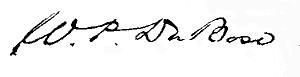
Faith, Valor, and Devotion: The Civil War Letters of William Porcher DuBose by W. Eric Emerson and Karen Stokes, University of South Carolina Press, 392 pages, $49.95.

Brilliant and devout, William Porcher DuBose (1836-1918) considered himself a man of thought rather than of action. During the Civil War, he discovered that he was both, distinguishing himself as an able and courageous Confederate officer in the Holcombe Legion and later as a dedicated chaplain in Kershaw's Brigade. Published for the first time, these previously unknown letters of DuBose chronicle his Civil War actions with these two celebrated South Carolina units and make an important contribution to the literature and history of the war. They also advance our understanding of DuBose's burgeoning religious ideals as a Civil War combatant who would later become one of the foremost theologians of the Episcopal Church and a distinguished professor at the University of the South.

A native of Winnsboro, South Carolina, DuBose was studying to enter the Episcopal priesthood when the war began. After struggling with the question of secular and spiritual obligations, he decided to join in the defense of the Confederacy and began a long and varied career as a soldier. After service in the lowcountry during the first year of the war, he was thrust into the thick of combat in Virginia, where he was wounded twice and taken as a prisoner of war.

After being exchanged and returned to duty in 1862, DuBose was wounded again at the battle of Kinston in North Carolina, and a year later influential friends arranged for his appointment as chaplain in Kershaw's Brigade. He continued to share in the hazards of combat with the men to whom he ministered as they fought in the battles of Spotsylvania, Cold Harbor, Petersburg, and Cedar Creek in 1864.

Adroitly edited by W. Eric Emerson and Karen Stokes, the more than 150 letters collected here prove DuBose to be a man of uncompromising duty to his faith, fellows, and the Confederate cause. He references his interactions with prominent figures of the day, including General Nathan "Shanks" Evans, John L. Girardeau, John Johnson, Colonel Peter F. Stevens, General Joseph B. Kershaw, Louisa Cheves McCord, and General John Bratton. Also included here are DuBose's wartime courtship letters to his fiancée and later wife, Anne Peronneau DuBose. Collectively these extraordinary documents illustrate the workings of a mind and heart devoted to his religion and dedicated to service in the Confederate ranks.

W. Eric Emerson is director of the South Carolina Department of Archives and History in Columbia. The author of Sons of Privilege: The Charleston Light Dragoons in the Civil War, Emerson has also served as director of the Charleston Library Society and the South Carolina Historical Society. Karen Stokes is an archivist with the South Carolina Historical Society in Charleston. Her articles on South Carolina history have appeared in numerous newspapers and journals.

Text and Image Source: University of South Carolina Press

Image Source: Dubose signature