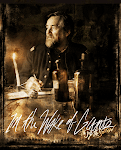
War and Ruin: William T. Sherman and the Savannah Campaign. American Crisis Series. Wilmington: Scholarly Resources, 2003. 152 pp. Maps, notes, bibliographical essay, index. $17.95 (paper)
Reviewed by: Kathy L. Jones, Department of History, University of South Carolina. Published by:
H-CivWar (January, 2007)
Sherman's War of Words
The famous proverb "actions speak louder than words" often rings true. Yet, sometimes words have more impact than actual deeds in historical memory. This is the case that Anne J. Bailey explores in her book, War and Ruin: William T. Sherman and the Savannah Campaign. Since the end of the Civil War, many southerners have depicted William T. Sherman as an evil warmonger. He was, and still is in some circles, blamed for the destruction of countless southern towns and the deaths of innumerable southern civilians. In short, Sherman has become one of the great villains in the epic story of the Lost Cause.
Was Sherman really so evil? Did he introduce the South to the horrors of total war? What effect did his actions really have on the outcome of the war? Bailey addresses these questions and makes the argument that Sherman's words were far more effective than any of his actions. He used the language of total war to strike fear in the minds of Georgians, yet did not fully act on those threats.
Bailey's main argument throughout the book is that Sherman's "war of words was far more devastating to the Southern nation than the actual events along his route" (p. xiv). The book begins with a tour of Savannah and southern Georgia during the early years of the Civil War. Bailey argues that the residents of Savannah were so far separated from the violence and destruction of the front lines, that they believed they were "immune from invasion" (p. 9). As Sherman got closer to the city and his threats filtered into the ears of Savannah residents, the result was extreme psychological fear.
In the course of the book, Bailey visits several of the sites that made Sherman infamous in the South. Sherman has been vilified for his occupation of Atlanta ever since he and his troops marched out of the city in November 1864. During and after the war, southerners accused Sherman of "turning out helpless women and children" (p. 25) when he expelled the residents from the city. Rather than doing this to punish the citizens of the city, Bailey explains, Sherman needed to prepare for his march and had neither the time nor resources to care for these refugees. He knew that he had to be prepared to leave the city quickly, which could not be accomplished with hundreds to thousands of refugees draining away necessary resources.
According to Bailey, when Sherman began his march his "goal was to break the South's will to fight, not to devastate the land and murder the people" (p. 31). To demonstrate this, Bailey points out that Sherman set rules limiting what specific property could be confiscated or destroyed. Only in cases where towns actively harbored Confederates or engaged in actions to hinder the progress of the Union forces was property destroyed or taken. Likewise, the Union forces were to concentrate on destroying only factories, mills, depots, warehouses, and public buildings. For the most part, Sherman kept his men from destroying private residences.
Of course, Bailey also points out that Sherman and the officers under his command could not watch every one of their men. Vandalism, murder, rape, and pillaging did occur when officers were not watching. Technically, however, Sherman and his officers never sanctioned these actions, and in some cases even prosecuted and punished the offenders (p. 79).
By the time Sherman was marching through the Georgia piedmont, news about the destruction of Atlanta had spread throughout the state. Bailey argues that this news had a profound psychological effect on the residents of the state--even if the written and verbal accounts did not exactly match up with actual deeds. For example, one of the towns Sherman was notorious for destroying, Griswoldville, was devastated only because it was composed mostly of factories involved in war production. The house belonging to the town's founder, Samuel Griswold, was not destroyed and the town itself disappeared only after its founder died in 1867. The state capital during the war, Milledgeville, was pillaged not by Sherman's men but by civilians who looted its houses after the troops left. Likewise, the residential section of the town of Sandersville was spared from destruction even though Confederate vigilantes had previously killed several Union soldiers nearby.
The fact that destruction did occur in the wake of Sherman's army cannot be denied. But Bailey is careful to point out that Sherman was infrequently responsible for this destruction. For example, the town of Louisville experienced a fire that spread through the residential area of the town. The fire, however, started before Sherman's troops even arrived in the town. Incidences like this actually played well into Sherman's hands, according to Bailey. The rumors of these events spread throughout Georgia and the blame was laid squarely at Sherman's feet. Georgians in Sherman's path believed that only destruction lay ahead for them.
Bailey does not paint a blameless portrait of Sherman. For pragmatic reasons, Sherman knowingly bypassed Andersonville prison instead of liberating it. In addition, he was less than kind to the newly freed slaves that followed his troops through Georgia. Sherman's contraband policy was to only allow those that could work to stay with the troops, as long as there were enough supplies and food to support their numbers. In one incident, Brig. Gen. Jefferson C. Davis of the Union Army prevented a group of freed slaves from crossing a creek near Savannah on a pontoon bridge with his troops. Several of these freed slaves drowned while trying to swim across the creek, fearing that they would be left behind to be re-enslaved or killed by a group of nearby Confederates. Sherman not only condoned Davis's actions, but also endorsed them. In both of these cases, Bailey argues that Sherman made decisions based on military necessity. He could not take care of a large group of weak and starving prisoners, nor could he feed and support refugees who chose to follow the army. His goal was to complete the march to Savannah, not to care for the people along the way.
When Sherman and his troops finally reached Savannah, they did not harm the city at all. None of the buildings were burned down or destroyed. In fact, Savannah was filled with celebrations in the days following Sherman's arrival. Confederate supporters in the city were allowed to remain in the city peacefully or leave without being harmed. Again, Sherman demonstrated with his actions that he did not wish to physically harm the people of Georgia. His goal was mainly to strike fear in their minds and in the minds of their loved ones far away fighting for the Confederacy. As Sherman himself stated to a southern friend who was living in New York, "you do me but justice in thinking that I am not the scourge and monster that the Southern Press represents me, but that I will take infinitely more delight in curing the wounds made by war, than in inflicting them" (p. 126).
War and Ruin is a concise and well-written summary of Sherman's journey through Georgia in 1864. The advantage of this slim volume is that it is quick and almost effortless to read, owing mainly to Bailey's enjoyable style of writing. She provides just enough description to paint a picture of both Sherman and Georgia that is engaging and not tedious. The shortcoming of the book is that it does not cover any new territory. Many historians have written about this topic in much more thorough detail. This weakness is also a strength, however, in that lay readers and scholars of the Civil War will find this book both understandable and interesting. In addition, the book would be extremely useful for introductory and upper-level courses on the Civil War.
What is different about War and Ruin is Bailey's interesting interpretation of the subject matter. Instead of just summarizing Sherman's March and listing the events that took place along the way, Bailey tells the story through the minds of Georgia's civilians. The parts of the book where she discusses the effects of Sherman's words and the rumors of his deeds on the southern people are the most engaging aspects of the book. In fact, the reader is left desiring more of this kind of information.
Bailey effectively demonstrates that Sherman was not responsible for all of the horrendous things he has been accused of. In doing so, she clearly places this work historiographically in a group of recent studies examining whether or not Sherman introduced "total war" to the South. Like Mark Neely, Mark Grimsley, and Lee Kennett, Bailey does not see the Civil War as a "total war."[1] Sherman's aim was to destroy property, not to take civilian lives. Every action he took had a pragmatic reason behind it. None of these reasons included revenge against the people of Georgia. Sherman realized that in order to become one nation again, these things could not occur. As Bailey concludes, "he had waged war against Southern civilians, but within limits, for true total war would have resulted in an irreparable schism" (p. 138).
Note
[1]. Mark Grimsley, The Hard Hand of War: Union Military Policy toward Southern Civilians, 1861-1865 (Cambridge: Cambridge University Press, 1995); Lee Kennett, Marching through Georgia: The Story of Soldiers and Civilians during Sherman's Campaign (New York: HarperCollins, 1995); and Mark E. Neely Jr., "Was the Civil War a Total War?" Civil War History 37 (1991): 5-28.
Citation: Kathy L. Jones. "Review of Anne J. Bailey, War and Ruin: William T. Sherman and the Savannah Campaign," H-CivWar, H-Net Reviews, January, 2007. URL: http://www.h-net.org/reviews/showrev.cgi?path=213771171040626.