Showing posts with label Pennsylvania Troops. Show all posts

Wednesday, March 18, 2020

Primary Souce: 45th Pennsylvania' Hospital Steward's Report on South Mountain

  “It’s too damned hot here” – A medical history of the 45th Pennsylvania’s first battle

A common theme in Civil War history is examining how soldiers described their first experience in combat. Many referred to this with the period phrase “seeing the elephant.” After experiencing their first combat, however, those who survived lost that naïve excitement they first carried into combat.
The same also applies to the medical teams that accompanied their regiments into their first battle. For the 45th Pennsylvania Volunteer Infantry, the first blood came at the Battle of South Mountain in September 1862. The regiment had spent almost its entire first year of the war in coastal South Carolina, and lost many more men to disease than it had to Confederate bullets or shells. The men spent their days drilling, building fortifications, and performing other hard labor as necessary.
In the regimental history for the unit, published in 1912, Hospital Steward James A. Myers described the first time the 45th Pennsylvania’s medical personnel went into action and the chaotic first taste of combat.

Full Text Link:National Museum of Civil War Medicine

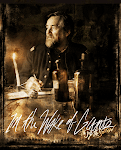
 Image: James A. Meyers, Hospital Steward, 45th PA. Image taken from regimental history on archive.org

Tuesday, August 12, 2014

Author Interview: Uzal W. Ent And The Pennsylvania Reserves In The Civil War

The Pennsylvania Reserves In The Civil War: A Comprehensive History, Uzal W. Ent, McFarland Publishing, 2014, 401pp., appendices, bibliography, index, chapter notes, $75.00.

Uzal W. Ent, a brigadier general retired from a 34 military career, has authored three books and has been published in 19 magazines and five encyclopedias and the of The Pennsylvania Reserves In The Civil War: A Comprehensive History which was published in July. Ent is the author of Fighting on the Brink: The Defense of the Pusan Perimeter [1998] and The First Century: A History of the 28th Division [1979].

Because Josiah R. Sypher published his History of the Pennsylvania Reserves in 1865 and Samuel P. Bates his History of the Pennsylvania Volunteers in 1869, the accounts of many of the individual regiments of the Pennsylvania Reserve division have never been adequately researched and studied with two exceptions being:  Bouquets From The Cannon's Mouth: Soldiering With The Eighth Regiment Of The Pennsylvania Reserves [2005], Three Years in the Bloody Eleventh: The Campaigns of a Pennsylvania Reserve Regiment [2002].  Notable is the extensive work done by August and Angela Marchetti and colleagues at the online Pennsylvania Reserve Historical Society [http://www.pareserves.com/] whose Pennsylvania Reserve Volunteer Corps online research center develops and offers new resources.

CWL: The Pennsylvania Reserves In The Civil War: A Comprehensive History is certainly comprehensive. When did you begin your research for your work?
UWE: About 16 years ago after I completed a book on the Korean War's Pusan Perimeter in 1996-1997.  McFarland Publishing edited it over several years. I began with my great, great grandfather' copy of  Joseph Sypher's History of the Pennsylvania Reserve Corps first published in 1864 and then updated in 1865. Sypher's work is somewhat faulty regarding casualties because is was written at the end of the war.  Yet Sypher kept in contact with Pennsylvania Reserve soldiers and received immediate feedback regarding his work, which he later updated in the next editions. By 1869 the casualty figures were released by the federal government. Broadfoot Press' work in regimental rosters is accurate and significant.

CWL:  When did your interest first develop in the Pennsylvania Reserve Corps?
UWE: After completing Fighting on the Brink: The Defense of the Pusan Perimeter in 1997. I was familiar with the Pennsylvania Reserves because I am related to two Pennsylvania Reserve veterans: one in the 6th Pennsylvania and one in Rickett's Battery.

CWL: During your research, what were the most illusive pieces of information?
UWE: None especially yet I was always looking .

CWL: What difficulties did you have acquiring maps and photographs for the book?
UWE: Since I am not a cartographer, every map I drew was rejected by the publisher.  McFarland Publishing acquired maps from Louisiana State University Press, Savas Beatie Publishing, Hal Jesperson and the National Park Service. The photographs are from the collection of the Library of Congress and those found in Battles and Leaders of the Civil War, which are in the public domain.

CWL: For such a large book, how did you construct the index?
UWE: A librarian and friend at the United States Army Military History Institute in Carlisle [Pennsylvania] constructed about 90% of the index and nearly all my research was done at the institutes' library.

CWL: You quote extensively for newspaper of the era.  Tell us of your experience with newspaper morgue books and the online and digitized archives you used.
UWE:  Regarding newspapers, most of what I needed was on microfilm and what is online and digitized was found for me by librarians.

CWL:  What material did you use to which possibly Sypher did not have access?
UWE: At the USAMH library there is a large collection of letters, memoirs, newspapers. In neighboring Harrisburg at the Pennsylvania Museum's library there is another trove.

CWL: In what ways does The Pennsylvania Reserves in the Civil War: A Comprehensive History move beyond Sypher's and Bates' work?
UWE: It relies on those regimental histories published after Bates' work was published. Also the diaries, letters, memoirs and narratives available in the USAMHI archives and at the Pennsylvania State Museum library. Scholarly and popular articles published in the last 100 years and of course, The Official Records of the War of the Rebellion published in 128 volumes between 1880 and 1901.  In the appendices are biographical sketches of the principal Reserve Corps officers along with the initial organization, including the 14th Reserves which is an artillery unit and the 15th Reserves which is a cavalry unit.

CWL:  Thank you for your work on behalf of the Pennsylvania Reserves division.
UWE: And thank your for the interview.


Wednesday, July 28, 2010

New---155th Pennsylvania Lieutenant's Letters Home

Letters From The Storm: The Intimate Civil War Letters of Lt. J.A.H. Foster, 155th Pennsylvania Volunteers, Linda Foster Arden, edited by Dr. Walter L. Powell, Mechling Books,365 pages commentary, illustrations, photographs, index, paperback,$29.95

Arden offers 101 letters written by Lieutenant Foster, Company K, 155th Pennsylvania to Mary Jane Foster, his wife; the documents are separated by Arden's comments regarding the events and situations described in the letters. Complaints regarding campaigns and camp life with descriptions of individual soldiers and unit combat are a focus of the letters. Additionally Lieutenant Foster addresses his loneliness, intimate fantasies and apprehensions about his spouses faithfullness.

The campaigns and combat of Antietam, Fredericksburg, Kelly's Ford, Brandy Station, Gettysburg, Bristoe Station, the Wilderness and Cold Harbor are described. Pontoon bridges new corps flags are described and drawn. Colorful language regarding personalities and events is not absent from the letters.

The 155th Pennsylvania Volunteers' Company K was formed in Kittanning in 1862, from recruits in Armstrong and surrounding counties. The 155th Pennsylvania Volunteers during their first years the regiment wore the regulation uniform of the Union Army. In 1863 they, along with the 140th New York, received Zouave uniforms. Unlike the 140th New York, the 155th Pennsylvania received a Zouave uniform never before created. Their uniform consisted of a dark blue Zouave jacket with not red but yellow trimming, a dark blue Zouave vest with yellow trimming, a red Zouave sash with a yellow trimming, dark blue Zouave pantaloons, and a red Zouave fez with a yellow trimming and a blue tazzle. The 155th Pennsylvania along with the 140th New York, and the 146th New York became the "Zouave Brigade" in the Army of the Potomac.

Mechling Books has also published The 155th PA Volunteer Zouaves, Co. K.'s history.

Text Source: Mechling Books and Wikipedia

Tuesday, June 29, 2010

Recent Issue Of Army History Journal: Pennsylvania Division at Antietam and Fredericksburg

Just recieved this pdf of the Army History Journal. The issue leads with an article on the Pennsylvania Division at Antietam and Fredericksburg.

"No Heroism Can Avail": Andrew A. Humphreys and His Pennsylvania Division at Antietam and Fredericksburg by Matthew T. Pearcy. Here is the link: Army History Summer 2010, no. 76 . Enjoy and pass it along.

Image Source: Pennsylvania Reserve Division monument at the Cornfield, Antietam

Saturday, August 11, 2007

CWL --- Until Every Traitor Copperhead Kneels Before the Goddess of Liberty: Union Soldiers and the Antiwar Movement


'A Viler Enemy In Our Rear': Pennsylvania Soldiers Confront the North's Antiwar Movement, Timothy J. Orr, in Aaron Sheean-Dean, The View From the Ground: Experiences of Civil War Soldiers, University of Kentucky Press, 2007, pp. 171-198.

On May 3, 1863 a sergeant of the 28th PVI happened to view a large political meeting of the 29th OVI; the units were in the same brigade of the Army of the Potomac. The lieutenant colonel of the 29th "spoke of a set of traitors who were plotting against
the government and poisoning the minds of the people." (p. 172)

As a field of study, Civil War history has paid little attention to Union soldiers' camp scuttlebut on partisan politics. Several historians argue that anti-war Democrats had little or no success in obstructing the Republican war effort. Timothy J. Orr contends that the Democratic Party in the North were "hardly the enemies of the Union that the Republicans made them out to be." But the affect among troops of Republican propaganda regarding the degree of loyalty was extensive. Most soldiers from Pennsylvania "identified antiwar Democrats as the arm of the rebellion in the North." (pp., 192, 193)

Orr cites Pennsylvania troops' resolutions which appear in regional newspapers. Descriptive language of these resolution include: traitors of the worst class, fellow conspirators of the South, deserving of unmigated scorn, hatred, contempt and 'the hemp that is due traitors.' Also, the antiwar proponets should be crushed to the earth, suffer a traitor's doom. (pp.188-189)

The author describes how "Pennsylvania regiments contrcuted these resolutions with extreme care". A trend appears in which captains and lieutenants lead discussions among the enlisted men and then compose a letter to an editor. It took three weeks for the 140th Pennsylvania to draft a set of resolutions on which most could agree, with the colonel trying to stiffle the rhetoric. The 150th Pennsylvania wrote a resolutions document under the same conditions. The 100th Pennsylvania voted on each of their resolutions with the assent of each enlisted man in favor being signified by taking 'shoulder arms' and those opposed remaining at 'order arms.' (pp. 183-185)

Pennsylvania soldiers' vote in the 1863 and 1864 elections heavily supported the Republican Party. Committant to the military draft, suspension of habeas corpus, limitations on free speech, support of the federal authority, and a complete aversion to an armistice were the planks of the soldiers' political platform. In the election of 1864, 68% of Pennsylvania soldiers who voted cast votes for Lincoln.