Showing posts with label Civil War Medicine. Show all posts

Thursday, January 03, 2019

Clara Barton's Civil War: Between Bullet and Hospital, Donald C. Pfanz,   248 pp, 30 illustrations, appendices, bibliographic notes, bibliography, Westholme Publishing, 2018,  $28.00 hardcover.

Civil War Librarian: Most other works on Clara Barton's American Civil War service accept and rely upon, at face value, her own tales about herself. Pfanz's reading of Stephen Oates' A Woman on Valor found that Oates' portrayal of Barton as a "heroine of mythical proportions." Checking the Oates' footnotes set off alarm bells for Pfanz and he decided to "dig out the original sources, peel away the self-manufactured legend and determine for myself what she really did during the war.;

While a National Park Service staff historian, he had read "thousands of letter and memoirs written by Union soldiers, and not one of them so much as mentioned Barton. Pfanz asked "How does a historian get at the truth when his subject is so firmly steeped in legend?"  The author reevaluated the source material of Barton's own recollections and the text of her many speeches after the war.

In Clara Barton's Civil War: Between Bullet and Hospital Pfanz offers a more realistic and historically grounded account of Barton's work during the war. Readers will likely be both somewhat surprised and more appreciative Clara Barton's actual accomplishments. Checking primary sources against Barton's own post-war testimony, Pfanz concludes that Barton overstated her the dramatic elements of her accomplishment. But in the course of the book, he provides an accurate account of her service that in the end needed no burnishing.


Clara Barton's Civil War: Between Bullet and Hospital narrative is accessible to both adults and advanced placement middle school and high school students. Pfanz's work also offers a fine introduction to the historian's process of finding the actual event among the recollections of the participants.


From the Publisher:
“I always tried to succor the wounded until medical aid and supplies could come up—I could run the risk; it made no difference to anyone if I were shot or taken prisoner.” So recorded Clara Barton, the most famous woman to emerge from the American Civil War. In an age when few women worked in hospitals, much less at the front, Barton served in at least four Union armies, providing food and assistance to wounded soldiers on battlefields stretching from Maryland to South Carolina.
 
Thousands of soldiers benefited from her actions, and she is unquestionably an American heroine. But how much do we really know about her actual wartime service? Most information about Barton’s activities comes from Barton herself. After the war, she toured the country recounting her wartime experiences to overflowing audiences. In vivid language, she described crossing the Rappahannock River under fire to succor wounded Union soldiers at Fredericksburg, transporting critical supplies to field hospitals at Antietam, and enduring searing heat and brackish water on the sun-scorched beaches of South Carolina.

She willingly braved hardship and danger in order to help the young men under her care, receiving in return their love and respect. Most of Barton’s biographers have accepted her statements at face value, but in doing so, they stand on shaky ground, for Barton was a relentless self-promoter and often embellished her stories in an effort to enhance her accomplishments.
In Clara Barton’s Civil War: Between Bullet and Hospital, distinguished historian Donald Pfanz revisits Barton’s claims, comparing the information in her speeches with contemporary documents, including Barton’s own wartime diary and letters. In doing so, he provides the first balanced and accurate account of her wartime service—a service that in the end needed no exaggeration.

Donald C. Pfanz is a graduate of the College of William and Mary. In his thirty-two-year career with the National Park Service, he worked at Fredericksburg and Spotsylvania County Battlefields Memorial National Military Park, Petersburg National Battlefield, and Fort Sumter National Monument. He is a founding member of the Association for the Preservation of Civil War Sites (now the Civil War Trust) and has written six books about the Civil War, including Richard S. Ewell: A Soldier’s Life and War So Terrible: A Popular History of the Battle of Fredericksburg.

Thursday, June 21, 2018

Manassas Amputation Pit Discovery: More News, Enfield Bullets Key to Dating

Image result for washington post manassas amputation


The Washington Post reports . . .


The park service says it’s the first time that a surgeon’s pit at a Civil War battlefield has been excavated and studied. The complete remains of two soldiers were found in the pit, along with 11 partial limbs.  Researchers believe the bodies were those of Union soldiers who died in the Second Battle of Bull Run, also known as the Second Battle of Manassas. The battle was fought in August 1862. 

Researchers are confident the remains belong to Union soldiers because buttons from a Union jacket were found in the pit. In addition, one of the soldiers had an Enfield bullet lodged in his thigh bone — those bullets were used almost exclusively by Confederate soldiers.

The Enfield bullets also provide a key clue that the pit is from the second Bull Run battle, not the first. Those bullets were not yet in use during the first Bull Run battle, which was the first major battle of the war. The location of the pit also fits with the battle lines from the second battle.


Washington Post Text Source: Washington Post 

The two soldiers — referred to as Burial 1, with the embedded bullet, and Burial 2 — were placed side by side in the pit. The severed limbs were carefully arranged next to them, like broken tree branches, according to a photograph from the dig. Burial 1 probably went in first, because Burial 2 was partially on top of him.

The hole was about a foot deep, and over the years farm plows had carried off the skull of one man and part of the skull of the other.  Anthropologists from the Smithsonian Institution have studied the injuries suffered by the two soldiers and examined the cut marks on the severed limbs made by the surgeons’ saws. There were nine severed legs and two arms in all.

Washington Post Text Source:  Washington Post 


Monday, April 06, 2015

New and Noteworthy---Resisting Sherman's 1865 Advance Through The Carolinas

Resisting Sherman: A Confederate Surgeon's Journal and the Civil War in the Carolinas, 1865
Thomas Robertson, Savas Beatie Publishing, hardcover
, 192 pages, release date: April 19, 2015.

Wednesday, August 13, 2014

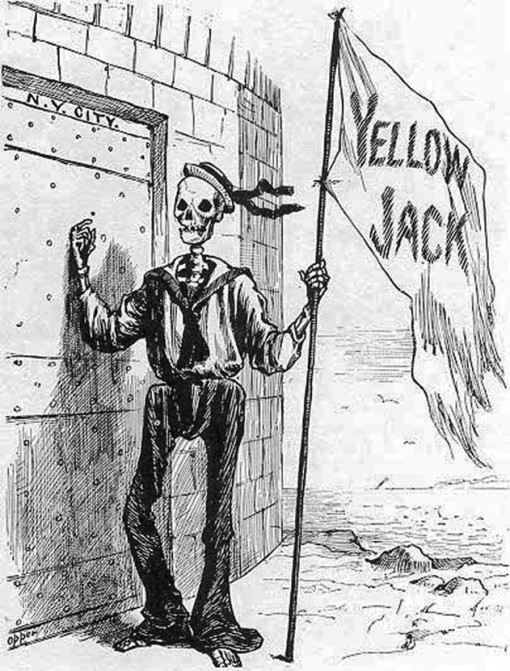
News--Did A CSA Agent Target Northern Cities in 1864 For A Yellow Fever Epidemic?

Yellow JackYellow Fever Plot of 1864 Targeted Lincoln, U.S. Cities, Mathew W. Lively, Civil War Profiles Weblog, July 13, 2014.
 
Excerpt: In the summer of 1864, Dr. Luke P. Blackburn, a Kentucky-born physician turned Confederate agent, allegedly instituted a bioterrorism plot against United States cities and President Abraham Lincoln. Blackburn’s goal was to “release” Yellow Fever through the distribution of infected clothing, with specific articles being sent directly to Lincoln. The plot was unsuccessful, however, mainly due to a 19th century misunderstanding of how Yellow Fever is transmitted, but also because a disgruntled fellow conspirator revealed the plot to U.S. authorities.
 Yellow Fever, also known as “Yellow Jack,” after the flag that was flown from quarantined ships in harbors, was a deadly disease in U.S. coastal cities during the 1800’s (an 1853 outbreak in New Orleans, Louisiana, produced 9,000 deaths – 28% of the city’s population). The disease was notorious for causing “black vomit,” an ominous clinical sign resulting from hemorrhage in the stomach. 

Today we know that Yellow Fever is a virus that is spread through the bite of infected mosquitoes. But during the Civil War, which occurred prior to the discovery of germs being the source of disease, medical science and the lay population believed Yellow Fever could be contracted from direct exposure to those who were infected, primarily through contact with “black vomit.” It was this belief that led Blackburn to “contaminate” clothing for distribution.

The island of Bermuda was a major base of blockade running for the Confederacy and when a Yellow Fever epidemic occurred there in the summer of 1864, Dr. Blackburn, who had extensive experience treating the disease in the Deep South, traveled from Canada to Bermuda to lend his expertise in controlling the outbreak. While on the island, Blackburn took the soiled bedding and clothing of infected patients and packed them into trunks with new shirts and coats in an effort to “infect” the unused garments with Yellow Fever particles. 

Blackburn then traveled to Halifax, Nova Scotia, in June 1864 with five trunks and one valise of infected clothing. Once there, he offered a man named Godfey Hyams the sum of $100,000 to smuggle the trunks into “Washington City, to Norfolk, and as far South” as he could go “where the Federal Government held possession and had the most troops.” He instructed Hyams to dispose of the new clothing by auction with the exception of the valise, which was to be delivered by express to President Lincoln as a gift. Blackburn also specified the contents of the largest trunk were to be sold in Washington, D.C., callously remarking: “It will kill them at sixty yards.”

Mathew W. Liverly's online article is continued at Civil War Profiles July 13, 2014
Image Source: Frank Leslie's Illustrated Newspaper, provided by Matthew Lively.


Saturday, October 26, 2013

New and Noteworthy---Surgeon in Blue, Jonathan Letterman: Triage, Ambulances and Battlefield Farms

Surgeon in Blue: Jonathan Letterman, The Civil War Doctor Who Pioneered Battlefield Care by Scott McGaugh, Publisher: Arcade, 368pp., notes, bibliography, b/w photographs, $25.95
Scott McGough’s Surgeon In Blue is the first full length biography of Letterman. The author’s narrative is accessible to a variety of readers. It is not a detailed account of military campaigns nor is it a densely written example of medical history. It offers minimal insight into Letterman’s character and motivation. Jonathan Letterman did not leave a trove of personal letters. A current edition of his Medical Recollections of the Army of the Potomac is 204 pages in a slim trade paperback edition. Letterman’s narrative is similar to an analytical treatise: clear, precise and dispassionate.McGough gives other medical reformers credit where credit is due. He notes that Letterman in early 1863 “could set aside the continuing refinement of battlefield care that he had organized. Fredericksburg validated the Letterman System. Though the system was Letterman’s achievement, it had been built in part on the work of Napoleon’s surgeons more than sixty years before and of Union army surgeons under Ulysses S. Grant earlier in 1862.” 
McGough’s work accomplishes several tasks.  It puts Letterman and his work in the context of the mid-19th century U.S. army. Surgeon in Blue offers a clear depiction of the personalities and political vendettas of the Army of the Potomac, the presidential cabinet, the U.S. Congress and the U.S. Sanitary Commission. McGough has researched the appropriate archival material and enhanced his efforts by consulting historians of the National Park Service and the U.S. Army, the Gettysburg Licensed Battlefield Guides, and the staff of the National Museum of Civil War Medicine. Surgeon in Blue offers the compelling story of American physician’s life lived during the sobering era of the American Civil War.

Wednesday, June 26, 2013

On The Road---The Rosecrans/Wheeling [WV] Ambulance

The Wheeling or Rosecrans ambulance wagon was built in the Government workshops after a design of General W. S. Rosecrans, U. S. A. It was lighter than [others and] could be readily drawn by two horses, and would accommodate eleven or twelve sitting or two recumbent and two or three sitting patients. Two cushioned benches were attached to the two sides of the interior of the wagon, running along its whole length.

From the edge of each of these benches, fastened by hinges, depended a cushioned seat the length of the benches. These seats could be readily brought on a level with the benches, and when thus elevated could be securely fixed by iron feet, folded in the suspended seat. For the ends of the iron feet receptacles were fitted in the floor of the wagon. When both seats were raised they met, in the middle of the carriage and made one continuous bed for two patients.

When only one seat was raised it formed a bed for a recumbent patient, while the other bench, with its suspended seat, allowed space for at least four sitting patients. A water-tank, capable of holding five gallons, was stored away under the seats in the rear end of the ambulance wagon; not unfrequently stretchers took the place of one of the water-tanks. In front of the benches a transverse seat, accommodating the driver and two or three patients, was provided.

Under the seat was a box for medicines and other articles for field use. Accurate specifications for the building of this ambulance will be found on page 59 of the Report of a Board of Officers . . . . The body of the wagon rested upon four elliptical springs, two placed, transversely (one on the front and one on rear axle), and two on the rear axle running longitudinally. A frame of light wood, with canvas cover, protected the patients against the inclemencies of the weather, and on the sides curtains of canvas could be closely buttoned to the top and the body. At the rear of the wagon was a step to assist patients and bearers in lifting in the wounded. The weight of the wagon was between seven hundred and eight hundred pounds.

Text Source with edits: Civl War Home.com
Photograph Souce: Civil War Librarian LLC and June 20, 2013

The photographs of a reproduction Wheeling Ambulance. It was built in Rayland, Ohio and on exhibit on Rest Stop #1 on Interstate 70 in West Virginia about 3 miles from the Pennsylvania line. From autumn to spring, the ambulance resides in the Pry House barn, Antietam National Military Park.  During the summertime, it returns to the owner who lives in Rayland, Ohio.

Tuesday, May 21, 2013

Forthcoming and Noteworthy---Jonathan Letterman, Surgeon in Blue and Pioneer of Battlefield Emergency Care

Surgeon In Blue: Jonathan Letterman, The Civil War Doctor Who Pioneered Battlefield Care, Scott McGaugh, Arcade Press, 30 black and white photographs,bibliographic notes, bibliography, index, 340 pp., hardcover, $25.95. 2013, Available July 1.

From the publisher: Jonathan Letterman was an outpost medical officer serving in Indian country in the years before the Civil War, responsible for the care of just hundreds of men. But when he was appointed the chief medical officer for the Army of the Potomac, he revolutionized combat medicine over the course of four major battles—Antietam, Fredericksburg, Chancellorsville, and Gettysburg—that produced unprecedented numbers of casualties. He made battlefield survival possible by creating the first organized ambulance corps and a more effective field hospital system. He imposed medical professionalism on a chaotic battlefield. Where before 20 percent of the men were unfit to fight because of disease, squalid conditions, and poor nutrition, he improved health and combat readiness by pioneering hygiene and diet standards. Based on original research, and with stirring accounts of battle and the struggle to invent and supply adequate care during impossible conditions, this new biography recounts Letterman’s life from his small-town Pennsylvania beginnings to his trailblazing wartime years and his subsequent life as a wildcatter and the medical examiner of San Francisco. At last, here is the missing portrait of a key figure of Civil War history and military medicine. His principles of battlefield care continue to be taught to military commanders and first responders.

Text Source:  Arcade Press

CWL:  From a review copy---the bibliographic notes run from about 20 to 50 for each chapter and range from the December 1865 Atlantic Monthly essay on the Gettysburg Battlefield, a 2004 PhD dissertation on Letterman's development of a battlefield evacuation system and Gettysburg Licensed Battlefield Guide Phil Lechak's  A Blue and Gray Sea of Misery [unpublished]. McGaugh spent a full day with 'brogans on the ground' with Lechak. Also, McGaugh has found a rare photograph of  the home in which Letterman was born in Canonsburg, Pennsylvania [three miles from CWL's house].

There are four chapters on four battles; Antietam, Fredericksburg, Chancellorsville and Gettysburg. Other chapters focus on Letterman's July 4 1862 rise to command on  of the Army of the Potomac's medical service and his service of coroner for the city of San Francisco. The book's spine is firm and the text block falls open easily.  CWL is anxious to begin Surgeon In Blue: Jonathan Letterman, The Civil War Doctor Who Pioneered Battlefield Care.

Friday, May 03, 2013

Off Topic---Post Civil War Medicine: A Tale of Madness, Medicine and the Murder of a President

Destiny of the Republic: A Tale of madenss, Medicine and the Murder of a President, Candice Millard, Doubleday Publishing, 340 pp.,  34 illustrations, bibliographic notes, bibliography, index, $28.95 hardcover; $16.00 trade paperback.

On July 2, 1881 about four months into his presidency, James A. Garfield was shot in the back by Charles J. Guiteau using a .44 caliber British Bulldog pistol. Garfield died September 19 of the same year. He was medically attended to by D. Willard Bliss who had attendied Abraham Lincoln when he had been assassinated. Millard's book offers many intriguing stories regarding Garfield's death and his assassin's life.

Among those aspects, Millard discusses the dissmissal by Bliss of Joseph Lister's work with germ theory and antiseptic surgery.  Lister used Louis Pasteur's research in microbiology and he promoted the practice of sterile surgery. Carbolic acid used for cleaning wounds and sterilizing medical instruments reduced infections. During 1867-1869 Lister introduced his discovery to British surgeons. Throughout the 1870s sterilization became a wide spread practice in England.

Bliss appears to be represenative of American doctors in 1881 in that he dismissed in the 1870 Lister's work. Additionally, Bliss excessively probed Garfield's wound and inadvertently created a new wound in Garfield's body.  Millard's story contains insights to the American medical establishment of the late 19th century.  Also, she covers the politics and the diagnosis of mental illness during this era.  Destiny of the Republic: A Tale of madenss, Medicine and the Murder of a President is a nicely paced narrative that is accessible to the general reader.

Author discusses Destiny of the Republic on CSpan BookTV  [52 minutes]


Tuesday, April 09, 2013

News---Gettysburg's George Spangler Farm's Eleventh Corps Hospital and Armistead Death Site Open

The 156-acre George Spangler farm served as the Union army’s 11th Corps field hospital from July 1 to the first week in August, 1863. Over 1,600 Union and Confederate wounded were treated here. Recently preserved by the Gettysburg Foundation, the farm stands as the finest example of a field hospital that exists on the Gettysburg battlefield.

 For the 150th battle anniversary, the Foundation is opening the George Spangler Farm to the public on Fridays, Saturdays and Sundays from May 24 through August 18. Each Friday at 1:30 p.m. the public is invited to join a Gettysburg National Military Park Ranger for a special program exploring this unique site and discovering how an army corps hospital functioned. Access to the farm is by free shuttle bus from the Museum and Visitor Center.   For more information about visiting the George Spangler farm go to:  www.gettysburgfoundation.org

Text Source: Gettsyburg Foundation
Image Source: Gettysburg Daily

Wednesday, January 30, 2013

Research Tip---National Library of Medicine American Civil War Finding Aides Index


U.S. National Library of Medicine has a search page that aggregates online resources. The History of Medicine Finding Aids Consortium is a discovery tool that provides keyword search services across a union catalog of descriptions of primary sources materials found in special collections and archives throughout the United States.
The consortium leads to information found in historical documents, personal papers, business records, and other sources. Finding aids provide contextual information about these collections along with detailed inventories to help researchers locate relevant materials.  Currently 3,600 finding aides are indexed from 35 institutions that collect broadly in the areas of the history of medicine, allied sciences, general collections and archives.
Here is the link to the initial search page: National Library of Medicine.  A keyword search, 'American Civil Medicine', yielded 233 record collections and their web links.

Monday, December 31, 2012

News: Gettysburg's Daniel Lady Farm Becomes Confederate Field Hospital, June 30 Through July 7

GBPA Announces Major Gettysburg 150th Event At Daniel Lady Farm, The Gettysburg Battlefield Preservation Association, Press Release, December 31, 2012.

The Gettysburg Battlefield Preservation Association today announced that a reenactment of the struggle of Southern surgeons, stewards and nurses to treat the scores of wounded soldiers of the Army of Northern Virginia brought to the Lady Farm will run from June 30 to July 7 at the farm.  The Florida Regimental Medical Department (FRMD) is organizing the field hospital living history week War Meets Compassion: The Confederate Field Hospital during the Battle of Gettysburg sesquicentennial observance. There will be no admission charge to the event.

The restored barn on the Lady farm was used for treating enlisted personnel, while wounded officers were administered to in the nearby house. Forensically-verified bloodstains on the floor of the house show where wounded officers propped themselves against the wall as a surgeon worked nearby, blood-soaked clothing and rags accumulating in a corner of the room. The FRMD will be joined in the living history by three other active Confederate field hospital corps organizations and the local Pvt. John Wesley Culp Camp #1961 of the Sons of Confederate Veterans.

The 2nd Florida Volunteer Infantry will portray the march of the troops of generals Richard Ewell and Jubal Early to the site, bringing ambulatory wounded soldiers for treatment by surgeons and inhabiting the grounds where Confederate troops encamped in preparation for their assault on Culp's Hill.

The living history will be tailored to the convenience of visitors. Scheduled demonstrations will include triage of the wounded, amputations, brain surgery and treatment of diseases.  Additional programs will focus on Civil War-era medicines, sanitary conditions, medical instrument identification, roles of purveyors and stewards, battlefield chaplains, embalming and the role of women in aiding the sick and wounded.

The overall commander for the event will be Major Robert Sonntag, Department of the Gulf. Sonntag, who actually worked in surgery, as a hospital administrator and now a medical consultant, will demonstrate on wounded soldiers how a good Civil War surgeon could perform a leg or arm amputation in 11 minutes. Other unit commanders will be Major Trevor T. Steinbach, Department of Tennessee; Major Harry Sonntag, Army of Northern Virginia; the 1 st Virginia Medical Unit; and Commander Gary Casteel of the Private John Wesley Culp Camp #1961, Sons of Confederate veterans.

The Lady Farm event is being coordinated with the official 150th anniversary activities of the Gettysburg Convention & Visitors Bureau and the Gettysburg National Military Park. "We are honored to be able to hold the largest ever Civil War medical re-enactment to the Daniel Lady Farm," said Robert  Sonntag. "What could be better than staging our living history on an actual Confederate field hospital site as part of the 150th Anniversary of the Battle of Gettysburg?"


"This is the blossoming of the Daniel Lady Farm into what the Gettysburg Battlefield Preservation Association envisioned for the property when it was acquired 14 years ago," said GBPA Vice-President Jay Purdy. "With this presentation it will evolve from a restored static site where one must try to imagine what happened there in 1863. War Meets Compassion: The Confederate Field Hospital will transport visitors to the closest thing to having been there 150 years ago."


We also cannot over-emphasize how pleased the GBPA is with the cooperative relationship that has developed with the Military Park and the Convention and Visitors Bureau and we look forward to this relationship growing in the future.


Text Source: The Gettysburg Battlefield Preservation Association
Image Source: panoramio.com

Thursday, July 19, 2012

New Exhibit Online: Civil War Hospital at Smithsonian Focuses on Nurse's Diary


Civil War Nursing, an online exhibition, is jointly produced by the Smithsonian's National Museum of American History and the National Library of Medicine. So Much Need of Service focuses upon the diary of Amanda Akin, a Civil War nurse and the photographic collection of fellow nurse, Anna Lowell.  Also included are issues of a era newspaper entitled the Armory Square Gazette that was authored, printed and distributed by the hospital's staff.   There is an interactive map with pins on the locations mentioned by Akin; included are 'then and now' picutures.  The photograph above is of the Armory Square Hospital. Here is the link to the exhibit. 


Thursday, May 24, 2012

New and Noteworthy---Photographing The Wounded And The Healed

SHOOTING SOLDIERS: Civil War Medical Photography by Reed B. Bontecou, MD by Stanley B. Burns, MD is the first exposé of clinical photography taken during the war from May 1864 through Spring 1865. The images reveal a new significant chapter of Civil War history. A biography of the surgeon-photographer Reed Brockway Bontecou, MD Surgeon in Charge of Harewood US Army Hospital is included as well as discussions of death and dying. Tables of the units and battles they were in accompany the text. This new work will be a major contribution to Civil War history.

Of the vast research on the Civil War this is something new. The subject of this book is one of them – clinical photography during the war – and the images are artistically posed in the style of the masters of photography, making them major works of art. There have been dozens of books and articles describing medical aspects of the war but none have, nor could they have presented a history of clinical war photography as Dr. Burns owns the largest collection of clinical images taken during the war and has not heretofore published an exposé of them. In 1980 he published Early Medical Photography in America (1839-1883) – Medical Photography in the Civil War, which has remained the definitive analysis of the use of photography by, of, and for physicians in the war. This current work is a scholarly extension of that study using the 570 clinical cartes de visite photographs in the Harewood US Army Hospital Album.

Bontecou’s photographs are beautiful, artistic representations of photographic art that transcend the subject. This book will become a classic and has been heralded by the Civil War medical historians who have seen the images and text as it was produced. Michael Rhode, Chief Archivist of the Otis Historical Archive, National Museum of Health and Medicine wrote the forward. He notes "that the presentation of these images is a great service as even I have not seen most of them." All of previous Burns Archive publications have been large coffee table size and we have now started to produce books as smaller, easily handled, and carried volumes. Shooting Soldiers… is produced as a fine art photographic text and is coupled with information not available anywhere else.

Perhaps to get a better understanding of his work you can see the video on The Burns Archive, which is the number one viewed program on Newsweek.com (The Burns Archive on Newsweek), or his current CBSNews.com medical photography series, also number one these past weeks (The Burns Archive & CBS News: Cancer in the 1800s and The Burns Archive & CBS News: Smallpox). I also encourage you to visit our blog where we showcase various highlights of the collection as well as announce upcoming exhibits, etc.

Several museum exhibitions of Bontecou’s clinical photographs will be presented over the next four years. The first is currently at New York’s Merchant House Museum titled New York in the Civil War… April 11–Aug 2011 and was reviewed by the Wall Street Journal on July 16, 2011. Several other venues are scheduled. Among the major museums planning to use Bontecou clinical photographs in their exhibits are the Houston Museum of Fine Arts (2012) and The Metropolitan Museum of Art (2013).

If you decide to review this book, please let me know and I will send a copy. Official publication date is July 2011. The book is currently available from The Burns Press, retail price $50.00, Case Bound, 6 by 6 3⁄4 inches, 168 pp, ISBN 13978-1-936002-05-4.

Wednesday, August 31, 2011

Off Topic: The Demon Under the Microscope---What Civil War Doctors Couldn't See

The Demon Under The Microscope: From Battlefields Hospitals to Nazi Labs, Thomas Hager, Broadway Publishing, 352 pages, bibliography, index, source notes, paperback, $15.00.

Thomas Hager opens Demon Under The Microscope with compelling descriptions of December 7 1941's wounded and those who cared for them. The setting is Tripler General Hospital in Hawaii. Ambulances, trucks, and cars bring the torn, the lacerated, and the roasted to the hospital. When it is filled the lawns of the facility are covered with the injured. The hospital's three operating rooms are in service for nearly a full day. Surprisingly and quite unlike World War One, there is not a single death from infection.

In the first three chapters, Hager weaves stories of battlefield medicine from before the French Revolution through World War One. The science of bacteriology began immediately before and during the First World War in which soldiers living in earthworks and trenches could die and without being wounded. It was a world without antibiotics. In Germany, Gerhard Domagk and his colleagues at Bayer Corporation worked constantly to identify which microscopic bacteria that caused tuberculosis, malaria, and blood poisoning. Discovered in 1932, sulfa became the first of the modern.

Hager addresses the biology and chemistry of the discovery through the competitive personalities, the national environments, the aggressive international marketplace. Patent wars, lawsuits, dying children of U.S. Presidents, a nearly dead Winston Churchill after the Teheran Conference move the store forward. Research chemists, laboratory mice, and fortunate and unfortunate accidents may be mundane, but not when the Nazi's are looking over shoulders and monitoring research labs. Nazi chieftan Reinhard Heydrich is wounded by Czech assassins and, due to a possible misuse of sulfa, dies. To find out if sulfa was the cause, Ravenbruck concentration camp's laboratory conducts infection and sulfa studies on women prisoners.

For those who have seen Saving Private Ryan, recall the episode where the medic is wounded in the assault on the Nazi communication post. His wound was dusted with white powder, a sulfa drug. Demon Under the Microscope is a well paced, personality driven suspense story of scientific discovery. There are no photographs in the books; it would have been enhanced with portraits of the main characters. On the other hand, your mind supplies the visuals from Hager's descriptions.

Second Image Source: The Science Museum, United Kingdom

Wednesday, July 27, 2011

New and Noteworthy---Photographing Union Soldiers: Images of Surgery, Anesthesia, And Pathological Specimens

Shooting Soldiers: Civil War Medical Photography by R.B. Bontecou, Dr. Stanley B. Burns, Burns Archive Press, 150+ illustrations, bibliography, no index, July 2011 168 pp.,$50.00

Shooting Soldiers: Civil War Medical Photography by R.B. Bontecou, a revealing exposé of the wartime clinical photographs of Reed Bontecou, is a new significant chapter in Civil War history. The war has been under writers’ and scholars’ microscopes for the past 150 years and there are few significant things yet to be uncovered of general interest. The subject of this book is one of them – clinical photography during the war – and the images are artistically posed in the style of the masters of photography, making them major works of art.

Through his remarkable portraits, Bontecou created and became a legend. This is the first volume of a series showcasing the Civil War carte de visite (CdV) photographs of Reed Brockway Bontecou, MD, Surgeon-in-Charge of Harewood U.S. Army General Hospital, Washington DC. He was responsible for pioneering and taking the largest number of photographs of wounded soldiers during the war and was the largest contributor of photographs and specimens to the Army Medical Museum and Civil War medical publications. His close up images of surgery, anesthesia, and patients posing with their pathological specimens were unique for his time. Many photographs are of patients pre- and postoperation, views of patients showing the progression of specific treatments, or the various stages of diseases.

The album is also the pioneering effort by one physician to document war wounds and to use photography to teach physicians how to care for these wounds. None of the clinical images were published as photographs, most of these images are now reproduced photographically in this series for the first time. Bontecou’s photographs are beautiful, artistic representations of photographic art that transcend the subject. This book will become a classic and has been heralded by the Civil War medical historians who have seen the images and text as it was produced. Michael Rhode, Chief Archivist of the Otis Historical Archive, National Museum of Health and Medicine wrote the forward. He notes “that the presentation of these images is a great service as even I have not seen most of them.”

To place the photographs in context of their creation, a history of Bontecou’s career is presented along with a history of the various images and albums he made. A summary of the last campaigns of the war are also briefly documented. A list of units represented is documented along with a list of the battles and the specific soldiers wounded in them. About 103 plates of soldiers from the CdV album posing with identification boards are included, and arranged by states but not numerically by unit number. Also discussed are the artistic and scientific merit of the images. A presentation of the role of sacrifice and death during the Civil War era is important in helping understand the general mental state of servicemen of that era. This chapter documents some death and dying concepts in the time period and emphasizes the lack of concern of Federal government authorities for identification and proper burial of servicemen.

In addition to being an internationally distinguished author, curator, historian, collector, publisher, and archivist, Dr. Stanley B. Burns, MD, FACS, is a New York City ophthalmologist and Clinical Professor of Medicine and Psychiatry at NYU Langone Medical Center. In 1975 he began collecting historic photography. In 1977 he founded The Burns Archive to share his discoveries and began his writing and publishing career. Dr. Burns’ collection of vintage photographs (1840-1950) has been generally recognized as the most important private comprehensive collection of early photography. It has been showcased in numerous national media venues worldwide. Artists, researchers and historians can access the one million+ photographs. The images have been the source of numerous Hollywood feature films, documentaries and museum exhibitions. Dr. Burns has authored forty photo-historical texts and curated more than fifty photographic exhibitions. He has been a founding donor of photography collections, including the J.P. Getty Museum and The Bronx Museum of the Arts. He spends his time lecturing, creating exhibits, and writing books on underappreciated areas of history and photography.

Text Source: Burns Archive Press Release

Thursday, September 09, 2010

CWL---The Civil War's Women Nurses: Humanitarian. Moral. But Professional?

The Inhospitable Hosptial: Gender and Professionalism in Civil War Medicine, Jane E. Schultz, Signs: Journal of Women in Culture and History, 17:2 [1992], pp. 363-392.

The enthusiastic embrace by women of the benevolent organization, especially those focusing upon the health concerns of soldiers, was remarkable during the American Civil War. In the hospitals of the Union and the Confederacy, 20,000 women served. Enslaved and free black women, upper class white widows, farm women, and others served as nurses, matrons, cooks and laundresses provided paid, forced, and unpaid labor. Schultz's review of several hundred published and archived diaries, memoirs and letter collection reveals that female nursing evolved during a trend of increasing medical professionalism which was guided by men. (364-365)

In military hospitals, personal interactions of brought forth coping strategies by women. Their avoidance of the 'medical models of professionalism was a protest against male authority' that after the war were embraced. After the war in hospital training schools placed nurses at the bottom of the hierarchy. Obedience and discipline were principles were emphasized in the curriculum. Dissent and protest was not encourage among nursing students. Schultz focuses not on the post-war emerging professionalism of nursing, but the behavior of nurses that emerged as conflicts arose between male surgeons and female attendants regarding corruption, bureaucratic inhumanity and morality in Civil War hospitals. (365-366).

Between June 1861 and October 1863, Dorothea Dix appointed 3,200 women to nursing positions. In October 1863, the surgeon general allowed surgeons to appoint nurses. Frequently chosen by surgeons were Catholic nuns who would not be paid and required very little in regard to housing. Vows of poverty and self-sacrifice along with experience in asylums and orphanages seemed to suit the nature of nursing as it was recognized by doctors. Female U.S. Sanitary Commission agents at time assumed nursing duties on hospital transport boats and ships. The Union paid female nurses 40 cents a day and one ration. Cooks and laundresses earned between six and ten dollars a month. (336-367)

Untypical but noteworthy are Esther Hill Hawks and Mary Edwards Walker, both educated by medical colleges. It was inconcievable for a women to have military rank yet both performed service. Hawks tended to black federal soldiers in South Carolina and Walker performed emergency medical services at Fredericksburg in December 1862 and later Chickamauga in September 1863. The Confederacy established a pay scale for female nurses, yet it appears that most Confederate nurses provided temporary and unpaid services. (368-369)

Nurses' duties consisted of keeping clean patients with their beds and clothes, preparing and serving food and perscriptions ordered by the surgeon, and writing for and pass time with them. Military hospitals were plagued by cascading issues. Chief among was the issue of relating the early 18th century mindset of allopathic medicine to the emerging mid-19th century mindset of homeopathic medicine. Additional issues included military rank, hospital inspectors, medical competency examinations and graft among vendors and quartermasters. (370-373)

Women entered situations in which 'status anxious' poorly supplied and trained surgeons. These doctors declared that the best service to be done by women be at the bottom of the chain of command. Ratios of doctors to patients, nurses to surgeons, male nurses to female nurses created difficult situations particular to the size of the hospital. Schultz believes the small hospital homes of Richmond held fewer bureaucratic dilemmas than the larger general and pavilion hospitals like Chimborazo in Richmond. The post-war memoir by Phoebe Yates Pember reveal this. Jane Stuart Woolsey, a nurse at Washington DC hospital offered a similar reflection on her experience. (373-374)

Image Source: Civil War Nurses

Tuesday, January 05, 2010

CWL---When Nerves Are Literally Shot: Phantom Pain From Gunshot Wounds

"The Firm: Mitchell, Morehouse and Keen and Civil War Neurology", D. J. Canale, pp. 127-141 with notes in Years of Change and Suffering: Modern Perspectives on Civil War Medicine, James M. Schmidt and Guy R. Hasegawa, editors, Edinborough Press, 2009, $29.95 (hardcover), $13.95 (paper).

As in the case of post-traumatic stress syndrome in Civil War veterans, brilliant and hardworking individuals bring forth a new medical approach to phantom pain and sensations from amputated limbs. Silas Weir Mitchell and co-workers George R. Morehouse and W.W. Kean birthed the American study of neurology. At the outbreak of the war Mitchell declined a commission as a brigade surgeon due to family obligations including assuming his father' medical practice. In a year's time, Mitchell was serving as a contract surgeon at the Filbert Street Hospital in Philadelphia. Recognizing the experience as a unique opportunity to produce scholarly research as well as heal wounded soldiers, Mitchell pursued patients with diseases and injuries to the nervous system.

George Read Morehouse, a colleague of Mitchell, was assigned in 1863 to the Christian Street Hospital and W. W. Keen was assigned to assist Mitchell after Keen served as an assistant surgeon during the First (1861) and Second (1862)Manassas campaigns. Like several other medical discoveries during the Civil War, neurology was developed by the concentration of medical talent in Philadelphia. As the three migrated to the new 400 bed Turner Street Hospital in Philadelphia, it became the first hospital in the United States to develop treatment for neurological injuries and disorders.

The first hand observation of nerve injuries inflicted by gunshot wounds led to a classification system: the pain, paralysis and loss of sensation related to reflex paralysis, causalgia (burning sensation in attached limbs), malingering (feigned symptoms) and the perception that a missing limb is still attached. By 1864 the team wrote and published ground breaking Gunshot Wounds and Other Injuries of Nerves.

The six classifications of injuries to nerve trunks were founded upon detailed case students with the full cooperation of the afflicted soldiers. Self-reporting by articulate suffers and improvement in interviewing techniques of physicians allowed for a breakthrough in interpretation of trends found in case studies. From the 1854 Surgery (Eichsen edited by Briton), the 1861 System of Surgery (Gross) and the 1862 Treatise on Gunshot Wounds (Longmore), Mitchell and colleagues found that there was not therapy for the repairing of damaged nerves.

They successfully explored the degeneration and regeneration of served nerves and the possibility of suturing of divided ends of nerves. Reflex paralysis instigated by shock to nerves or the spinal cord and causalgia (burning sensation) brought about severed and damaged nerves were found to exist in patients. A systematic and thorough interview and collection of information from other soldiers weeded out malingers who feigned pain and disability to avoid duty. Though not systematically studied, data was collected on phantom limb sensation. Mitchell speculated on the phantom limb pain in his noteworthy, in literary terms, short story The Case of Georg Dedlow published in 1866 in the literary magazine The Atlantic .

Mitchell succumbed to exhaustion and withdrew from medicine for 1864, but during the year he travelled to Paris to consult with physicians also studying neurology. With the closing of Turner's Lane Hospital in June 1865, the team broke apart though they worked in Philadelphia at different practices. Mitchell, Morehouse and Keen continued their pioneering work throughout the rest of the 19th century with Mitchell also gaining notoriety for his short stories. Their systematic collection of data, their consistent use of interviewing methods, their collection of patient generated descriptions allowed them to advance neurology and the treatment of gunshot wounds. Surgeons in both World War One and World War Two relied on their discovers and conjectures.

Top Image: Images of Surgery

Monday, August 10, 2009

CWL: Speaking On Civil War Medicine at CWRT

Recovery From Battle Wounds Often Tortuous In 1860s, Les Harvath, Pittsburgh Tribune Review, August 9, 2009

Phantom limb syndrome, post-traumatic stress disorder, facial reconstruction and brain and eye surgery all are the product of a battlefield. The first concerted response to such wounds occurred during the Civil War in the United States. "This was a time before doctors used microscopes, before they understood germs. Many of their practices would be appalling by today's standards, but this is what they had to work with," said Rea Andrew Redd, who will be the featured speaker at the Civil War Roundtable Aug. 13, in the Kara Alumni House at California University of Pennsylvania.

During Redd's address, "Gangrene and Glory: Medical Care During the American Civil War," he will provide an overview of medical practices and advances made and detail the work of a Federal regimental surgeon. "Actually, the Civil War turned into a complete medical laboratory," Redd said. "Doctors had an abundance of bodies to which they could apply their medical studies of the skeletal, muscular, and circulatory systems. In addition to being able to study aspects of brain and eye surgery due to soldiers' wounds, other wounds exposed the inner workings of the bones, the stomach, or other organs, enabling doctors to advance their knowledge of the human body."

Redd, director of the Eberly Library at Waynesburg University and an adjunct instructor in history, brings an impressive Civil War resume to the roundtable: He made a 20-minute movie about journalism in the Civil War for the New York Times Web site and has performed at living history events at Gettysburg, Antietam and Harper's Ferry National Parks. The speaker said he has read volumes about the Civil War, but developed an initial interest in the conflict as a pre-schooler while perusing pictures in his older sibling's history books. His interest was so strong that his family claimed he had a Civil War gene in his DNA makeup.

Two members of his immediate family, Samuel Redd and George Redd, were members of Company C, 140th Pennsylvania Infantry, Second Corps, Army of the Potomac. Both fought at Gettysburg and survived the war. Distant cousins from Virginia and Alabama fought for the Confederacy, providing significant fodder for interesting discussions at family reunions. To further his interest, Redd began to participate as a Civil War reenactor in 1993, with Company A, Ninth Pennsylvania Reserves. "At that time, the movie 'Gettysburg' was out, as was Ken Burns' Civil War series, and the tide was right," said Redd, 57, who resides in McMurray. "I found a group in its 12th year as reenactors, joined, and the group is still thriving."

As a reenactor, Redd serves in the Union infantry, portraying a captain of medical services with the U.S. Signal Corps. He may drop rank to an infantry private or corporal or, as color sergeant, carry the regiment's colors. "Even though a popular school of thought is that medicine in the U.S. was inferior to that on the European continent during the mid-nineteenth century, that's not the case," he said. "Medical science in the United States at the time was as advanced and comparable to medicine being practiced in Europe.

"There was talk about phantom limb syndrome and post-traumatic stress syndrome even during the Civil War era, plus there was even facial reconstruction occurring toward the end of the conflict. With photography rapidly developing, doctors were able to photograph many stages of surgery. Advancements in reconstructive surgery developed to the point where a soldier's jaw was rebuilt over period of three years' time."

During the Civil War, there were appalling numbers of casualties accompanied by simultaneous and incredible medical discoveries, Redd noted. Because synthetic medicines were still non-existent, medicine was all herbal. After the war, he said, the discovery of vitamins would change the face of medicine. "As of 1862, there was plenty of chloroform for anesthetic purposes, and huge government contracts were awarded for its manufacture," he said. "As a result, the pharmaceutical industry was birthed during the Civil War."

Chloroform was administered through a copper funnel with a sponge at the end; a soldier inhaled the chloroform before the operation. There was no shortage of chloroform during the war, in the North or South, and there was enough even on the battlefield, as long as supplies arrived with the troops. On those bloodied and corpse-strewn battlefields, the wounded received what medical care was available. Surgeons frequently wiped a knife, thick with blood following an operation, on their clothing, only to reuse that same surgical tool on the next patient.

Northern medical personnel developed the use of the ambulance to remove the wounded from the battlefield, to perhaps a farmhouse two miles from the battlefield, which was where physicians performed amputations. Physicians, Redd noted, also speculated about blood transfusions, about getting new blood into a wounded soldier, but how was the question that puzzled them.

Gangrene, the death of soft tissues leading to a loss of blood supply, was another problem frustrating doctors on the battlefield. Wounded soldiers faced chronic blood poisoning, and there were no X-rays to determine precisely what damage wounds caused, whether from wool (uniforms), leather or buttons, which often shattered and spread throughout wounds. This lead to gangrene and often forced multiple amputations.

Amputation of a foot did not necessarily stop the spread of infection but resulted in amputation of a leg below the knee. However, infection would often lead to an entire leg being amputated, and the spread of gangrene often resulted in death, many times in a matter of days. Redd points to numerous advancements during the war. For the first time, dried vegetables were used to feed troops, and the first canned milk was sent to soldiers. "That canned milk, or bottles of milk, along with a little whiskey, often saved a soldier's life," he said.

Redd's historical anecdotes have been related to middle- and high-school students, for historical societies, and at Soldiers and Sailors Museum in Pittsburgh. Redd has put on a stove-pipe hat to perform as Abraham Lincoln for schools and historical societies and at the Allegheny Cemetery. "Everything about the Civil War comes together, from the reenactments to historical research and stories," he said. "This is something I grew up with, and I enjoy sharing my stories with anyone who will listen." Redd has a Civil War blog at www.civilwarlibrarian.blogspot.com.

Text Source: Pittsburgh Tribune Review, August 9, 2009