Showing posts with label Frederick Douglass. Show all posts

Tuesday, June 25, 2019

New and Noteworthy: Frederick Douglass, A Prophet of Freedoms and The Discovery of Truths


Prophet of Freedom,  David Blight, 912 pp., illustrations, bibliographic notes, bibliography, Simon and Schuster Publishing, 2018,  $39.95

Reviewed by Nathan Varnhold, Emerging Civil War Online

Understanding the life of the most famous and most outspoken black abolitionist in American history is no easy task, but David W. Blight has spent most of his career attempting to simplify a complicated subject. His latest publication, Frederick Douglass: Prophet of Freedom, is a testament to his twenty-plus year career devoted to understanding Frederick Douglass; the man, the words, the historical figure. It does not disappoint. Historians have access to Douglass’s life works – speeches, writings, letters, and his autobiographies – but those same historians struggle to define him. Blight summarized the difficulties he faced in a book talk at Politics and Prose in Washington, D.C. 

Whenever the renowned author thought he had a firm idea of Douglass, a new letter or article would surface and pull Douglass from his grasp. Think of holding an ice cube. You have a firm grip on the cube only to watch it melt and drip through your fingers. This biography is Blight’s attempt to fully and deeply understand Frederick Douglass.
Douglass is initially introduced as Frederick Bailey, an enslaved black born in Talbot County, Maryland. Rather quickly Blight shows the transformation of Bailey, an American slave, into Douglass, a freedman. Even though an evolution takes place, Frederick Douglass remained haunted, yet inspired, by Bailey. Bailey’s life fueled the black abolitionist for answers but reminded him that some answers will escape him, some questions cannot be answered. Blight makes this an important facet. Blight sees this plight for answers instrumental in Douglass’s evolution. 

The freedman searches for meaningful answers and the discovery of truth. “What to the Slave is the Fourth of July?” is one such speech used by Blight to show Douglass’s constant struggle for truth and answers. Do black Americans have a place in American history and on the American continent? What meaning does independence have on black Americans? These questions tackle the past, present, and the future of black lives in the United States. For Douglass, the answers to these questions become central to equality, protection, participation, and advancement. Autobiographies offered another platform for Douglass to dispel myths, answer questions, and find truth.

The first few chapters read as a literary analysis and an overview of Douglass’s first autobiography, The Narrative of the Life of Frederick Douglass, an American Slave. A conscious decision to begin with the 1845 autobiography allowed Blight an easy introduction to the starting point for this biography’s research. For the first-time, Douglass introduced the complexities of his experience as an American slave in print. He existed as a human within a society, within an institution, that denied all aspects of humanity to an enslaved race. Blight showed how Douglass challenged the perception of humanity by giving the enslaved individual human fears, human emotions, and human characteristics; something more than a name on a property list. The autobiography challenged societal norms and gave Douglass his very first national platform. Blight’s literary analysis recounts a journey for answers and closure to a past, a past Douglass allowed no one to forget. He carried his past with him like a talisman–to assault the minds of the American public.

To assault typically denotes violence. It is an aggressive term, but then again Douglass proved an aggressive and an unrelenting individual through words. Blight used the verb not to illustrate Douglass as a violent human but to justify the subtitle of his biography: Prophet of Freedom. Jewish theologian Abraham Heschel, whom Blight uses extensively in his work, stated “the prophet is a human” who “employs notes one octave too high for our ear…an assaulter of the mind. Often his words begin to burn where conscience ends.”[1] Heschel tells us that prophets are not heard in the moment. Instead, prophets incept an idea into the minds of listeners. These ideas slowly eat away at the subconscious of the individual and promote action. Therefore, words spoken by Douglass remain an everlasting lesson. Lessons for the present and lessons for the future. Blight’s use of Heschel becomes key to understanding the religiosity of Frederick Douglass and knowing the label, Prophet of Freedom.
 
Christianity, millennialism, and the Bible became central to Douglass’s life and central to the idea of a Prophet. In fact, the black abolitionist’s religiosity is one of Blight’s themes for this book. Blight connected Douglass with Moses. Both individuals argued against forced labor and helped bring freedom to an enslaved population. Douglass’s beliefs allowed him to attack the southern misconceptions of Christianity and the Bible through his understanding of the Old Testament as a marker for natural law. Natural law stood as the basic premise for equality to all people, not ordained to only one race. Blight specializes in the Civil War Era and memory studies. His understanding of religious texts and theology strengthened his innate ability to simplify a complicated historical figure, connect Douglass to a larger audience, and justify the use of Prophet.
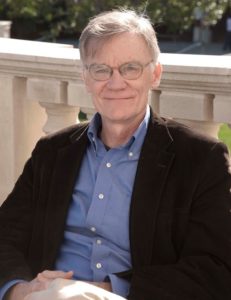
Image result for david BlightOther themes include Douglass’s autobiographies, his individual evolution, the relationship between his public and private lives, and Douglass’s intellect. Each theme promoted the orators constant and consistent assault upon the minds of the American public. Just as Douglass transformed as an individual, his tactics changed throughout his life. From his three autobiographies written to a specific audience, to his speeches and articles printed throughout the nation, Blight used extensive records to showcase the orator’s impact on a nation, thus lending credence to the notion of Douglass the Prophet. The nation went through a tumultuous time and Blight argues that the life of Frederick Douglass, more than any other American, tells the transformation of the United States.

Simply stated, Frederick Douglass: Prophet of Freedom is worth the read. Blight’s masterful prose, use of sources, connection to his subject, and his overall knowledge offers something for everyone. From the academic to the casual reader everyone will walk away knowing that the life of Frederick Douglass was a microcosm of an entire century. Unlike other biographies that focus on a subject in the confines of an event, Blight studied, and continues to study the life of Douglass, to emphasize an era. The lessons of the past have not fully been learned. This biography is a look at the prolonged struggle for freedom and equality that continue today.

Full Text Source: Emerging Civil War

Monday, August 09, 2010

News: $25,000 Frederick Douglass Book Prize Finalists Announced

Yale University's Gilder Lehrman Center for the Study of Slavery, Resistance, and Abolition, sponsored by the Gilder Lehrman Institute of American History, has announced the finalists for the Twelfth Annual Frederick Douglass Book Prize, one of the most coveted awards for the study of the African-American experience.

The finalists are: Judith A. Carney and Richard Nicholas Rosomoff for In the Shadow of Slavery: Africa's Botanical Legacy in the Atlantic World (University of California Press); Siddharth Kara for Sex Trafficking: Inside the Business of Modern Slavery (Columbia University Press); and Robert E. McGlone for John Brown's War Against Slavery (Cambridge University Press). The $25,000 annual award for the year's best non-fiction book on slavery,resistance, and/or abolition is the most generous history prize in its field. The winner will be announced following the Douglass Prize Review Committee meeting in, and the award will be presented at a dinner at the Yale Club of New York on February 24, 2011.

The Frederick Douglass Prize was established in 1999 to stimulate scholarship in the field by honoring outstanding accomplishments. Previous winners are Ira Berlin and Philip D. Morgan in 1999; David Eltis, 2000; David Blight, 2001; Robert Harms and John Stauffer, 2002; James F. Brooks and Seymour Drescher, 2003; Jean Fagan Yellin, 2004; Laurent Dubois, 2005; Rebecca J. Scott, 2006; Christopher Leslie Brown, 2007; Stephanie Smallwood, 2008; and Annette Gordon-Reed, 2009.

The award is named for Frederick Douglass (1818-1895), the one-time slave who escaped bondage to emerge as one of the great American abolitionists, reformers, writers, and orators of the nineteenth century. Eighty books were nominated this year.

In the Shadow of Slavery: Africa's Botanical Legacy in the Atlantic World, by Judith A. Carney and Richard Nicholas Rosomoff (University of California Press), tells the fascinating story of how enslaved Africans shaped and changed the landscape of the New World. With remarkable originality, the authors reveal how the men and women of the Middle Passage wielded their agricultural experience as part of the unending struggle to control their own lives. Interpreting archival evidence with both rigor and creativity, Carney and Rosomoff explore the provisioning of slave ships, the transfer and diffusion of African horticultural knowledge, the botanical gardens of slaves, and the gastronomic legacies of black slavery, among many other intriguing topics. Comprehensive and compelling, this is a work of truly global dimensions that narrates the ordeal of enslavement as a simultaneous story of food, memory, and survival.

Siddharth Kara's book Sex Trafficking: Inside the Business of Modern Slavery (Columbia University Press) carefully and compassionately convinces us to understand the phenomenon of modern-day human sex trafficking as part of the history of slavery and abolition. As an investigative reporter, Kara posed as a customer across Asia, Europe, and the United States, entangling himself with perpetrators and speaking confidentially with victims. Sidestepping sensationalism and absent any delusion of casting himself as a rescuer, Kara relates wrenching stories in lucid prose, thereby shedding a strong and steady beam of light on a widespread and ongoing global crime. With an exemplary mixture of courage and humility, the author combines a gripping first-person narrative with trenchant economic analysis and clear-eyed proposals for change. In the end, this book prevents us from consigning slavery to the past.

John Brown's War Against Slavery, by Robert E. McGlone (Cambridge University Press), tells a new version of the story of John Brown by taking on the most perplexing question of all: Why did John Brown carry out the raid at Harper's Ferry? With a fine balance of narration and interpretation, McGlone offers a meticulous re-creation of Brown's life, returning to old questions and asking new ones. No quest for seamless analysis, McGlone's story embraces complexity as he charts transformations in Brown's family alongside the shifting political world of the antebellum United States. This absorbing and learned book ultimately portrays a keen, compassionate, and conflicted abolitionist who made a purposeful decision to go forward with a plot that was sure to fail, but only in the most literal sense.

Text Source: Gilder Lehrman Center for the Study of Slavery, Resistance, and Abolition, Yale University

Image Source: First Edition of Douglass' autobiography; In The Shadow of Slavery ; Sex Trafficking; John Brown's War Against Slavery

Wednesday, July 29, 2009

News---Frederick Douglass Book Award of $25,000: The Nominees Are . . .


Finalists Announced for the 2009 Frederick Douglass Book Prize

Yale University's Gilder Lehrman Center for the Study of Slavery, Resistance, and Abolition, sponsored by the Gilder Lehrman Institute of American History, has announced the finalists for the Eleventh Annual Frederick Douglass Book Prize, one of the most coveted awards for the study of the African-American experience.

The finalists are: Thavolia Glymph for Out of the House of Bondage: The Transformation of the Plantation Household (Cambridge University Press); Annette Gordon-Reed for The Hemingses of Monticello: An American Family (W.W. Norton and Company); and Jacqueline Jones for Saving Savannah: The City and the Civil War (Alfred A. Knopf Publishers).

The $25,000 annual award for the year's best non-fiction book on slavery, resistance, and/or abolition is the most generous history prize in its field. The prize winner will be announced following the Douglass Prize Review Committee meeting in September, and the award will be presented at a dinner at the Yale Club of New York on February 25, 2010. This year's finalists were selected from a field of over fifty entries by a jury of scholars that included Robert Bonner (Dartmouth College), Rita Roberts (Scripps College), and Pier Larson (Johns Hopkins University).

Thavolia Glymph's Out of the House of Bondage draws attention in a wholly new way to the strife between Southern plantation mistresses and those enslaved black women they sought to master. The book's bold and wide-ranging research, its lucid emphasis on the "public" nature of slaveholding households, and its passionate argumentation results in a deep and disturbing account of white cruelty and black resentment. In addition to re-connecting plantation mistresses to the systematic violence of slavery, Glymph persuasively documents how the social, political, and economic upheavals of emancipation spurred new opportunities and fostered recurrent conflicts. This incisive study promises to inspire new research agendas among Southern historians for years to come.

In Annette Gordon Reed's The Hemingses of Monticello, an enslaved Virginia family is delivered -- but not disassociated -- from Thomas Jefferson's well-known sexual liaison with Sally Hemings. The book judiciously blends the best of recent slavery scholarship with shrewd commentary on the legal structure of Chesapeake society before and after the American Revolution. Its meticulous account of the mid-eighteenth century intertwining of the black Hemingses and white Wayles families sheds new light on Jefferson's subsequent conjoining with a young female slave who was already his kin by marriage. By exploring those dynamic commitments and evasions that shaped Monticello routines, the path-breaking book provides a testament to the complexity of human relationships within slave societies and to the haphazard possibilities for both intimacy and betrayal.

Jacqueline Jones' Saving Savannah memorably charts a bustling city's passage from slavery to freedom. Covering a twenty-year span, the book tracks the fortunes of an unforgettable cast of characters, setting fugitive slaves beside imperfectly paternalist masters and proud black fire fighters beside idealistic Northern-born missionaries. Interwoven with the book's tapestry of stories is a series of crisp assessments of Savannah's social, political, religious, and economic institutions, many of which were pioneered by a vibrant free black community in the antebellum period. The account provides both a gripping read and a new interpretation of how those whites "laid low"by Confederate defeat regained a semblance of control over this majority-black city.

The Institute maintains two websites, www.gilderlehrman.org and the quarterly online journal History Now.

Monday, October 06, 2008

Forthcoming---Author Describes Writing Giants: The Parallel Lives of Frederick Douglass and Abraham Lincoln

Giants: The Parallel Lives of Frederick Douglass and Abraham Lincoln, John Stauffer, Twelve Publishing, 448 pages,$30.00 (November 3, 2008)

Behind The Book: How Giants Came into Being by John Stauffer

"It’s often said that biographies reveal as much about their biographers as their subject. I plead guilty, for I was born in Lincoln (Nebraska) and fell in love with the Civil War era at age fourteen, which is when I began reading Lincoln and Douglass.

Moving was the central experience of my formative years, and literature and history offered alternative realities that could redeem the constant dislocations and confusions of my adolescence in the late 1970s. I hungered for characters I could identify with; and those from the Civil War era seemed larger than life, more heroic, able to give meaning and purpose to my present.

I was especially drawn to Douglass. I loved the way he wrote, I yearned to have something of his undaunted courage, and, strange as it may seem now, I wanted to be like him. After all, here was a slave—a total outsider—who stood up to the meanness around him at the risk of losing his life, and who found in books a way to “give tongue to his thoughts,” as he put it. A few years later, I realized that Lincoln too, had been an outsider, escaping the fighting and drinking of his backwoods communities through literature. They learned how to use words as weapons, and I desperately wanted a dependable weapon.

Years later, while in graduate school, I realized just how significant Douglass’s and Lincoln’s rise really was; they are the two preeminent self-made men in American history. (Other contenders like Ben Franklin began life with more comfort and status.) At the time, I was researching abolitionists, and had fallen in love with the wide array of wonderfully weird men and women, from blacks and whites to rich and poor, their wild utopian visions, and their extraordinary journeys through life. I wanted to know how they were able to remake themselves, what the costs of doing so were, and how self-transformation related to race and reform.

I addressed these themes in my first book, The Black Hearts of Men, and while writing it, discovered that Douglass and Lincoln ultimately became friends, despite the social and political gulfs separating them. I wanted to know how and why Douglass and Lincoln were able to come together as they did; and I decided to write about their self-making. Their friendship, I realized, depended in part on their having continually remade themselves.

In the past fifty years, scholars have largely disparaged the concept of self-making. They saw it as a term for Madison Avenue, not the Ivory Tower; it had the ring of an advertisement, not scholarship. Yet the concept of self-making, its rewards and costs, is central to the American experience, for it functions as a barometer of the ideals of freedom and equality of opportunity. I also felt that scholars had not adequately accounted for the significance of self-making in the personalities, politics, and decisions of Douglass and Lincoln. Too often, these men are written about as though they were born brilliant, a cut above other mortals. Too often, Lincoln has been characterized as America’s Christ, the redeemer president. The result is a static, romantic, mythic figure rather than a man born dirt poor living, striving, grappling in a distant past.

Giants began in 2005 as an essay on Douglass and Lincoln in the July 4th issue of Time Magazine. Initially, I planned to include the essay as part of a book on interracial friendship, but their story, I realized, was bigger than an essay or chapter. Giants was written at a propitious time. Not only is Lincoln’s bicentennial in 2009, which kept me on or near deadline; but Barack Obama’s The Audacity of Hope had become a bestseller and then of course Obama decided to run for president. Obama’s journey, like Douglass’s and Lincoln’s, has been nothing short of breathtaking. Perhaps it is not coincidental that he knows Douglass and Lincoln better than many scholars, has steeped himself in their writings, and has been inspired by them. While many journalists have noted the influence of Lincoln on Obama, none has shown how Douglass shaped his understanding of himself and his country.

Writing the book has thus given me a much better understanding of our own time. We carry the past within us and are unconsciously shaped by it, to paraphrase James Baldwin. In certain respects, the Civil War is not over; we are still fighting about the meanings of America on cultural and political fronts. Indeed, while steeped in the writings of Lincoln and Douglass, and sometimes dreaming of them, I found myself quoting Faulkner’s famous maxim, “The past is not dead. It’s not even past.” ―John Stauffer

CWL---John Stauffer's Meteor of War on John Brown and his Black Hearts Of Abolitionists on Brown's and other abolitionists' identification with slaves are both remarkable books in their freshness of perspective that rings true; the works set the militant and pacifist abolitionists within the climate of their times.

Stauffer's books as well as David Reynolds' John Brown, Abolitionist depict John Brown, as someone who has has rationally placed his being into the hands of a perfectly loving, perfectly just God who hates the type of slavery that fractures families and human dignity. Brown, who is often seen as a madman or an incompetent, is revealed as more fully human and humane than most social critics of the era. Yet, his violence had an unforntuate place in the 19th century world, similar to the caning of Charles Sumner of Massachusetts by Preston Brooks of South Carolina on the floor of the U.S. Senate and the sacking of Lawrence, Kansas by border ruffians.