Showing posts with label Slavery. Show all posts

Thursday, December 05, 2024


Sexual Violence and American Slavery:

The Making of a Rape Culture in the Antebellum South

 Shannon Eaves, University  of North Carolina Press,

242 pp., illustrations. index, bibliography, $27.95  April 2024,  paperback, 2024.

Eaves mimes a wealth of primary sources including autobiographies, diaries, court records and more to show that rape and other forms of sexual; exploitation entangled slaves and and slave owners in battles over power to protect oneself and one's community, power to avenge hurt and humiliation, and power t punish and eliminate future threats.

By placing sexual violence at the center of the systems of power and culture, the author shows how the South's rape culture was revealed in enslaved people's and their enslavers' interactions with one another and with members of their respective communities.

    Tuesday, April 23, 2019

    New And Noteworthy: They Were Her Property: White Women as Slave Owners in the American South


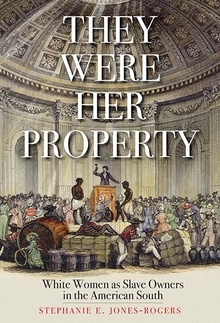
    They Were Her PropertyThey Were Her Property: White Women as Slave Owners in the American South, Stephanie E. Jones-Rogers, Yale University Press, 320 pages, bibliographic notes, bibliography, illustrations, index, 2019, $30, hardcover.

    From the Publisher: Bridging women’s history, the history of the South, and African American history, this book makes a bold argument about the role of white women in American slavery. Historian Stephanie E. Jones-Rogers draws on a variety of sources to show that slave-owning women were sophisticated economic actors who directly engaged in and benefited from the South’s slave market. Because women typically inherited more slaves than land, enslaved people were often their primary source of wealth. Not only did white women often refuse to cede ownership of their slaves to their husbands, they employed management techniques that were as effective and brutal as those used by slave-owning men. White women actively participated in the slave market, profited from it, and used it for economic and social empowerment. By examining the economically entangled lives of enslaved people and slave-owning women, Jones-Rogers presents a narrative that forces us to rethink the economics and social conventions of slaveholding America.
     
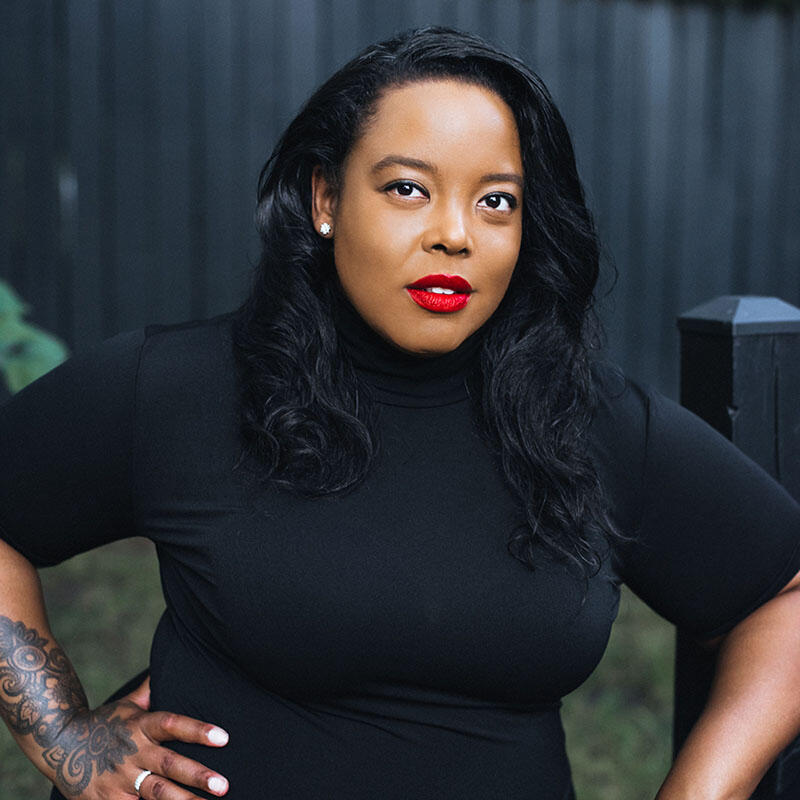
    Stephanie E. Jones-Rogers is assistant professor of history at the University of California, Berkeley. She is the winner of the 2013 Lerner-Scott Prize for best doctoral dissertation in U.S. women’s history. She lives in El Cerrito, CA.
     
    Christian Century Magazine review by Edward J. Blum (April 18, 2019):  
     
    Eva Jones was devastated. The Civil War had left some friends and family members maimed and others dead. Because of economic inflation and stagnation, she could no longer afford some everyday goods. Perhaps most upsetting was emancipation. Before the war, Jones was a member of a prominent southern family and a slave owner. She fumed in a letter to her mother-in-law that the loss of her human property constituted “unprecedented robbery” that would render her “a heap of ruins and ashes.” She lamented the life she would lead when no longer a mistress: a “joyless future of probable ignominy, poverty, and want.”

    Stephanie E. Jones-Rogers chronicles the financial realities and choices of slave-owning women like Jones, uncovering a world of women’s participation in the institution of slavery that is often undervalued by other scholars. With an array of evidence ranging from court records to newspaper advertisements, ruminations of slave traders to remembrances of former slaves, Jones-Rogers places slaveholding mistresses at the core of slavery’s economy. These women were perceptive players in the buying and selling of men and women. Rather than passive victims of patriarchy and the system of slavery, they were coconspirators in the economic exploitation of people.
    Jones-Rogers shows how young mistresses were cultivated to manage and discipline slaves through childhood education. Some of the training came from parents directly. Girls learned other lessons by watching, even by reading a children’s newspaper. The day when a girl first received legal rights to slaves was a noteworthy occasion, as important as a birthday or other holiday.

    Dissecting the way women worked within slavery’s financial world, Jones-Rogers finds no discernible differences between mistresses and masters in their treatment of slaves as property. Both women and men exploited enslaved people for their economic benefit. Curiously, however, Jones-Rogers largely omits discussion of the prevalence and economic consequences of sexual contact between masters and slaves—or between mistresses and slaves.

    Professor Stephanie Jones-RogersSlave auctions were considered detestable by many, and a story emerged in the South that women would avoid the tawdry affair of separating families and friends. Jones-Rogers rips apart this fabrication. She shows how mistresses were active participants in the market at every step of the system. They discussed trades within their homes, brought slaves to traders for sale, circulated around the auctions to gather information, and purchased and sold slaves.

    In perhaps her most interesting chapter, Jones-Rogers looks at the one arena of slave ownership where white women largely created and defined the market: wet nurses. There were many reasons a mistress might want a slave woman to provide nourishment for newborns. One was to free the mistress from the labor of nursing, especially if she was in poor health. Another was to offer sustenance to enslaved babies. Wet nurses became prized commodities, and they were often regarded as skilled laborers.

    Jones-Rogers also investigates how mistresses (like Eva Jones) experienced the collapse of slavery. Many white women did everything in their power to maintain their investments. In New Orleans, for instance, one owner hid a slave in a dungeon. When Union soldiers rescued the young woman, they found that the iron yoke around her neck had rusted and fused onto her skin. Other mistresses went on the run to avoid Union soldiers and thereby keep their slaves. Even when they acknowledged that emancipation had carried the day, many white women continued to press for their financial interests, petitioning the federal government for compensation for their alleged fiscal losses.

    Overall, the book makes two points clear. First, women acted in their own best interest financially and socially. They followed the prices and values of slaves; they sold and purchased men, women, and children; and they often kept their finances separate from those of their husbands. Second, women’s slave ownership caused considerable conflict between white people. Husbands frequently wanted to control the assets of their wives, and  parties often ended up in court over matters of slave control.

    They Were Her Property will generate significant conversation among historians of the American South and slavery. While it includes ample qualitative evidence (petitions, court cases, recollections, and other textual documents), economic historians may complain that it lacks the quantitative data that would demonstrate mistresses’ monetary im­pact and their power to generate broader social change. Jones-Rogers presents legal and political history, but she rarely includes macro-statistics to place slave-owning women within broad trends and developments.

    When she does use such data, her findings are fascinating. For instance, after Congress abolished slavery in the District of Columbia, the federal government offered slaveholders financial compensation. Of the 1,065 slave owners to submit petitions, more than 400 of them were women. One, Margaret C. Barber, owned 34 slaves and Congress paid her almost $10,000. When Congress then allowed African Ameri­cans to sue for their freedom in the district, 42 of the roughly 108 petitioners identified their owners as women. These numbers are probably not representative of the southern states overall, but they should pique the interest of historians. In the moment of emancipation, 40 percent of government involvements with slaveholders and slaves in the nation’s capital dealt with female slaveholders.

    In the 1930s, workers for the Federal Writers Project—a New Deal organization dedicated to combating unemployment during the Great Depression—inter­viewed former slaves about their experiences. Jones-Rogers relies significantly upon these interviews, although some historians wonder if they are more useful for understanding race relations in the early 20th century than slavery in the 19th. Since slavery had ended 65 years earlier, many of the interviewees had been children at the time of emancipation. There are also concerns that the interviews are shaped by the influence of white interviewers. Whether the interviews are suitable for the study of slavery, Jones-Rogers puts them to excellent work. She shows that the interviewees understood white women to be part of, rather than subject to, the economic realities of enslavement.

    Amid the vignettes of slave-owning women using their power and authority, Jones-Rogers frequently chastises other historians for failing to present southern white women as active players in slavery. The point is important, but it becomes tedious to read repeatedly. If readers simply skip those paragraphs, they will find a gripping story of female businesswomen using their property—in this case, human beings—to make money. These women were not pawns in the racialized nation we still inhabit; they were players.

    Full text link to Christian Century review:  Christian Century April 18, 2019
    Author's Photograph Source 
    Yale University Press Source   They Were Her Property

    Thomas Watson Brown Award: $50,000. And the winner is . . .

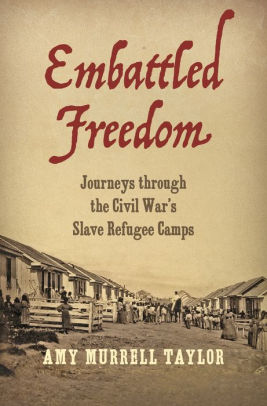
    Embattled Freedom: Journeys through the Civil War's Slave Refugee CampsThe Society of Civil War Historians and the Watson-Brown Foundation are proud to announce that Amy Murret Taylor is the recipient of the Tom Watson Brown Book Award. Dr. Taylor, Associate Professor at the University of Kentucky, earned the award for Embattled Freedom: Journeys Through the Civil War’s Slave Refugee Camps which was published in 2018 by the University of North Carolina Press. 

    The $50,000 award is funded by the Watson-Brown Foundation in honor of the broadcaster, philanthropist, and Civil War enthusiast Tom Watson Brown. In making its selection, the prize committee praised Taylor for her “original, nuanced view of slave refugee camps and the relationship of the US Army to the process of emancipation.” Offering a “detailed spatial analysis of the camps” along with compelling stories “about the fate of so-called contraband slaves”, Embattled Freedom, the prize committee explains, “is one of the very best books written in the field of Civil War studies in the last decade and perhaps longer than that.” 

    From The PublisherThe Civil War was just days old when the first enslaved men, women, and children began fleeing their plantations to seek refuge inside the lines of the Union army as it moved deep into the heart of the Confederacy. In the years that followed, hundreds of thousands more followed in a mass exodus from slavery that would destroy the system once and for all. Drawing on an extraordinary survey of slave refugee camps throughout the country, Embattled Freedom reveals as never before the everyday experiences of these refugees from slavery as they made their way through the vast landscape of army-supervised camps that emerged during the war. Amy Murrell Taylor vividly reconstructs the human world of wartime emancipation, taking readers inside military-issued tents and makeshift towns, through commissary warehouses and active combat, and into the realities of individuals and families struggling to survive physically as well as spiritually. Narrating their journeys in and out of the confines of the camps, Taylor shows in often gripping detail how the most basic necessities of life were elemental to a former slave's quest for freedom and full citizenship.

    The stories of individuals--storekeepers, a laundress, and a minister among them--anchor this ambitious and wide-ranging history and demonstrate with new clarity how contingent the slaves' pursuit of freedom was on the rhythms and culture of military life. Taylor brings new insight into the enormous risks taken by formerly enslaved people to find freedom in the midst of the nation’s most destructive war.                                      

    Table of Contents:
     
    Biographic Example:Edward and Emma Whitehurst in Slavery
                 Epilogue


    Tuesday, July 18, 2017

    New and Noteworthy---Jefferson Davis, Confederate Nationalism and the Possibility of Arming Slaves

    Jefferson Davis's Final Campaign: Confederate Nationalism and the Fight to Arm Slaves, Philip D. Dillard, Mercer University Press, 286 pages, eight photos, 8 maps, footnotes, bibliography, index, 2017, $35.


     Jefferson Davis's Final Campaign: Confederate Nationalism and the Fight to Arm Slaves focuses upon the Southern public's debate over the enlistment of free blacks and slaves into the military forces of the Confederacy. Virginia, Georgia and Texas newspapers are closely examined as well as Davis' statements and correspondence. Also the author relies on Davis' annual address of 1864 and his letters to to Confederate States officials.

    The chief conclusion the author reaches is that the closer the Federal armies came to Southern communities the more prevalent and vocal came the call from those communities to consider the enlistment of African Americans. The proposition to arm the slaves came from those most threatened by Federal armies.

     Jefferson Davis's Final Campaign begins with  a survey of current work done on the topic of the enlistment of slaves. Dillard's research takes into consideration the various social classes in the Confederacy.  His narrative suggests the consideration of the question: what would an independent Confederate nation look like if it contained former slaves  who were veterans or if it contained slaves who were once armed but not emancipated.

    Dillard discusses three phases which the debate of arming the slaves passed through: during the second half of 1863 (post Gettysburg and Vicksburg); the summer and autumn of 1864 with Sherman approaching Atlanta, Grant approaching Richmond and Thomas waiting at Nashville for Hood to arrive; Davis' annual address at the end of 1864 and the February 1865 Hampton Roads conference.

    The author derives most of the support for his  arguments from newspaper editorials and letters to the editor from soldiers and civilians. Contrary to popular understandings of Davis effectiveness, Dillard finds that Davis successfully marshaled support for his views, though the support he received may have been too little and too late.  Jefferson Davis's Final Campaign: Confederate Nationalism and the Fight to Arm Slaves is a thought provoking study of the Confederate nation at the brink of its extinction and what possible life-saving remedies were acceptable to its leaders and citizens.

    Wednesday, June 17, 2015

    Chained To The Land: Voices From Louisiana's Cotton and Cane Plantations

    Chained To The Land: Voices From  Cotton and Cane Plantations From Interviews of Former Slaves, Lynette Ater Tanner, editor, John F. Blair, Publisher, 2014, photographs, maps, 2014, $9.95.

    During the Great Depression, the Federal Writers' Project interviewed over 2,200 ex-slaves who lived in 17 states. Most of those interviewed were in the eighties, nineties and a few over 100 years old. Interviews in this book are of Louisiana slaves who worked in a legal environment of state laws of a French tradition. Many of these interviews are not found in the Library of Congress' collection; they are held in the Northwestern State University Archives in Natchitoches, Louisiana.  The Writers' Project in Louisiana was directed by Lyle Saxton. Most of the former slave narrations in this volume were kept in Natchitoches at Melrose Plantation, owned by Cammie henry, who donated the items to the state archives.  Within the book are a few Louisiana slave interviews that are housed by the Library of Congress.

    The slaves recollections of housing, food, clothing, weddings, funerals, and relations contain anger, joy, sadness, religious practices and wit. The slaves hailed from eight distinct regions including New Orleans. The collection offers not only memories of the work-a-day world of slavery but also reflections of the personal ties that were found in slave families and church congregations. Interviewees who were children during the Civil War reflect on the loss of fathers who fought with the Federal army, the significance of Abraham Lincoln, and the variety of masters that existed during the era of slavery.

    Chained To The Land: Voices From  Cotton and Cane Plantations From Interviews of Former Slaves is accessible to most readers and may be used in both classrooms or living rooms.


    Wednesday, October 15, 2014

    News--- Found On Ebay: Photograph of R. E. Lee's Slaves Found At Arlington House

    Slave Photo From Robert E. Lee's Home Discovered On Ebay, Fox News.coma and the Associated Press, October 12, 2014.

    National Park Service curator Kim Robinson holds the photo of Selina Gray, right, who was in charge to care for Arlington House where Gen. Robert E. Lee had lived in for 30 years, Thursday, Oct. 9, 2014, at Arlington National Cemetery in Arlington, Va. The National Park Service has acquired a rare Civil War-era photograph of an enslaved woman at Confederate Gen. Robert E. Lee's home in Virginia. The previously unknown photograph depicts Selina Gray, the head housekeeper to Lee and his family. The photograph was unveiled Thursday at Lee's Arlington House plantation overlooking the nation's capital.

    An “extremely rare” Civil War-era photograph of the enslaved woman who helped save Confederate Gen. Robert E. Lee's Virginia home has been obtained by the National Park Service after a volunteer spotted the image on eBay.  The previously unknown photograph depicts Selina Gray, the head housekeeper to Lee and his family, along with two girls thought to be her daughters. The photograph was unveiled Thursday at the Arlington House plantation overlooking the nation's capital that was home to Lee and dozens of slaves before the Civil War. An inscription on the back of the image reads "Gen Lees Slaves Arlington Va."

     Park officials said this is only the second known photograph taken of slaves at Arlington.  "It's extremely rare to have an identified photo of an enslaved person," said National Park Service spokeswoman Jenny Anzelmo-Sarles. "Since slaves were considered property, it's very rare to have a photo where you can identify the people in the photo."

    WJLA eported Thursday that National Park Service volunteer Dean DeRosa spotted the photograph for sale on eBay for just $20. DeRosa told WJLA he recognized Gray “immediately.”  “What I find so fascinating is how well dressed Selina and her daughters are in this photo,” he told the station.

    The nonprofit Save Arlington House Inc. donated $700 to acquire the image. The seller was based in England and found the photo in a box of unwanted images.  Gray is noted in history books for helping to save Arlington House after Lee's family left and the plantation was captured by Union troops during the Civil War.

    Arlington House was originally built as a monument to George Washington. Lee's wife, Mary Custis Lee, entrusted the home to Gray, and she later confronted a Union general about soldiers pilfering Washington family heirlooms from the house. She was able to have the items safeguarded.  The photograph was unveiled to the public Saturday, and it will be used in future exhibits after Arlington House and its slave quarters are restored.

    CWL:  Still in question is the date of the photograph and the lives of Selina Gray and her daughters. 

    Text Source:  Slave Photo Discovered From Lee's Home and Slave Photo Discovered From Robert E. Lee's Home Discovered on Ebay

    Image Source: AP Photo/Jose Luis Magana

    Tuesday, March 18, 2014

    News---The Historian Who Unearthed '12 years A Slave' : The Journey Lasted 78 Years

    The Historian Who Unearthed “Twelve Years a Slave”, Michael Schulman, New Yorker, March 7, 2014. 

    sue-eakin-290.jpg
    Accepting the Oscar for Best Picture on Sunday—technically, it might have been Monday at that point—Steve McQueen took a moment to thank “this amazing historian Sue Eakin,” who “gave her life’s work to preserving Solomon’s book.” It was an unusual shout-out: we’re used to seeing Harvey Weinstein or God get thanked, not historians from Louisiana. But it’s safe to say that without Eakin, who died in 2009, at the age of ninety, none of us would be talking about Solomon Northup, or Patsey, or the other once-forgotten souls portrayed in this year’s Best Picture.

    Eakin, who taught at Louisiana State University at Alexandria for twenty-five years, spent her career rescuing Northup’s memoir from obscurity. “There were five of us, and Solomon was the sixth,” Eakin’s son Frank said the other day, from his home in Texas. “There was never a time when he was not part of the conversation.” Eakin grew up near Cheneyville, Louisiana, the eldest of nine children, and discovered Northup when she was twelve.

    One summer day in 1931, her father, a planter, drove her in a flatbed truck to the nearby town of Bunkie, not far from the property once owned by Edwin Epps (the Michael Fassbender character). They were visiting Oak Hall Plantation, where her father had business with the owner, Sam Haas. Haas brought young Sue to the library on the second floor (“My mom was a big-time bookworm,” Frank says), where he handed her a dusty copy of “Twelve Years a Slave,” first published in 1853.

    “I began reading the old book as rapidly as I could, becoming more and more excited with every page,” Eakin wrote later. “I recognized local place names like Cheneyville, where our mail was delivered.” The family names were familiar, too: the Tanners, the Fords, the McCoys. Eakin was rapt, but her father picked her up before she could finish reading. Back then, the book was in scant supply. Eakin didn’t find another copy until 1936, when she arrived at Louisiana State University and spotted the book at Otto Claitor’s Bookstore. She asked Mr. Claitor how much it cost. “What do you want that for?” he said. “There ain’t nothin’ to that old book. Pure fiction.” He sold it to her for twenty-five cents.

    Eakin devoted the rest of her life to proving him wrong. As a white woman growing up in Jim Crow-era Louisiana, she had been forward-thinking about race. In 1944, she invited a black choir to sing at the Haas Auditorium, in Bunkie, causing community uproar. A burning cross landed on her front yard. After church one Sunday, she discovered some kids trying to set her house on fire. “I never let it worry me,” she later recalled. But her weapon of choice was history, and Solomon became her obsession. (Her many other books include histories of Cheneyville and Rapides Parish.) She wrote her master’s thesis on “Twelve Years a Slave,” and, in 1968, published the first modern edition. But her research continued. She contacted descendants of Northup and Epps, and helped preserve a side house on Epps’s former property. (In the movie, Chiwetel Ejiofor and Brad Pitt are shown building it.)

    With state funding, she developed the Northup Trail, a tour of key locations from the book. “I said, ‘Mom, I know how much this means to you.’ But I didn’t want her expectations to be unmet,” Frank said. “All you had was a bunch of rusty signs. Not many people showed up.” Nevertheless, Eakin believed that someday Northup’s story would get its due. Frank recalled going to courthouses and descendants’ houses as a child. “If she had any news of anybody that could contribute, we were off to the races in the car with the fifty-pound tape recorder and an old camera,” he said. In 1983, she even wrote a musical based on Northup’s life.

    Eakin spent her last years working on an expanded edition of “Twelve Years a Slave,” including the decades of research she had accumulated since 1968. But her health began to decline, and her eyesight was poor. Frank’s sister helped her edit the new version, and, in 2007, at the age of eighty-eight, Eakin published the enhanced edition, with maps, pictures, and historical notes. She wrote in the acknowledgments, “Now Solomon and I can rest.” Two years later, she died.

    Every couple years, Eakin would get a phone call from someone interested in turning “Twelve Years a Slave” into a movie. Nothing came of it. (Besides, the story was in the public domain.) The year she died, there was another call—Frank spoke to someone and shrugged it off. It wasn’t until 2011, two years after his mother’s death, that Frank heard that Brad Pitt’s production company, Plan B, was making the film. He offered to help however he could. Steve McQueen flew Frank to the Hollywood première, where they discussed his mother’s contribution: “Steve said, ‘There wouldn’t be a movie if it wasn’t for your mom’s discovery when she was twelve.’ ”

    Frank spent Oscar night at a viewing party in Texas. “When Brad Pitt introduced Steve, everything was complete silence,” he said. Hearing his mother’s name, he was dumbstruck. “I couldn’t believe my ears. I looked around and said, ‘Did did he say that?’ ” As the publisher of his mother’s edition and the audiobook, Frank has been busy in the wake of the film’s success. But mostly he’s happy to see his mother posthumously validated: “She never sought personal publicity. Her passion was history, getting the history out.” Even the Northup Trail is getting refurbished—no more rusty signs. “Yesterday, I was on the phone with the tourism commission,” Frank said. “They see this as a large tourism opportunity.”

    Full Text and Image Source:  New Yorker, March 4, 2014

    Wednesday, March 05, 2014

    Historian Sue Eakin Thanked By 12 Years A Slave Director

    Sue Eakin Thanked Onstage At Oscars For Work Verifying Story Of ‘12 Years A Slave’, Kyle Peveto, The Advocate, Baton Rouge, Louisiana, March 5, 2014.

    A Louisiana historian who dedicated decades to researching the 1853 book “Twelve Years a Slave” received international attention Sunday when the film based on the book won the Academy Award for best picture.

    During his acceptance speech, the film’s director thanked Sue Eakin, a Rapides Parish native and historian whose research for the 1968 LSU Press edition of the book helped prove the veracity of the story of Solomon Northup, a free man who was kidnapped and sold into slavery. “I’d like to thank this amazing historian, Sue Eakin, whose life, she gave her life’s work to preserving Solomon’s book,” director Steve McQueen said while accepting the Oscar.

    “Twelve Years a Slave” tells the firsthand account of Northup, who was kidnapped, enslaved at plantations in central Louisiana and freed to return to his family. Eakin was 12 when she read an original edition of the book in the early 1930s. She found her own copy at a Baton Rouge bookstore when she entered LSU in 1936, according to an essay she wrote later in life, and dedicated her graduate studies in history at LSU and at the University of Southwestern Louisiana (now University of Louisiana at Lafayette) to researching the book. She died at 90 in 2009.

    “I think it’s vital that everyone understands it’s a true story and there’s a lady from Louisiana who spent her lifetime dedicated to authenticating it,” said her son, Frank Eakin, of The Woodlands, Texas, who broke into tears when McQueen mentioned his mother from the stage.
    “The very last thing I expected was that recognition,” he said. When the book was published in the 1850s, it became a popular best-seller, said Raphael Cassimere Jr., a retired professor at the University of New Orleans. “Timing was bad, because even though it sold 30,000 copies, which was a lot for a book, it came out a year after ‘Uncle Tom’s Cabin’ and it kind of was forgotten for some time, except by local people,” Cassimere The Advocate in October.

    Some locals regarded Northup’s book as fiction when Sue Eakin first read the memoir.
    Sue Eakin, who commuted to Baton Rouge from her home in Bunkie to complete her master’s degree in the 1950s and 1960s, researched the people and places mentioned in Northup’s memoir of enslavement at plantation in the Bayou Boeuf area. In the 1960s, she began working with Joseph Logsdon, a professor at LSU-New Orleans, now the University of New Orleans, to create a scholarly edition of the book.

    Sue Eakin investigated all the Louisiana people and places mentioned in the work, while Logsdon focused on researching Northup’s home in Saratoga, N.Y., and other places of interest in the north. Their 1968 annotated edition reintroduced Northup’s story to college students across the country, who read it in history classes. “If that hadn’t happened, then none of the other things could have happened,” said MaryKatherine Callaway, director of LSU Press. “It took their work first to begin this whole journey toward this film.”

    Filmed at south Louisiana plantations and in New Orleans, “12 Years a Slave” earned $50 million worldwide and won three awards Sunday. Lupita Nyong’o won best supporting actress for her role as Patsey. Screenwriter John Ridley, who said in media interviews he leaned heavily upon the LSU Press edition of the book, won best adapted screenplay.

    Logsdon and Eakin continued researching Northup’s story after their 1968 edition rescued the book from obscurity. When Logsdon died at 61 in 1999, he was planning a trip to New York to investigate Northup’s mysterious disappearance, Cassimere said in October. Descendants of the slave owners and other characters in the book approached her with archives of family history while she taught history at LSU at Alexandria, Frank Eakin said. Sue Eakin published her final annotated version of “Twelve Years a Slave” in 2007 when she was 88.

    Text Source:  The Advocate, March 5, 2012
    Image Source: Barnes and Noble.com

    Monday, October 21, 2013

    New and Noteworthy--- Did John Brown Get What He Wanted? An Emancipation Army With Armed African Americans?

    To Raise Up a Nation: John Brown, Frederick Douglass, and the Making of a Free Country, William S. King, Westholme Publishing,  664 pages, 40 b/w illustrations and maps, $35.00.

    From The Publisher:  Drawing on decades of research, and demonstrating remarkable command of a great range of primary sources, William S. King has written an important history of African Americans’ own contributions and points of crossracial cooperation to end slavery in America. Beginning with the civil war along the border of Kansas and Missouri, the author traces the remarkable life of John Brown and the personal support for his ideas from elite New England businessmen, intellectuals such as Emerson and Thoreau, and African Americans, including his confidant, Frederick Douglass, and Harriet Tubman.
    Throughout, King links events that contributed to the growing antipathy in the North toward slavery and the South’s concerns for its future, including Nat Turner’s insurrection, the Amistad affair, the Fugitive Slave law, the Kansas-Nebraska Act, and the Dred Scott decision. The author also effectively describes the debate within the African American community as to whether the U.S. Constitution was colorblind or if emigration was the right course for the future of blacks in America.
    Following Brown’s execution after the failed raid on Harper’s Ferry in 1859, King shows how Brown’s vision that only a clash of arms would eradicate slavery was set into motion after the election of Abraham Lincoln.

    Once the Civil War erupted on the heels of Brown’s raid, the author relates how black leaders, white legislators, and military officers vigorously discussed the use of black manpower for the Union effort as well as plans for the liberation of the “veritable Africa” within the southern United States. Following the Emancipation Proclamation of January 1863, recruitment of black soldiers increased and by war’s end they made up nearly ten percent of the Union army, and contributed to many important victories.

    To Raise Up a Nation: John Brown, Frederick Douglass, and the Making of a Free Country is a sweeping history that explains how the destruction of American slavery was not directed primarily from the counsels of local and national government and military men, but rather through the grassroots efforts of extraordinary men and women. As King notes, the Lincoln administration ultimately armed black Americans, as John Brown had attempted to do, and their role was a vital part in the defeat of slavery.

    Blurb: “In his fast-paced and deeply researched To Raise Up a Nation, William S. King narrates the coming of the Civil War, the war itself, and the emancipation process, through the intertwined lives of John Brown and Frederick Douglass. King’s stimulating, well-written account draws upon telling anecdotes and pen portraits to document America’s dramatic story from Harper’s Ferry to Appomattox, a drama personified by the lives of Brown and Douglass."  John David Smith, Charles H. Stone Distinguished Professor of American History, University of North Carolina at Charlotte, and author of Lincoln and the U.S. Colored Troops.

    CWL:  As the historiography grows and as schools of historical thought reveal the stereotypes used to misrepresent John Brown, King possibly completes the circle to what people in 1859 understood Brown to be and what Brown himself claimed to be: a captain without a company of soldiers, in an army that was yet to be raised, fighting for country that was still being formed. CWL is  looking forward to several days with To Raise Up a Nation: John Brown, Frederick Douglass, and the Making of a Free Country.

    Wednesday, October 02, 2013

    News---Plantation Quest: Re-enactor Sleeps In The Beds of The Slaves


    One Man's Epic Quest To Visit Every Former Slave Dwelling in the United States: Joseph McGill, A Descendant of Slaves, Has Devoted His Life To Ensuring The Preservation Of These Historic Sites, Tony Horwitz, Smithsonian Magazine, October, 2013.

    At a bygone plantation in coastal Georgia, Joseph McGill Jr. creaks open a door to inspect his quarters for the night. He enters a cramped cell with an ancient fireplace and bare walls mortared with oyster shell. There is no furniture, electricity or plumbing.“I was expecting a dirt floor, so this is nice,” McGill says, lying down to sample the hard pine planks. “Might get a decent sleep tonight.”

    Some travelers dream of five-star hotels, others of visiting seven continents. McGill’s mission: to sleep in every former slave dwelling still standing in the United States. Tonight’s stay, in a cabin on Georgia’s Ossabaw Island, will be his 41st such lodging. McGill is 52, with a desk job and family, and isn’t fond of sleeping rough. A descendant of slaves, he also recognizes that re-inhabiting places of bondage “seems strange and upsetting to some people.” But he embraces the discomfort, both physical and psychological, because he wants to save slave dwellings and the history they hold before it’s too late.  “Americans tend to focus on the ‘big house,’ the mansion and gardens, and neglect the buildings out back,” he says. “If we lose slave dwellings, it’s that much easier to forget the slaves themselves.”

    A century ago, the whitewashed cabins of former slaves remained as ubiquitous a feature of the Southern landscape as Baptist churches or Confederate monuments. Many of these dwellings were still inhabited by the families of the four million African-Americans who had gained freedom in the Civil War. But as blacks migrated en masse from the South in the 20th century, former slave quarters—most of which were cheaply built from wood—quickly decayed or were torn down. Others were repurposed as toolsheds, garages or guest cottages. Of those that remain, many are now endangered by neglect, and by suburban and resort development in areas like the Georgia and Carolina Low Country, a lush region that once had the densest concentration of plantations and enslaved people in the South.

    McGill has witnessed this transformation firsthand as a native South Carolinian who works for the National Trust for Historic Preservation in Charleston. But it wasn’t his day job that led him to sleep in endangered slave cabins. Rather, it was his weekends as a Civil War re-enactor, wearing the uniform of the 54th Massachusetts, the black unit featured in the movie Glory. Donning a period uniform and camping out, often at antebellum sites, “made the history come alive for me,” he says. Re-enacting the 54th has also drawn public attention to the pivotal role of black soldiers in the Civil War. So in 2010, when Magnolia Plantation near Charleston sought to publicize restoration of its neglected slave cabins, McGill proposed sleeping in one of them.

    “I was a little spooked,” he says of his overnight stay. “I kept getting up hearing noises. It was just the wind blowing limbs against the cabin.” His simple bedroll, laid on the hard floor, also didn’t make for a comfortable night. But the sleepover succeeded in drawing media attention to the slave cabins, which have since been opened to the public. So McGill began compiling a list of other such structures and seeking out their owners, to ask if he could sleep in them.

    Source and Full Text Continued at Smithsonian Magazine, October 2013


    Tuesday, July 16, 2013

    Forthcoming Film And Book--- 12 Years A Slave: An Autobiography; This Is Not Another Django

    The forthcoming film 12 Years A Slave is based upon the incredible but true autobiography of Solomon Northrup of freedom, enslavement and escape. 12 Years a Slave was published in 1853 and reveals that a free black man was kidnapped in Washington D. C. in 1841 and worked on Louisiana plantations for 12 years before his release.   In antebellum America, Northrup lived in upstate New York, was kidnapped and then sold into slavery. Northrup was purchased by a cruel master but experienced unexpected kindness from a variety of sources. Northrup's constant struggle is stay alive as a slave and retaining his dignity as a human being. A chance meeting with a Canadian abolitionist changes Northrup's odds of leaving slavery and returning to his home and family.

    Actors you may recognize include Brad Pitt, Paul Giamatti, and Benedict Cumberbatch. The trailer is located on MovieWeb. The full cast list, screenwriters and other credits are located at the Internet Movie Database.  The screenplay is written by John Ridley who wrote the screenplay for Redtails and Three Kings

    The book is available at Amazon.com is hardcover, paperback, audiobook,and Kindle editions.

    Also, in August 2013 Praeger Publishing will offer an annotated, 238 page edition of the autobiography.  The following text is provided by the publisher.

    Solomon Northup: The Complete Story of the Author of Twelve Years A Slave provides a compelling chronological narrative of Northup's entire life, from his birth in an isolated settlement in upstate New York to the activities he pursued after his release from slavery. This comprehensive biography of Solomon Northup picks up where earlier annotated editions of his narrative left off, presenting fascinating, previously unknown information about the author of the autobiographical Twelve Years A Slave.

    This book examines Northup's life as a slave and reveals details of his life after he regained his freedom, relating how he traveled around the Northeast giving public lectures, worked with an Underground Railroad agent in Vermont to help fugitive slaves reach freedom in Canada, and was connected with several theatrical productions based upon his experiences. The tale of Northup's life demonstrates how the victims of the American system of slavery were not just the slaves themselves, but any free person of color—all of whom were potential kidnap victims, and whose lives were affected by that constant threat.

    Wednesday, June 19, 2013

    Forthcoming---America's Longest Siege: Charleston, South Carolina's Slavery, Siege and Surrender

    America's Longest Siege: Charleston, Slavery And The Slow March To The Civil War, Joseph Kelly,  Overlook Press, 384 pp., $28.95.   June 27, 2013.

    From The Publisher: In 1863, Union forces surrounded the city of Charleston. Their vice-like grip on the harbor would hold the city hostage for nearly two years, becoming the longest siege in the history of modern warfare. But for almost two centuries prior, a singular ideology forged among the headstrong citizens of Charleston had laid a different sort of siege to the entire American South--the promulgation of brutal, deplorable, and immensely profitable institution of slavery.

    In America's Longest Siege, Joseph Kelly examines the nation's long struggle with its "peculiar institution" through the hotly contested debates in the city at the center of the slave trade. From the earliest slave rebellions to the Nullification crisis to the final, tragic act of secession that doomed both the city and the South as a whole, Kelly captures the toxic mix of nationalism, paternalism, and unprecedented wealth that made Charleston the focus of the nationwide debate over slavery. Kelly also explores the dissenters who tried--and ultimately failed--to stop the oncoming Civil War.
    Exhaustingly researched and also compulsively readable, America's Longest Siege offers an insightful new take on the war and the culture that made it inevitable.

    From the Invitation To Book's Launch Party at the Old Slave Mart, Charleston, SC on June 26: America's Longest Siege: Charleston, Slavery, and the Slow March toward Civil War, begins and ends with the Union's siege of Charleston, the longest in modern warfare until Hitler's attack on Leningrad. But it also tells the story of the evolving ideology of slavery from the colony's founding through the Civil War, focusing on key moments of change: the Stono and Vesey rebellions, the American Revolution, the Constitutional Convention, and the Nullification Crisis. Taking seriously the founding fathers' expectation that slavery would die a gradual and natural death in the new republic, the book reveals how the hard and determined work of a relatively few South Carolinians sustained slavery against the odds, through chicanery, torture, the politics of intimidation and fear. 

    This talk will narrate one chapter in the moral history of the nation: how John Rutledge and the Pinckneys, contrary to the conscience and wishes of most delegates, connived to protect slavery in U. S. Constitution. Joe Kelly has been a professor of literature at the College of Charleston since 1992. His interests range from modern Irish literature and nationalism to the history of American Southern ideology. His archival research has been supported by NEH and Mellon fellowships. His first book, Our Joyce: From Outcast to Icon, uncovers the manipulations of this monumental figure of modern literature by liberals and conservatives in the American culture wars. His popular introductions to literature, W. W. Norton & Company's Seagull Readers series, are entering their 3rd editions. America's Longest Siege: Charleston, Slavery, and the Slow March toward Civil War, is his first foray into narrative history. He earned his Ph. D. in literature with a minor in history from the University of Texas at Austin.

    CWL: Steven Channing's 1974 Crisis of Fear: The Secession Crisis In South Carolina was a hallmark study while I was in graduate school; Channing's work has been in print continously for nearly 40 years and has stood the test of time and scholarship.  Stephen Wise's 1994 Gate of Hell: The Siege of Charleston, 1863 offers a fine, detailed account of the seige and the struggles of the troops and their commanders on both sides.

    Wednesday, August 01, 2012

    New and Noteworthy---Richmond Virginia Before the War


    The Richmond Slave Trade: The Economic Backbone of the Old Dominion, Jack Trammell, History Press, 128 pp., 26 b/w illustration, 4 charts, 2 maps, references, 2012, $19.99. 
     Edgar Allan Poe's Richmond: The Raven In The River City, Christopher P. Semtner, History Press, 127 pp, 51 b/w photographs, bibliography, index, 2012, $19.99.  


    From the publisher of The Richmond Slave Trade: The Economic Backbone of the Old Dominion: Richmond's 15th Street was known as Wall Street in antebellum times, and like its New York counterpart, it was a center of commerce. But the business done here was unspeakable and the scene heart wrenching. With over sixty-nine slave dealers and auction houses, the Wall Street area saw tens of millions of dollars and countless human lives change hands, fueling the southern economy. 
    Local historian and author Jack Trammell traces the history of the city's slave trade, from the origins of African slavery in Virginia to its destruction at the end of the Civil War. Stories of seedy slave speculators and corrupt traders are placed alongside detailed accounts of the economic, political and cultural impact of a system representing the most immense, concentrated human suffering in our nation s history.


    From the publisher of Edgar Allan Poe's Richmond: The Raven In The River City:  Acclaimed as one of America's most innovative authors and the inventor of the detective story, Edgar Allan Poe and his works are celebrated around the world. Yet the true story of Poe's time in Richmond, Virginia, is every bit as strange and exciting as his fiction. Poe spent nearly a third of his life in Richmond. It was here that he matched wits with a chess-playing robot, set the record for swimming against the current in the James River, challenged a rival editor to a duel and first revealed his talent for practical jokes. 


    Join Christopher P. Semtner, curator of the Edgar Allan Poe Museum, as he reveals previously unpublished photographs and little-known source material to shed new light on how the mystery, madness and tragedy that Poe encountered during his Richmond years forever shaped his renowned fiction.


    Wednesday, September 21, 2011

    News--- From Wills and Court Records A Database Of Virginia Slave Names Emerges

    Database Of Virginia Slave Names Made Public, Linda Wheeler, Washington Post, September 15, 2011.

    Names of people enslaved in Virginia, pulled from some of the Virginia Historical Society ’s 8 million documents, have been compiled into Unknown No Longer, a searchable database now available to the public.

    The online tool includes more than 1,500 names found in letters, wills, court records and other sources. Each name is connected to a digital copy of the original document in which it was found. Society spokeswoman Jennifer Guild said the work of extracting the information began more than a year ago. “It is possible these names have never been seen before,” she said. “This is the first time we have published them.”

    The database can be searched by keywords such as name, occupation and plantation. “For instance, if all you knew was your great-great-great-grandmother was named Ann and she had been a slave in Virginia, that is enough to begin a search with this database,” Guild said. “Or, if all you have is a plantation name, you go to that name and you will find what we have on the slaves who lived there.”

    It is a continuing work: the society will add new information to the database as it continues to go through the 8 million documents in its collection. This is the society’s first database that specifically compiles names of enslaved people from Virginia and is taken from their own materials. In the past, all that was available to anyone searching the society’s holdings online was a list of the titles of books or other published material that contained slave-related information; anyone wanting to know more about what those papers contained would have to go to the society to do the research.

    Text Caption: Ambrotype from Virginia Historical Society's collection shows an unidentified woman. The organization has launched Unknown No Longer, a database of slave names. (Courtesy Virginia Historical Society)

    Text and Image Source: Washington Post September 15, 2011

    Wednesday, June 22, 2011

    News---Frederick Douglas and Confederate Veterans Share Maryland Courthouse Lawn

    Douglass Statue Welcomed Home, Downtown Easton Fills With Proud Celebrants Of Douglass' Returns, Becca Newell, The Star Democrat, Easton, Maryland, June 19 2011.

    Before the unveiling of the Frederick Douglass statue Saturday morning, keynote speaker David Blight, director of the Gilder Lehrman Center for the Study of Slavery, Resistance and Abolition at Yale University, spoke briefly about Douglass' life and the significance of the statue, which now proudly stands on the Talbot County Courthouse lawn. "Douglass was one of the greatest ironists," he said. "And the irony that his monument will now stand forever ... next to Talbot County's Confederate monument is something Douglass would not want us to forget."

    Throughout his life, Douglass considered himself an orphan, Blight said, spending much of his time searching for a mother, a father and, most importantly, a home. "Home is one of the most powerful themes in Douglass' autobiography," he said, noting that if Douglass were present at Saturday's unveiling ceremony, he would undoubtedly speak about "home."

    In some ways, Talbot County - St. Michaels, Easton and along the Tuckahoe creek - was always his home, Blight said. "That's a complicated sense of home," he said. "But it's really the closest thing Douglass ever had to roots."

    Thirty years ago, Blight visited Talbot County in an effort to retrace Douglass' steps, he said, describing his visit around the Eastern Shore, from the Wye House to Edward Covey's farm. While at the farm, Blight saw the exact scene Douglass previously had described in a passage about his time enslaved by Covey. "Our house stood within a few rods of the Chesapeake Bay, whose broad bosom was ever white with the sails from every quarter of the habitable globe," he said, citing examples of Douglass' eloquent use of words. "Those beautiful vessels robed in purest white, so delightful to the eye of freemen were to me so many shrouded ghosts, to terrify and torment me with thoughts of my wretched condition."

    Douglass will forever be remember as much more than a fugitive slave, who escaped to freedom, Blight said. He's now celebrated as a thinker, an orator, and perhaps most importantly, for the language he used in his writings and speeches. "Frederick Douglass is a writer of the ages; he is a writer of the universality of human rights," he said.

    However difficult it may be for the country to re-visit the topic of slavery, it is important that individuals do so, Blight said. "You've done so much here today ... to make sure (slavery) is no longer just under the surface, it is now on the courthouse lawn," he said. "We need to choose to remember, to hear, Douglass' voice."

    And, like Monticello in Virginia has its Jefferson statue and Springfield, Ill., has its Lincoln statue, the courthouse lawn in Easton now has its own Frederick Douglass statue, Blight said, as the crowd of about 1,000 people applauded. Another of the invited speaker's, Maryland Gov. Martin O'Malley, also spoke before the unveiling of the nearly eight-foot-tall bronze sculpture which sits atop of a 33-inch granite pedestal. "We've finally come to the crescendo," O'Malley said, with a smile, pointing to the statue that was covered with a red, blue and white sheet.

    Douglass was born in Talbot County, just four years after the birth of The Star-Spangled Banner, O'Malley said, before admitting that Douglass is one of his favorite Republicans. As the crowd counted backwards from 10 to one, O'Malley stood next to the statue, ready to remove the its patriotic cover at the end of the countdown. Also with O'Malley were Eric Lowery, president of the Frederick Douglass Honor Society, Juliette Neil, winner of the Frederick Douglass Honor Society-Chesapeake Bay Maritime Museum essay contest, and Brandon Coleman, a soon-to-be fifth-grader who researched Douglass for a school project, on which he earned 100-percent.

    "Frederick Douglass was one of the great Americans of all time and the placement of this statue today, I think, is a real testament, not only to his life and the contributions to the America that we carry in our hearts, but I think it's a great reflection of the people of the Eastern Shore," O'Malley said, in a brief interview with The Star Democrat, following the ceremony. "(They) understand by the placement of this statue

    Text and Top Image Source: Easton Star Democrat, June 19 2011

    Bottom Image Source: Talbot County website

    Tuesday, February 01, 2011

    Forthcoming---American Social History: Slavery Moves From Being A Political Problem To A Moral Issue

    America Aflame: How The Civil War Created A Nation, David Goldfield, Bloomsbury Press, 640 pages, color and b/w illustrations, notes, index, $35.00, March 15, 2011.

    Publishers Weekly: "This sweeping, provocative history of America from the 1830s through Reconstruction has two grand themes. One is the importance of evangelical Protestantism, particularly in the North and within the Republican Party, in changing slavery from a political problem to an intractable moral issue that could only be settled by bloodshed. The second is the Civil War's transformation of America into a modern industrial nation with a powerful government and a commercial, scientific outlook, even as the postwar South stagnated in racism and backward-looking religiosity. UNC-Charlotte historian Goldfield (Still Fighting the Civil War) courts controversy by shifting more responsibility for the conflict to an activist North and away from intransigent slaveholders, whom he likens to Indians, Mexicans, and other targets viewed by white evangelical Northerners as "polluting" the spreading western frontier. Still, he presents a superb, stylishly written historical synthesis that insightfully foregrounds ideology, faith, and public mood The book is, the author writes, "neither pro-southern nor pro-northern," but rather "antiwar." Goldfield's narrative of the war proper is especially good, evoking the horror of the fighting and its impact on soldiers and civilians. The result is an ambitious, engrossing interpretation with new things to say about a much-studied conflagration."

    Gilbert Taylor, Booklist: A specialist in southern history, Goldfield assesses Civil War causes and consequences chronologically from 1834 to the termination of Reconstruction. Why begin in 1834? That year a Boston mob destroyed a Catholic convent; for Goldfield, that event is symbolic of a toxic factor in the period’s politics, evangelical Protestantism. Arguing that it promoted eschatological mentalities on both sides of the Mason-Dixon line, Goldfield, as his narrative navigates the 1850s, personifies evangelicals’ influence in Uncle Tom’s Cabin author Harriet Beecher Stowe and in southern preachers who sermonized on God’s sanction for southern rights, slavery included. The overtly religious aren’t the sole culprits in Goldfield’s interpretation. He critiques the increasing inflexibility of such politicians as former Whigs Abraham Lincoln and Alexander Stephens. Frederick Douglass and Walt Whitman stroll through Goldfield’s pages as eyewitnesses while he considers that the South’s fear for slavery’s future and for its exclusion from industrialization and westward expansion underlay variously argued causes of the war. But it is his emphasis on the religious angle that readers may find distinctive among Civil War overviews."

    CWL is looking forward grabbing a copy ASAP; too bad the book is released a week after spring break but will have to be added to the May [post-finals week] reading list.

    Tuesday, January 11, 2011

    News---200th Anniversary: Before the 1815 Battle of New Orleans, 1811 Slave Revolt

    The Largest Slave Revolt in U.S. History Is Commemorated, Littice Bacon-Blood, The Times-Picayune, January 04, 2011,

    More than a century before the first modern-day civil rights march, there was Charles Deslondes and his make-do army of more than 200 enslaved men battling with hoes, axes and cane knives for that most basic human right: freedom. The 200 year anniversary of the 1811 Slave Revolt in St. John and St. Charles Parishes that reverberated around the country because of the large number of enslaved people involved, the organized nature of it, and oddly enough -some say it finally demonstrated that all was not well among those held in bondage. Destrehan Plantation, along with Tulane University and African American Museum in Treme are hosting a yearlong look at the uprising that stared Jan. 8, 1811 through a series of events and exhibits. The commemoration starts with the exhibit opening at Destrehan on Jan. 8, 2011.

    They spoke different languages, came from various parts of the United States, Africa and Haiti, and lived miles apart on plantations along the German Coast of Louisiana. Yet after years of planning at clandestine meetings under the constant threat of immediate death, they staged a revolt on Jan. 8, 1811, that historians say is the largest uprising of enslaved people in this country.

    "Slavery was very harsh and cruel, but the slaves themselves were not mindless chattel with no aspirations and no basis for humanity,'' said John Hankins, executive director of the New Orleans African American Museum. "This revolt demonstrates that there were people willing to make the ultimate sacrifices to better not just themselves but other people."

    To mark the 200 year anniversary of that revolt, Destrehan Plantation, in conjunction with Tulane University and the African American Museum, located in Treme, is organizing a yearlong look at the uprising that reverberated around the fledgling nation because of the large number of enslaved people involved, its military strategy and oddly enough, because it demonstrated that all was not well among those held in bondage.

    "I don't think the United States as a whole understood that the enslaved black population were as unhappy as they were,'' said Hazel Taylor, the special project coordinator at Destrehan Plantation. "Slave owners had a tendency to say that (slaves) were happy. What this did was put awareness on the people who were being oppressed."

    It occurred just a year before Louisiana gained statehood and 50 years before Louisiana and 10 other southern states voted to secede from the union in favor of forming the Confederacy. One of the central issues driving the secession, historians say, was an attempt to keep slavery legal because of its huge economic benefits for farmers. Still the battle remains largely unheard of outside historical circles, according to Taylor and others who hope the year's events will change that.

    "These were real people and we have many of their names and we hope to encourage people to continue to study these brave individuals," Hankins said. "We want to provide the platform for a discourse about these moments in history and in this case a very important movement. What we want to do is put the Slave Revolt of 1811 into the national discourse to give it just due."

    "It's an introduction to the subject, a museum exhibit that you can walk through and get a whole picture of what happened,'' Taylor said. While historians may differ on whether there was one specific catalyst for the uprising, the historical accounts of the events that unfolded on Jan. 8 are generally uniform. It started in LaPlace on the Woodland Plantation, led by Charles Deslondes, the son of an enslaved black woman and her white owner.

    Deslondes, along with more than 200 others known mainly by first names, were headed to New Orleans in the hopes of joining with other revolution-minded free and enslaved black people. Historian Daniel Rasmussen spent two years researching the revolt as part of his senior thesis at Harvard University and has expanded his initial work into a recently published book, called "American Uprising: The Untold Story of America's Largest Slave Revolt." According to Rasmussen, the revolt had been planned for years and was "highly organized."

    "There were 11 separate leaders of the revolt, representing various different ethnic groups. In my book, I profile a few of these leaders, mainly Charles Deslondes, Kook, and Quamana. Kook and Quamana were Asante warriors brought over from Africa a mere five years before," Rasmussen said. "Charles Deslondes was the half-white son of a planter who had risen to the rank of driver, but was, actually, the ultimate sleeper cell, plotting revolt. These leaders took advantage of clandestine meetings in the cane fields and taverns of the German Coast, the slave dances in New Orleans, and the vast network of slave communications that extended throughout the Caribbean."

    Full Text is continued at Times-Picayune

    Wednesday, July 28, 2010

    News---Preservationist Sleeps in Slave Cabins to Save Them

    Sleep-Ins Staged To Save Slave Cabins: Historian Wants To Highlight Need To Preserve Structures, Bruce Smith, Associated Press, July 23, 2010

    When Joe McGill spreads his sleeping bag on the floor of a slave cabin, he knows that spending the night there will conjure the specter of slavery. "If I were a firm believer in ghosts and spirits and things of that nature, I don't think I could do this," said McGill, a preservationist who is working to preserve buildings that are part of a past that many prefer to forget.

    One night he heard dogs in the distance - a sound that recalled the search for runaways during slavery. He awoke on Mother's Day morning in a cabin thinking of children being sold from their mothers. Then he walked to the black graveyard on a plantation near Charleston. "I thought, this is why I'm doing this - for those people in those graves to give them a voice for what they endured," said McGill, 48.

    McGill, a program officer with the National Trust for Historic Preservation, will spend Saturday night in a cabin at Hobcaw Barony near the coastal community of Georgetown. It will be the fifth night this year that he has slept on a cabin floor, trying to attract attention to the need to preserve the structures and the history they hold.

    McGill, who is black, is also a reenactor with the 54th Massachusetts, the black Union regiment that fought at Battery Wagner on Charleston Harbor during the Civil War. He said spending the night in the cabins helps him connect with his ancestors. He first slept in a cabin at Boone Hall Plantation near Charleston a decade ago as part of a program for The History Channel entitled "The Unfinished Civil War" which focused on the dispute over the Confederate flag flying over the South Carolina Statehouse. He returned to the cabin project this year, meeting reporters wherever he goes to draw attention to the buildings. He said preserving the cabins requires local efforts and his goal is to encourage people to save the ones that are left. The cabins where McGill has stayed - such as those at Magnolia Plantation and Gardens near Charleston - have already been restored. But many others have been neglected.

    McGill started in May with a list from the state Historic Preservation Office showing cabins at about 30 sites. He feels his effort is already helping because since he started the sleep-ins, three more cabins have been identified. McGill plans to sleep later this summer in a cabin in Anderson, in upstate South Carolina, and this fall in cabins in Alabama. "There once were thousands of slave cabins in South Carolina, mainly near the coast in the state's largest plantations. Many have not survived because they were modestly constructed of wood or because people didn't want a connection with a dark chapter of history," he said.

    "When it comes to slave cabins, you are talking about a part of history that some folks would rather forget," said McGill. "I come from a chain of thought that to know is better," he said, adding that just as a plantation house tells a story, so, too, does a modest cabin. Andy Chandler, who helps administer the National Register of Historic Places for the Historic Preservation Office, said there are no firm figures on how many cabins are still standing in the state.

    There are about 1,300 register listings in South Carolina and some may include sites with cabins. But, he said, since some sites have been on the register for decades, some of the cabins may not be there any more. And people who recommend sites for inclusion on the registry don't always see slave cabins as worth mentioning. "In the preservation field we have always considered them significant," he said. "But the historic preservation community is a limited part of our larger community."

    Text Source: KSBW
    Top Image: A South Carolina Slave Cabin
    Middle Image: South Carolina Slave Cabins
    Bottom Image: South Carolina Slave Cabin

    Tuesday, April 27, 2010

    CWL on "The Blade Was At My Own Breast": A Runaway Slave Mother Kills Her Child

    'The Blade Was At My Own Breast': Slave Infanticide in 1850s Fiction, Sarah N. Roth, American Nineteenth Century History, 8:2, June 2007, 169-185.

    Anti-slavery authors searched for events to fictionalize so as to heighten the agitation of a northern readers. In January 1856 such an event occurred. In a year that included John Brown's Pottawatomie Massacre and Preston Brooks, one of South Carolina's representatives, attempted homicide of Massachusetts Senator Charles Sumner, other attempted murders and a homicide occurred. On January 27, Margaret Garner attacked her four children and killed one of them, a two year old. Garner and her children had runaway from Kentucky but were surrounded by slave catchers in Ohio. It was a front page story in the North but never appeared in print in the South.

    Garner's infanticide caused a dilemma for Northern authors. Would white, middle class readers have sympathy for a murdering mother? Having committed an 'unnatural act' such as killing her own child, would Margaret Garner's story turn audiences away from slave mothers? If slave mothers were savages then why should they be set free on Northern soil?

    Later that summer, Harriet Beecher Stowe author of Uncle Tom's Cabin published Dred. It contained an instance when a slave mother killed her two children. Other authors did attempt to portray such an instance in their own fiction. Race, femininity, motherhood, enslavement and violence directed toward children became entwined in these novels.

    Garner herself was of West African descent, lived her entire life as a slave, and had murdered one of her own children. Northern readers were far removed from her.
    Authors added attributes to their fictional Garner in order to develop sympathy in the readers. In two novels, Garner became nearly white with only a tincture of black blood. In other stories Garner's character spoke of salvation of death for the female child who would later be sexually assaulted by a white slaveholder. In the Victorian ante-bellum world a mother who murdered a child violated the sacred charge given to all mothers to protect their children.

    Authors stressed that the Garner character was fulfilling rather than rejecting this sacred charge. With only one option of putting a child out of harm's, mothers slew their children. Infanticide was not an act of beast-like violence but one of desperate sacrifice. Women characters in antebellum fiction could engage in violence in only one way---suicide. Suicide was self-determination. In suicide, women remained victims.

    A large number of antebellum fictional characters who were female slaves, committed suicide. In Uncle Tom's Cabin, Lucy drowned herself when she learned her child had been sold away from her. In another story, a female slave drank poison rather than submit to her new owner, a rapist. In Another story, a female slave threatened suicide after her rescuer from slavery attempted rape. When mothers killed children to prevent the child's destruction at the hands of a rapist, they were also committing suicide by suppressing their innate maternal instincts to preserve the child.

    Women in antebellum sentimental novels resorted to violence to protect their chastity, their faith and the safety of their child. Violence became logical when the choice was made in the face of abuse and harm by a slaveholder. Yet during the course of the plot, slaveholders who attacked women and young adults were not assaulted by women. The slaveholders were undone by other circumstances in the story.

    Traditional abolitionist images of women as victims were there in antebellum stories. Yet they became more assertive and defiant in the face of violent authority.

    Text by CWL.

    Top Image Source: Newspaper Clipping

    Second Image Source: Painting