Wednesday, August 18, 2010

News---Discovery of Georgia Camp Site Reveals Prisoners' Lives

Major Archaeological Find At Site Of Civil War Prison, Phil Gast, CNN, August 17, 2010.
The discovery of the exact location of a stockade and dozens of personal artifacts belonging to its Union prisoners is one of the biggest archaeological Civil War finds in decades, federal and Georgia officials said Monday. Outside of scholars and Civil War buffs, few people have heard of the Confederacy's Camp Lawton, which replaced the infamous and overcrowded Andersonville prison in fall 1864.

For nearly 150 years, its exact location was not known, the U.S. Fish and Wildlife Service, the Georgia Department of Natural Resources and Georgia Southern University said. Georgia Southern students earlier this year began their search at a state park and federal fish hatchery for evidence of the wall timbers and interior buildings. "Archaeologists call it one of the most significant Civil War discoveries in decades," a joint statement read.

Officials would provide no details until the formal announcement Wednesday morning at Magnolia Springs State Park, five miles north of Millen in southeast Georgia. An open house for the public will follow from 1 p.m. to 5 p.m. Life at Lawton, described as "foul and fetid," wasn't much better than at Andersonville, with the exception of plentiful water from Magnolia Springs. In its six weeks' existence, between 725 and 1,330 men died at the prison camp. The 42-acre stockade held about 10,000 men before it was hastily closed when Union forces approached.

Monday's announcement follows weeks of speculation that began after a locked chain-linked fence went up around the hatchery adjoining the state park. Townspeople in nearby Millen made the secrecy part of their water cooler discussions. "It's created a lot of buzz, what's going on out there," said Connie Lee, owner of Cindy's Cafe, a popular meeting place in the town of about 3,500.

Rumors have included the discovery of a chest with important papers, gold, a burial trench and, yes, even Union Gen. William Sherman's horse. There are no photos of Lawton and few visual stockade details, although a Union mapmaker painted some important watercolors of the prison. He also kept a 5,000-page journal that detailed the misery at Camp Lawton, which was built to hold up to 40,000prisoners.

"The weather has been rainy and cold at nights," Pvt. Robert Knox Sneden, who was previously imprisoned at Andersonville, wrote in his diary on Nov. 1, 1864. "Many prisoners have died from exposure, as not more than half of us have any shelter but a blanket propped upon sticks. . . . Our rations have grown smaller in bulk too, and we have the same hunger as of old."

The impending arrival of Federal forces during Sherman's March to the Sea soon forced the Confederates to move the prisoners elsewhere, including Florence, South Carolina, and Savannah, Georgia. In early December 1864, Union cavalry found the empty prison, a freshly dug area and a board reading "650 buried here." Outraged, troops apparently burned much of the stockade and the camp buildings, and a depot and a hotel in Millen, which was a transportation hub.

Many of the state park facilities -- including a pool, houses and the main office -- sit atop the prison site. Some earthworks, long known to visitors and historians, survived. The artifacts will deepen the knowledge of the tough daily life of prisoners and guards alike, said a historian who has completed a manuscript on the camp. "[Lawton] illustrates almost every Civil War POW issue," said John K. Derden, professor emeritus at East Georgia College which has campuses in nearby Statesboro and Swainsboro.

Derden cited health conditions, death rates, prisoner exchanges and the South's dwindling ability to manage a population where disease and poor sanitation were in abundance. Until now, Andersonville was the sole POW camp in the South to capture the public's attention and imagination. Besides the camp's own horrors, Clara Barton made Andersonville famous through her extensive campaign to have POW graves found and soldiers reinterred at a national cemetery. The prison's commandant, Henry H. Wirz, was hanged in 1865, the only man to be hanged for war crimes during the Civil War. Monuments dot Andersonville National Historic Site, which drew 136,000 visitors last year. A 1996 movie tells its story. None of that happened at Camp Lawton, where time and its remote location put it on the road to obscurity, fortunately for archaeologists.

That promises to change beginning Wednesday, when the public will get its first glimpse of what life might have been like for prisoners, many of whom had been moved to Lawton from Andersonville. Lee and Walter Bragg, owner of Millen Auto Parts, hope anything associated with the discovery will boost the depressed area, where a 10.7 percent unemployment rate exceeds the state average. "Our county [Jenkins] needs something to revitalize Millen," Lee said.

The U.S. Fish and Wildlife Service, the Georgia Department of Natural Resources and Georgia Southern University on Wednesday plan to announce some major Civil War archaeological discoveries.

For nearly 150 years, the exact location of the stockade at Camp Lawton, which was a Confederate prison camp that was abandoned in 1864, had been unknown, according to the U.S. Fish and Wildlife Service. Archaeologists from Georgia Southern University have located the stockade site and found several personal artifacts that were left behind by Civil War soldiers. Archaeologists say it is one of the most significant Civil War discoveries in decades. A news conference of the Camp Lawton findings is scheduled for 10 a.m. Wednesday at Magnolia Springs State Park in Millen, Ga.

Text Sources: CNN and WALB

Images' Source: Camp Lawton Site

Monday, August 16, 2010

News---Is North Carolina's Civil War 40,275 Body Count Accurate? 2,000 NC Federals Found? No Black Rebels Died?

Historian Reviews NC's Civil War Death Count, Associated Press, August 09, 2010.

North Carolina's claim that it lost the most men during the Civil War is getting a recount from a state historian who doubts the accuracy of the accepted, 144-year-old estimate.

"The time has come to get it right," said Josh Howard, a research historian with the Office of Archives and History in Raleigh. "Nobody has gone through man by man looking for the deaths." Howard is reviewing the military records of every Tar Heel who served in the 1861-65 conflict, as the state prepares to mark its sesquicentennial, The News & Record of Greensboro reported Monday.

Since shortly after the war ended, North Carolina has boasted that it sacrificed more men to the Confederate cause than any other state, at 40,275. That's more than twice the death toll of South Carolina, where the war's first shots were fired. It suffered the second-highest toll at 17,682. "This has sort of been the North Carolina badge of honor," says Keith Hardison, director of the Division of State Historic Sites and Properties. It was "held out as gospel, and it may be gospel. If it is, we need to have the figures to back it up. If it is not, we need to correct it."

Since 1866, the number of Civil War deaths has been attributed to a federal study by Gen. James B. Fry, the U.S. provost marshal general. Fry and his clerks examined Union and captured Confederate muster rolls and regimental reports to determine the toll from fighting, disease, accidents and those who died in prison. But Fry's figures were "incorrect and misguided," Howard said, because clerks relied on incomplete records, sometimes counted the same case twice, and identified units as being from North Carolina when they were from another state. Additionally, some records were lost and some casualty reports may have been exaggerated. "Officers did that to keep the enemy in the dark," Howard said. "Or it showed you were in the thick of the fight."

If North Carolina's numbers are wrong, then the numbers for other states are wrong as well because they all come from the same faulty sources, he said. Howard is basing his review on a 17-volume roster of Tar Heels who served on either side of the conflict - a project that was launched in the 1960s to commemorate the war's 100-year anniversary and continues with the state history office. For units not yet collected in the series, Howard will rely on military service records in the National Archives. He expects to examine the records of more than 140,000 men. By Friday, Howard had confirmed 29,418 North Carolina war dead.

While many died in battle for the Confederacy, most died of disease. Others died from drowning, lightning strikes, suicide, bar fights, train wrecks, riots, execution for desertion, accidental shootings, collapsing buildings, insect and snake bites, falls, or being run over by wagons.

The research also found that about 2,000 North Carolinians, black and white, died during service in the Union army. No cases of blacks who died while serving in North Carolina's Confederate ranks have been found, although some have argued that blacks did fight for the South. Howard is getting help from members of the Garner chapter of the Sons of Confederate Veterans, which had separately started its own study. "We are going to compare our lists. We are coming at it from two different angles," said Charles Purser, a retired Air Force master sergeant who led the veterans' group's research.

The study is unlikely to change the fact that a third of the state's men of military age died during the Civil War. "I don't think it matters if it is 30,000 or 40,000," said Tom Belton, curator of military history and the North Carolina Museum of History in Raleigh. "It's a significant number of North Carolinians who gave their lives for a cause they thought was worth dying for."

Text Source: News-Observer.com
Top Image Source: North Carolina Monuments, Gettysburg
Second Image Source: North Carolina Department of Geology

News--- Brady's Collection from National Archives Now At Flickr

Mathew Brady (1823-1896) was one of the most prolific photographers of the nineteenth century, creating a visual documentation of the Civil War period (1860-1865). During the Civil War, Brady and his associates traveled throughout the eastern part of the country, capturing the effects of the War through photographs of people, towns, and battlefields. Additionally, Brady kept studios in Washington, DC and New York City, where many influential politicians and war heroes sat for portraits.

The U.S. National Archives has digitized over 6,000 images from the series Mathew Brady Photographs of Civil War-Era Personalities and Scenes (National Archives's Local Identifier 111-B) and included them in our online catalog. We plan to upload all of the ones available in the online catalog to Flickr gradually over a few months.

To better aid researchers, we have created topical sets on Flickr that organize the photos in a meaningful way. These sets are constantly added to as more photos are available on Flickr. Sixty-two sets contain photos of common and uncommon Civil War locations, individuals, structures such as: entrenchments, defenses, forts, breastworks, earthworks, gabions, abatis, cities, battlefields, casualities of war and many others.

Text and Image Source: Link to Image Source and Brady Collection

News---The Lessons of Civil War Reenacting: Biases, Epiphanies, and Education

Remove Second-Guessing From American History, David Christy, News Editor, Enid (Oklahoma)News and Eagle, August 13, 2010.

I doubt it’s a recent phenomenon and it probably goes back to biblical times, but second-guessing and Monday-morning quarterbacking by people in every walk of life is as much an American pastime as watching fireworks on the Fourth of July or rooting for your favorite college football team. It’s as all-American as apple pie and drinking cold beer on a hot day after mowing the grass.

But for historians, second-guessing history is something of a pitfall — it should be avoided at all costs lest said historians’ bias and beliefs slip in and cloud the final picture. You see, it’s my contention we all should look at history and historical events from all sides, with as little bias as possible and with the most open mind we can muster.

Most who are familiar with me know I spent nearly 25 years as a Civil War living history re-enactor.

Re-enacting history, in my own view, is a way for an individual to go back in time on the odd weekend and attempt to live in the shoes and act the part of an individual from a bygone era. In this case I was able, within certain limitations and obvious boundaries, to try and re-create history in my own mind, and at the same time provide the public with a snapshot of how an individual soldier during the American Civil War would have lived, would have reacted, would have thought and would have interacted with others.

Re-enacting Civil War battles is not for everyone. It’s grueling, time-consuming, dirty, sometimes dangerous and most times a very mentally challenging hobby. Not only that, it’s a little on the expensive side to authentically outfit yourself both as a Confederate and Union soldier, constantly do research, travel around the country and find time to take a three- or four-day weekend to lose yourself in mid-19th century America with tens of thousands of other like-thinking re-enactors.

But ... it was an absolute epiphany.

So, when I see an author or historian who writes a book and questions how a particular Civil War general made his battlefield decisions, or a politician or president reacted to a situation, I always hope the author of the second-guessing has been there and done that, so to speak.

My first Civil War re-enactment occurred in the late-1980s at the Indian Territory Battle of Honey Springs, in all-encompassing 110-degree July heat, ticks, chiggers and powdered dust near a little creek and wooded area called Rentiesville, north of Checotah in McIntosh County. After two days of marching and fighting and putting on a show for thousands of appreciative spectators, I had lost 10 pounds and was hooked on re-enacting for life.

The next 24 years were full of building impressions of both a Confederate and a Union infantry soldier, studying and working to be as historically accurate as is possible for a 20th century individual, who didn’t have to live in those trying and history-altering times.

The first and most lasting thing I learned from travels to hundreds of places like Wilson’s Creek, Mo., Chickamauga, Ga., Franklin, Tenn., Vicksburg, Miss., and Mansfield, La., — my hat is off to the men and women who lived through those times, and helped us to get to where we are in history today.

Don’t believe me? Try wearing a heavy-wool uniform, long johns, lugging an 11 lb. musket and about 25 pounds of leather gear, water and food in heavy-leather, high-top Jefferson brogans about 15-20 miles during an average re-enactment, eat homemade hardtack and biscuits and wake up shivering in a thin canvas tent while sleeping on the hard ground when its 15 degrees.

It will open your eyes. More than a few historians over the years have questioned why the Confederates didn’t follow up their rout of the Union troops at the Battle of First Bull Run, capture Washington and end the war in 1861. Or, why Union generals George McClellan and George Meade didn’t pursue their battlefield successes at Antietam and Gettysburg and end the Civil War in 1862 and 1863, respectively.

If you’ve ever re-enacted a battle, you know why. Physical exhaustion, mental fatigue and sheer hunger and thirst are overwhelming. Any soldier in any real war will attest to that. And re-enactors aren’t being shot at in anger with real bullets and real artillery shells. There’s no dead or dying comrades. After the battle they aren’t forced to march mile after mile in freezing temperatures, over rivers of mud or in 100-degree heat, day after day after day.

History is made by the sacrifice of flesh and blood and intestinal fortitude. It is not made by historians — it’s only chronicled as best we can. It does dishonor to those who lived, fought and died to do otherwise. Keeping bias out of history is the ultimate goal. It allows us to see events and decisions and outcomes from different perspectives. It allows us to learn by mistakes made and keep the past from being tainted by our own individual mores — historically speaking.

Text Source: Enid News and Eagle
Image Source: Civil War Librarian, Bentonville, NC 2010.

Thursday, August 12, 2010

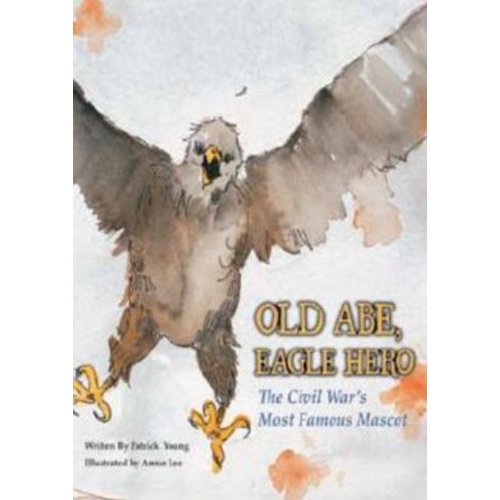
New and Noteworthy: Children's Book on 8th Wisconsin and Mascot

Old Abe, Eagle Hero, Patrick Young, illustrated by Anne Lee, Kane Miller Publisher, Ages 5-9, 48 Pages, jacketed hardcover,$15.99.

A bald eagle that inspired the nation during the darkest days of the American Civil War is the subject of a dramatic picture book for young children. Old Abe, Eagle Hero: The Civil War’s Most Famous Mascot is the little-known story of an eagle that served as a Union mascot and was a veteran of twenty-five major battles. This “biography” of Old Abe gives kids a new point of view from which to experience the Civil War, a defining event in American history.

Captured as an eaglet and named in honor of President Abraham Lincoln, Old Abe braved bullets, shells, and cannon balls, his courage never flagging. He could shake hands with his soldier friends, drink from a canteen, and sound the alarm when a stranger was approaching. Newspapers dubbed him “The Eagle Hero,” and for people on the home front he took on an almost-mythic status as a symbol of the Union.

Readers ages 5-9 will be fascinated by the amazing bond between man and bird in this unearthed piece of Americana revised and updated for a new audience. Evocative, ink and watercolor illustrations and simple, straightforward text make Old Abe the perfect, accessible introduction to the Civil War. An endnote gives facts about Bald Eagles.

Author Patrick Young is the great-grandson of Capt. Victor Wolf, commander of Company C of the 8th Wisconsin Volunteer Infantry, “the Eagle Company,” during much of the American Civil War, and he grew up hearing stories about Old Abe from his grandmother and mother. He is a science and medical writer whose articles have appeared in Smithsonian, Good Housekeeping, Parade, and Popular Science. His seven books include five for children and young adults. Illustrator Anne Lee grew up in Colorado, and now lives in Pittsburgh , Pennsylvania, where she has been lucky enough to see Bald Eagles on the shores of the Allegheny River .

Text [with edits] and Image Souce: Kane Miller Publishing

New and Noteworthy Novel: My Name Is Mary Sutter and I am Civil War Nurse and Aspiring Doctor

My Name Is Mary Sutter: A Novel, Robin Oliveira, Viking Publishing, 384 pages, $26.95,

Well versed in the scholarship of Civil War era medicine and urban life, My Name Is Mary Sutter offers a well defined historical setting with characters that have struggles common to men and women in any era. Oliveira's novel is enjoyable for readers are looking for a medical setting, a romance, and a war story with civilians playing a major role.

There is no gratuitous battlefield violence but stark pictures of midwifery and battlefield surgery. At times the characters carry themselves forward but at other times the author gives them a shove into action. The hearts and hands of male doctors and female nurses are often in conflict in this 19th century setting. For this reader, the tour of Washington D.C. hospitals and a tragic fire were compelling episodes. My Name is Mary Sutter has both unique and stock characters described at times with a fine dramatic pace and at times with tedious slowness. Overall, My Name Is Mary Sutter repays the reader for the time invested. After all, Graham Greene [notable British author] described his own work as primarily 'entertainments.' My Name Is Mary Sutter achieves that.

Monday, August 09, 2010

News: $25,000 Frederick Douglass Book Prize Finalists Announced

Yale University's Gilder Lehrman Center for the Study of Slavery, Resistance, and Abolition, sponsored by the Gilder Lehrman Institute of American History, has announced the finalists for the Twelfth Annual Frederick Douglass Book Prize, one of the most coveted awards for the study of the African-American experience.

The finalists are: Judith A. Carney and Richard Nicholas Rosomoff for In the Shadow of Slavery: Africa's Botanical Legacy in the Atlantic World (University of California Press); Siddharth Kara for Sex Trafficking: Inside the Business of Modern Slavery (Columbia University Press); and Robert E. McGlone for John Brown's War Against Slavery (Cambridge University Press). The $25,000 annual award for the year's best non-fiction book on slavery,resistance, and/or abolition is the most generous history prize in its field. The winner will be announced following the Douglass Prize Review Committee meeting in, and the award will be presented at a dinner at the Yale Club of New York on February 24, 2011.

The Frederick Douglass Prize was established in 1999 to stimulate scholarship in the field by honoring outstanding accomplishments. Previous winners are Ira Berlin and Philip D. Morgan in 1999; David Eltis, 2000; David Blight, 2001; Robert Harms and John Stauffer, 2002; James F. Brooks and Seymour Drescher, 2003; Jean Fagan Yellin, 2004; Laurent Dubois, 2005; Rebecca J. Scott, 2006; Christopher Leslie Brown, 2007; Stephanie Smallwood, 2008; and Annette Gordon-Reed, 2009.

The award is named for Frederick Douglass (1818-1895), the one-time slave who escaped bondage to emerge as one of the great American abolitionists, reformers, writers, and orators of the nineteenth century. Eighty books were nominated this year.

In the Shadow of Slavery: Africa's Botanical Legacy in the Atlantic World, by Judith A. Carney and Richard Nicholas Rosomoff (University of California Press), tells the fascinating story of how enslaved Africans shaped and changed the landscape of the New World. With remarkable originality, the authors reveal how the men and women of the Middle Passage wielded their agricultural experience as part of the unending struggle to control their own lives. Interpreting archival evidence with both rigor and creativity, Carney and Rosomoff explore the provisioning of slave ships, the transfer and diffusion of African horticultural knowledge, the botanical gardens of slaves, and the gastronomic legacies of black slavery, among many other intriguing topics. Comprehensive and compelling, this is a work of truly global dimensions that narrates the ordeal of enslavement as a simultaneous story of food, memory, and survival.

Siddharth Kara's book Sex Trafficking: Inside the Business of Modern Slavery (Columbia University Press) carefully and compassionately convinces us to understand the phenomenon of modern-day human sex trafficking as part of the history of slavery and abolition. As an investigative reporter, Kara posed as a customer across Asia, Europe, and the United States, entangling himself with perpetrators and speaking confidentially with victims. Sidestepping sensationalism and absent any delusion of casting himself as a rescuer, Kara relates wrenching stories in lucid prose, thereby shedding a strong and steady beam of light on a widespread and ongoing global crime. With an exemplary mixture of courage and humility, the author combines a gripping first-person narrative with trenchant economic analysis and clear-eyed proposals for change. In the end, this book prevents us from consigning slavery to the past.

John Brown's War Against Slavery, by Robert E. McGlone (Cambridge University Press), tells a new version of the story of John Brown by taking on the most perplexing question of all: Why did John Brown carry out the raid at Harper's Ferry? With a fine balance of narration and interpretation, McGlone offers a meticulous re-creation of Brown's life, returning to old questions and asking new ones. No quest for seamless analysis, McGlone's story embraces complexity as he charts transformations in Brown's family alongside the shifting political world of the antebellum United States. This absorbing and learned book ultimately portrays a keen, compassionate, and conflicted abolitionist who made a purposeful decision to go forward with a plot that was sure to fail, but only in the most literal sense.

Text Source: Gilder Lehrman Center for the Study of Slavery, Resistance, and Abolition, Yale University

Image Source: First Edition of Douglass' autobiography; In The Shadow of Slavery ; Sex Trafficking; John Brown's War Against Slavery

Friday, August 06, 2010

News: Civil War Chaplains' Museum To Host Fredericksburg Film

The film The Angel of Marye's Heights, (2010, 29 minutes)will be shown Saturday September 18 at 7:30 in room 113 of the De Moss Learning Center on the campus of Liberty University, Lynchburg, Virgina. This half-hour dramatic Civil War documentary covering the life and legacy of Confederate Sgt. Richard Kirkland who climbed the stonewall at one of the bloodiest battle of the war to give water to his wounded enemies. The image of this young South Carolina soldier holding a canteen to the lips of a fallen foe has been memorialized in many mediums but never in film. In essence, the memory of Richard Kirkland as a 'Southern Samaritan' is even larger than the selfless act he performed. This moment of mercy has become a major symbol of light amidst the darkness of war. This film examines both Kirkland's act and the commemoration of it. Tickets are $5 and $3 with the proceeds going to the Civil War Chaplains Museum. This new endeavor can be found online at http://chaplainmuseum.org/

CWL: The film was funded by the Fredericksburg, Virginia based Foundation of Civil War Life. It can be found online.

Text Source: Internet Movie Database

Thursday, August 05, 2010

Wide Awake In 1860 America: In Search of Young Men For Voting and Fighting

"Young Men for War: The Wide Awakes and Lincoln's 1860 Presidential Campaign," Jon Grinspan, Journal of American History, 96:2, 2009.

The initial Wide Awake club was founded in March 1860 in Hartford, Connecticut but with two months, from Bangor Maine to San Fransico California major cities and rural counties boated local chapters. Even upper South cities, such as Baltimore, Wheeling, and St. Louis held chatpters. The youth and militancy of the members differentiated it from other political organizations during the 1860 presidential campaign.

Social events, fraternal memberships, the publication of comic books and the wearing of goatees, attracted younger voters. A generation deeply shaken by the spectacle of partisan electioneering and instability seemed to be looking for a political identity that took their youth into account. An emphasis upon military-type organization and uniforms with social behaviour short of violence offered social strengths and voices to those who had yet to vote due to age or had voted in one or two presidential elections.

Parades and rallies in Pittsburgh, New York, Philadelphia, Chicago, Cleveland, Boston and other cities and counties of Wide Awake members, clad in black raincoats and black hats, carrying torchs and marching in military ranks and files startled Northern politicans and enhanced fears lurking in Southern hearts. Total membership numbers cannot be obtained but marchers thoughout the North may have totaledd 70,000. An estimate of 100,000 individuals seems reasonable which would translate into one percent of the 2009 U.S. population. Grinspan, the author, does not provide a figure for the percentage of Northern voters in the 1860 election that 100,000 would represent.

In a fine review of the past 150 years of literature, Grinspan reviews and disputes attempts by social and political historians to characterize the Wide Awakes as being coerced by an abundance of alcohol, the temptation to group violence, and a sheep-like disposition to follow the loudest political voice. Conversely, Grinspan states that the Wide Awake movement demonstrates the existence of a middle ground neglected by social and political historians. Wide Awakes grew from local conditions and from the bottom-up not the national conditions and from the top-down.

In general campaign clubs foster competition, used appealing symbols and offered a program of mass events. Grinspan finds that the Wide Awakes surpassed local and national expectations in each of the three categories. The Wide Awake movement was birthed in Connecticut, grew in central Illinois and southern Wisconsin, then reached to central New York, southern New Jersey and southern Maine. There appears to have been 250 Wide Awake chapters in the North with Chicago containing 48 of them. States such as Massachusetts, Vermont, and Michigan [each a Republican bastion] had few and apparently quiet chapters. The movement appears to have thrive in sections that contained hot political contents. The first chapters were organized to supply as body gaurds for Republican and Free Soil public speakers.

Grinspan likens the growth and movement through society of the Wide Awakes to a colorful dye dropped into a city's water supply. During the twelve months, March 1860 to February 1861, the movement appeared to be a spontaneous but the author states that it was a fascinating and deliberate effort that used the new communication technology of telegraphic news. Appealing to political, generational and social conditions, the Wide Awake movement took advantage of the new network of partisn newspapers and militia fever. A uniform could be purchased for two dollars and local talent, Ulysses Grant for example, taught precision marching.

Bloodshed during Wide Awake mass demonstrations occurred in politically competitive cities of the lower North. Marchs were ambushed by rock and brick throwing opponents who damned and threaten to kill demonstrators who at times gave as good as they got. Guns sparked, knives flashed and clubs splintered. The Wide Awakes did not keep their marching formation when attacked; some fled and some assaulted their attackers. Marchers never displayed weapons but hid them under their raincoats. Focusing upon confronting northern Democrats, the Wide Awakes rarely considered the impression they were having on the South.

Southerners came to view the Wide Awakes as part of the Republican alledged coercion. In many Southern minds, the Republican presidential would appoint for the South Republican postmasters and possibly organize Wide Awake chapters. Such events would move the South from a one-party political system two a two-party political system.

And then the war came.

Images' Sources: Wide Awake America 1860

Monday, August 02, 2010

New and Noteworthy: Mississippi's Wartime Homefront

Mississippi in the Civil War: The Home FrontTimoth B. Smith, niversity of Mississippi Press, illustrations, bibliography, index, $40.00.

In Mississippi in the Civil War: The Home Front, Timothy B. Smith examines Mississippi’s Civil War defeat by both outside and inside forces.

The Union army dismantled the state’s political system, infrastructure, economy, and fighting capability. The state saw extensive military operations, destruction, and bloodshed within her borders. One of the most frightful and extended sieges of the war ended in a crucial Confederate defeat at Vicksburg, the capstone to a tremendous Union campaign.

As Confederate forces in Mississippi became overwhelmed militarily, the white populace’s morale began to crumble. Realizing that the enemy could roll unchecked over the state, civilians, Smith argues, began to lose the will to continue the struggle. Many white Confederates chose to return to the Union rather than see continued destruction in the name of a victory that seemed ever more improbable. When the tide turned, Unionists and African Americans boldly stepped up their endeavors. The result, Smith finds, was a state vanquished and destined to endure suffering far into its future.

The first examination of the state’s Civil War home front in seventy years, this book focuses new light on previously neglected groups such as women and African Americans and it is the fourth book in the Heritage of Mississippi Series.

Tim Smith teaches history at the University of Tennessee at Martin. He is the author of several books, including The Untold Story of Shiloh: The Battle and Battlefield and Champion Hill: Decisive Battle for Vicksburg.

Text Source: Mississippi Department of Archives and History

Wednesday, July 28, 2010

New---Faith, Valor, Devotion: Chaplain's Letters from Army of Northern Virginia's Kershaw's Brigade

Faith, Valor, and Devotion: The Civil War Letters of William Porcher DuBose by W. Eric Emerson and Karen Stokes, University of South Carolina Press, 392 pages, $49.95.

Brilliant and devout, William Porcher DuBose (1836-1918) considered himself a man of thought rather than of action. During the Civil War, he discovered that he was both, distinguishing himself as an able and courageous Confederate officer in the Holcombe Legion and later as a dedicated chaplain in Kershaw's Brigade. Published for the first time, these previously unknown letters of DuBose chronicle his Civil War actions with these two celebrated South Carolina units and make an important contribution to the literature and history of the war. They also advance our understanding of DuBose's burgeoning religious ideals as a Civil War combatant who would later become one of the foremost theologians of the Episcopal Church and a distinguished professor at the University of the South.

A native of Winnsboro, South Carolina, DuBose was studying to enter the Episcopal priesthood when the war began. After struggling with the question of secular and spiritual obligations, he decided to join in the defense of the Confederacy and began a long and varied career as a soldier. After service in the lowcountry during the first year of the war, he was thrust into the thick of combat in Virginia, where he was wounded twice and taken as a prisoner of war.

After being exchanged and returned to duty in 1862, DuBose was wounded again at the battle of Kinston in North Carolina, and a year later influential friends arranged for his appointment as chaplain in Kershaw's Brigade. He continued to share in the hazards of combat with the men to whom he ministered as they fought in the battles of Spotsylvania, Cold Harbor, Petersburg, and Cedar Creek in 1864.

Adroitly edited by W. Eric Emerson and Karen Stokes, the more than 150 letters collected here prove DuBose to be a man of uncompromising duty to his faith, fellows, and the Confederate cause. He references his interactions with prominent figures of the day, including General Nathan "Shanks" Evans, John L. Girardeau, John Johnson, Colonel Peter F. Stevens, General Joseph B. Kershaw, Louisa Cheves McCord, and General John Bratton. Also included here are DuBose's wartime courtship letters to his fiancée and later wife, Anne Peronneau DuBose. Collectively these extraordinary documents illustrate the workings of a mind and heart devoted to his religion and dedicated to service in the Confederate ranks.

W. Eric Emerson is director of the South Carolina Department of Archives and History in Columbia. The author of Sons of Privilege: The Charleston Light Dragoons in the Civil War, Emerson has also served as director of the Charleston Library Society and the South Carolina Historical Society. Karen Stokes is an archivist with the South Carolina Historical Society in Charleston. Her articles on South Carolina history have appeared in numerous newspapers and journals.

Text and Image Source: University of South Carolina Press

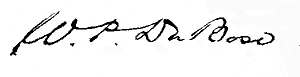
Image Source: Dubose signature

New---155th Pennsylvania Lieutenant's Letters Home

Letters From The Storm: The Intimate Civil War Letters of Lt. J.A.H. Foster, 155th Pennsylvania Volunteers, Linda Foster Arden, edited by Dr. Walter L. Powell, Mechling Books,365 pages commentary, illustrations, photographs, index, paperback,$29.95

Arden offers 101 letters written by Lieutenant Foster, Company K, 155th Pennsylvania to Mary Jane Foster, his wife; the documents are separated by Arden's comments regarding the events and situations described in the letters. Complaints regarding campaigns and camp life with descriptions of individual soldiers and unit combat are a focus of the letters. Additionally Lieutenant Foster addresses his loneliness, intimate fantasies and apprehensions about his spouses faithfullness.

The campaigns and combat of Antietam, Fredericksburg, Kelly's Ford, Brandy Station, Gettysburg, Bristoe Station, the Wilderness and Cold Harbor are described. Pontoon bridges new corps flags are described and drawn. Colorful language regarding personalities and events is not absent from the letters.

The 155th Pennsylvania Volunteers' Company K was formed in Kittanning in 1862, from recruits in Armstrong and surrounding counties. The 155th Pennsylvania Volunteers during their first years the regiment wore the regulation uniform of the Union Army. In 1863 they, along with the 140th New York, received Zouave uniforms. Unlike the 140th New York, the 155th Pennsylvania received a Zouave uniform never before created. Their uniform consisted of a dark blue Zouave jacket with not red but yellow trimming, a dark blue Zouave vest with yellow trimming, a red Zouave sash with a yellow trimming, dark blue Zouave pantaloons, and a red Zouave fez with a yellow trimming and a blue tazzle. The 155th Pennsylvania along with the 140th New York, and the 146th New York became the "Zouave Brigade" in the Army of the Potomac.

Mechling Books has also published The 155th PA Volunteer Zouaves, Co. K.'s history.

Text Source: Mechling Books and Wikipedia

New---Letters To A Pittsburgh Wife From A Medical Steward

Remember Me: Civil War Letters From A Hospital Steward , 1862-1864, Daniel McKinley Martin, edited by Alan I. West, Mechling Books commentary, illustrations, photographs, index, paperback, 328 pages, $29.95.

This exquisitely researched book narrates a fascinating story based on 230 letters, a diary, and possessions that have survived the past 150 years. In 1862, Daniel Martin was working as a druggist's clerk and living in Pittsburgh with his young family when he volunteered to serve as a hospital steward for the Union. His letters and diary speak of financial hardships, secessionists, medicine, diseases, generals, patriotism, the deaths of his two brothers, battles, politics, slavery, religion and family squabbles. With detailed descriptions of diseases and 19th century medical theories, these letters were written in the context of the American Civil War medicine and the political and social venues of southwestern Pennsylvania.

Alan West's commentary furnishes a ready resource for understanding the events surrounding the steward's remarkable experiences in Pittsburgh, Chambersburg, and western (West) Virginia. Remember Me offers a unique perspective for readers interested in 19th century life in Pittsburgh during the Civil War, the practice of medicine and pharmacy, a loving relationship between spouses separated by war. Historians, reeanactors and genealogists will find merits in West's editing.

CWL: As a reenactor whose impression is that of a captain in a Pennsylvania regiment raised in Pittsburgh, this books moves to the top of the 'must have list' for the personal book shelf. As a director of an academic library of a Pennsylvania university, a copy will be ordered for the library's shelf.

Text Source: edited from Mechling publicity.

News---Preservationist Sleeps in Slave Cabins to Save Them

Sleep-Ins Staged To Save Slave Cabins: Historian Wants To Highlight Need To Preserve Structures, Bruce Smith, Associated Press, July 23, 2010

When Joe McGill spreads his sleeping bag on the floor of a slave cabin, he knows that spending the night there will conjure the specter of slavery. "If I were a firm believer in ghosts and spirits and things of that nature, I don't think I could do this," said McGill, a preservationist who is working to preserve buildings that are part of a past that many prefer to forget.

One night he heard dogs in the distance - a sound that recalled the search for runaways during slavery. He awoke on Mother's Day morning in a cabin thinking of children being sold from their mothers. Then he walked to the black graveyard on a plantation near Charleston. "I thought, this is why I'm doing this - for those people in those graves to give them a voice for what they endured," said McGill, 48.

McGill, a program officer with the National Trust for Historic Preservation, will spend Saturday night in a cabin at Hobcaw Barony near the coastal community of Georgetown. It will be the fifth night this year that he has slept on a cabin floor, trying to attract attention to the need to preserve the structures and the history they hold.

McGill, who is black, is also a reenactor with the 54th Massachusetts, the black Union regiment that fought at Battery Wagner on Charleston Harbor during the Civil War. He said spending the night in the cabins helps him connect with his ancestors. He first slept in a cabin at Boone Hall Plantation near Charleston a decade ago as part of a program for The History Channel entitled "The Unfinished Civil War" which focused on the dispute over the Confederate flag flying over the South Carolina Statehouse. He returned to the cabin project this year, meeting reporters wherever he goes to draw attention to the buildings. He said preserving the cabins requires local efforts and his goal is to encourage people to save the ones that are left. The cabins where McGill has stayed - such as those at Magnolia Plantation and Gardens near Charleston - have already been restored. But many others have been neglected.

McGill started in May with a list from the state Historic Preservation Office showing cabins at about 30 sites. He feels his effort is already helping because since he started the sleep-ins, three more cabins have been identified. McGill plans to sleep later this summer in a cabin in Anderson, in upstate South Carolina, and this fall in cabins in Alabama. "There once were thousands of slave cabins in South Carolina, mainly near the coast in the state's largest plantations. Many have not survived because they were modestly constructed of wood or because people didn't want a connection with a dark chapter of history," he said.

"When it comes to slave cabins, you are talking about a part of history that some folks would rather forget," said McGill. "I come from a chain of thought that to know is better," he said, adding that just as a plantation house tells a story, so, too, does a modest cabin. Andy Chandler, who helps administer the National Register of Historic Places for the Historic Preservation Office, said there are no firm figures on how many cabins are still standing in the state.

There are about 1,300 register listings in South Carolina and some may include sites with cabins. But, he said, since some sites have been on the register for decades, some of the cabins may not be there any more. And people who recommend sites for inclusion on the registry don't always see slave cabins as worth mentioning. "In the preservation field we have always considered them significant," he said. "But the historic preservation community is a limited part of our larger community."

Text Source: KSBW
Top Image: A South Carolina Slave Cabin
Middle Image: South Carolina Slave Cabins
Bottom Image: South Carolina Slave Cabin

Tuesday, July 27, 2010

Off Topic---The Dude and The Coen Brothers Abide

The Dude Abides: The Gospel According to the Coen Brothers, Cathleen Falsani, Zondervan Publishers, 240 pages, illustrations, filmography, appendix, paperback, $14.99.

In the 1980s after viewing the first two Coen Brothers films, Blood Simple and Raising Arizona, I had my eyes wide open to fact that these two guys well understood film making, plotting, and existential ethics cast in a Judeo-Christian mold. An avid reader of works by Dashiell Hammett, Raymond Chandler, Ross MacDonald, and James M. Caine, I longed for Hollywood to get the noir detective genre right, again.

Chicago Sun-Times religion journalist Cathlee Falsani immerses herself in the 14 films of Joel and Ethan Coen and asks spiritual and religious questions of the films. Does the Coen brothers' dark humor, verbal slapstick comedy, grim judgments and bleak contexts offer an avenue to the deeper issues of death, betrayal, greed, loyalty in an environment in which God appears to be absent? Do the Coen brothers' film characters show the dire consequences of their choices? Are the filmakers' complex themes clearly presented so their notions of morality are apparent?

Falsani states that these films are not overtly religious, but the films do successfully convey the Coen brothers' spiritual insights into the human condition. She discusses each of the Coen brothers' films, from their debut, Blood Simple(1984), through A Serious Man (2009). Falsani's chapters contain a plot summary and concludes with a discussion of what lessons the film offers. These section are entitled 'The Moral of the Story'. She is adept at offering a nuanced analysis of pop culture, Judeo-Christian heritage, and the art of storytelling.

The Dude Abides: The Gosple According to the Coen Brothers is accessible to The book also is attractive to those who have seen all the brothers' films, twice. Ranging from iconoclastic comedies such as Raising Arizona and The Big Lebowski to an unblinking treatise on the nature of evil in No Country for Old Men, the Coen brothers have created moral universes in which some of life's essential questions are asked--if not always answered.

So how do the Coen brothers understand the meaning of life, the possibility of enlightenment, the nature of truth and enduring love> Falsani examines the films, her own personal experiences, her spirituality, and the intersection of the Coen brothers media and her own journalistic profession of asking questions and getting answers.

Cathleen Falsani, author of Sin Boldly: A Field Guide for Grace , The Dude Abides, and The God Factor: Inside the Spiritual Lives of Public People and The Thread: Finding a Sacred Place in Cyberspace. She is a columnist for Religion News Service, and a contributing editor and columnist for Sojourners Magazine and its blog, God's Politics. Most recently, she added her name to the masthead of Sojourners magazine as a contributing editor and columnist. Her work has appeared in Rolling Stone, Christianity Today and Christian Century magazines, as well as the Washington Post, Chicago Tribune, Kansas City Star, Madison Capital Times, and many other newspapers across the nation.

She holds a master's degree in journalism from Northwestern University as well as a master's degree in theological studies from Garrett-Evangelical Theological Seminary. She has also been a Media Fellow at Duke University, a Gralla Fellow in Jewish Studies at Brandeis University, and was the 1996 Stoody-West Fellow in Religious Journalism. Presently she is a Divinity School Media Fellow at Duke University.

Both Images' Source: Amazon.com

Points of View---What Did Presidents Washington, Jefferson, Jackson, Tyler Have To Do With The Civil War?

Four American Presidents: What Did They Have to Do With the Civil War? , The Annual Symposium of the Museum of the Confederacy and hosted by the Library of Virginia on Saturday, February 20, 2010.

The Museum of the Confederacy is more than exhibits. It encourages scholarship, education, and adds to the public's consideration of Confederate flag issues, slavery and Confederate biographies. CWL's visits to the MOC and conversations with its employees leaves the impression that the institution is not a bastion of neo-Confederate apologetics, unlike the recent incarnation of the Sons of Confederate Veterans.

Typical of the MOC's mission is its 2010 symposium, Four American Presidents and What Did They Have To Do With The Civil War? The summaries of the speakers' remarks follow and are from the CSPAN Video Library's wwwsite. The wwwsite's link is below the descriptions. The four 60 minute segments are worth the investment of CWL's readers' time. Audience questions and presenters' answers are included.

Anne Sarah Rubin discussed President George Washington and how his career, thoughts, and actions relate to the origins of the Confederacy and the coming of the Civil War. The unresolved disagreements about the status of slavery and the nature of the federal union created situations that presaged the dissolution of the union in 1861 since its founding. Professor Rubin focused on the way that the image of President Washington was used to justify and legitimize actions. She responded to questions from members of the audience. Anne Sarah Rubin is the author of A Shattered Nation: The Rise and Fall of the Confederacy, 1861-1868 and Seventy-Six and Sixty-One: Confederates Remember the American Revolution.

Peter Onuf discussed President Thomas Jefferson and how his career, thoughts, and actions relate to the origins of the Confederacy and the coming of the Civil War. The unresolved disagreements about the status of slavery and the nature of the federal union created situations that presaged the dissolution of the union in 1861 since its founding. Professor Onuf talked about President Jefferson's soci-political philosophy of nationhood and contrasted it with the Southern philosophy. He responded to questions from members of the audience. Peter Onuf is the author of Jefferson's Empire: The Language of American Nationhood (University Press of Virginia, 2001) and editor of Jeffersonian Legacies (University Press of Virginia, 1993).

William Freehling discussed President Andrew Jackson and how his career, thoughts, and actions relate to the origins of the Confederacy and the coming of the Civil War. The unresolved disagreements about the status of slavery and the nature of the federal union created situations that presaged the dissolution of the union in 1861 since its founding. William Freehling, a senior fellow at the Virginia Foundation for the Humanities and Public Policy, is the author of Prelude to Civil War: The Nullification Controversy in South Carolina, 1816-1836 and The Road to Disunion in two volumes.

Edward Crapol discussed President John Tyler and how his career, thoughts, and actions relate to the origins of the Confederacy and the coming of the Civil War. The unresolved disagreements about the status of slavery and the nature of the federal union created situations that presaged the dissolution of the union in 1861 since its founding. Edward Crapol is the author of John Tyler, the Accidental President, published by The University of North Carolina Press.

What Did Four Presidents Have To Do With the Civil War?

Top Image: Virtual Tourist
Second Image: 18th Massachusetts

Off Topic: World War 2--- Playing the Nazis For Chumps

Operation Mincemeat: How a Dead Man and a Bizarre Plan Fooled the Nazis and Assured an Allied Victory, Ben Macintyre, Crown Publisher, 416 pages, illustrations, maps, $25.99.

Having read and thoroughly enjoyed Ben Macintyre’s account of a British double agent,Agent Zigzag, his second effort seemed appealing. Operation Mincemeat is a thorough updating of a previous book, The Man Who Never Was, that I had read during junior high study halls.

Operation Mincemeat and The Man Who Never Was reveal the elaborate British deception of the Nazis into thinking that Allied forces were planning an invasion southern Europe from Greece or Sardinia, rather than Sicily.

Ewen Montagu, author of The Man Who Never Was and co-planner of Operation Mincemeat could not have been more different than Charles Cholmondeley of MI5 and British naval intelligence officer. Montagu was an aristocratic, detail-oriented barrister and Cholmondeley was an adventure seeker. Together they created an ingenious up tenuous plan: Plant a corpse on a Spanish beach and load it with false and misleading documents concerning the invasion. Approved by Ian Fleming (creator of James Bond) and other British intelligence officials the plan was present to Winston Churchill who believed it might look real to the Nazi and mislead them.

Presenting previously top secret material, Ben Macintyre brings the reader right into the minds of intelligence officers, their moles and spies, and the German Abwehr agents who suffered the “twin frailties of wishfulness and yesmanship.” He weaves together the eccentric personalities of Cholmondeley and Montagu and their near-impossible feats into a riveting adventure that not only saved thousands of lives but paved the way for a pivotal battle in Sicily and, ultimately, Allied success in the war. Most importantly, the corpse does not remain anonymous.

Macintyre's discovery of the identity of the corpse, its route into the hands of the British intelligence officers and then its delivery into the sea currents that took it ashore is astonishing and compelling. At the end of the book, the reader is conveyed to a Spanish cemetery that holds the body of an improverished and mentally disadvantaged Welshman who inadvertently committed suicide and afterward heroically served his country.

Top Image: Paul Davis On Crime

Thursday, July 15, 2010

News: Play Ball! Again!----First Annual 19th Century Baseball Tournament in Gettyburg

The 1st Annual Gettysburg 19th Century Base Ball Tournament will be held on July 17 and 18, 2010 and 6 clubs will compete for the 1st Championship. The Tournament will take place at Hickory Hollow Farm which is less than 3 miles from the center of Gettysburg going west on Lincoln Highway (Route 30).

Matches will start at 10:00am, Noon, and 2:00pm on Saturday and 10:00am and Noon on Sunday. Keep an eye on this website for the full schedule. When you come to the event, you will see base ball (two words) played the same way it was played in 1864 with the same style equipment and uniforms and clubs playing by the same rules and customs as was used at the end of the Civil War. In the Union Division the featured clubs are the Pittsburgh Franklins BBC, the Somerset (Pa) Frosty Sons of Thunder and the Flemington (NJ) Neshanock. The Confederate Division features the Eclipse Base Ball Club of Elkton (MD), the Talbot Fair Plays (MD) and the Diamond State BBC of Delaware. Each Confederate club plays each Union club. The two clubs with the best record will play for the championship regardless of division.

This weekend, Gettysburg will witness base ball the same way it did in 1864. Six clubs are gearing up to come to town to show the public how the great American Pastime got started. These clubs will be playing base ball the same way it was played in the mid 1860s using the same style uniforms and equipment and playing by the same rules and using the same customs and language as was used during the end of the Civil War.

Starting at 10am, 2 matches will start as President Lincoln, General Grant and General Lee will be on hand to throw out first balls during the day. Matches are in 2 blocks on Saturday starting at 10am, Noon, and 2pm. Sunday there is one more round of regular match play at 10:30 and then at 12:30 are the championship rounds.

Fans who come out will not only see the games, they can also see Lincoln, Grant and Lee as well as hear stiring renditions of Casey at the Bat and much more. There will be people all over to help you understand the rules and customs and to let you see what a 19th century bat and ball looked like. Free admission and free parking. Concessions by Gettysburg Eddies so bring a picnic basket or enjoy a great lunch by Gettysburg Eddies. Stop by Gettysburg Eddies on Friday and/or Saturday night and meet the ball players and hear all about this soon to be great tradition in Gettysburg!

Text and Top Image Source: Wordpress
Second Image: Eparks

Saturday, July 10, 2010

Novel--- Nathan Bedford Forrest, Vulgar and Haunted

Devil's Dream: A Novel About Nathan Bedford Forrest, Madison Smartt Bell, Pantheon, 352 pages, $26.95.

Publishers Weekly:
After tackling the Haitian slave rebellion in a three-book series, Bell uses a smaller stage to create a captivating portrait of Confederate general Nathan Bedford Forrest. The novel plays effortlessly with time and structure, shuttling between 1845 and 1865 as Forrest marries Mary Ann Montgomery, becomes a guilt-stricken slave trader and, during the Civil War, is targeted for destruction by General Sherman.

Despite his aggressive actions on the battlefield, Forrest struggles with the demands of a complicated family: tensions between Mary Ann and Forrest's black mistress take a personal toll, while the rivalry between his sons Willy and Matthew (the illegitimate child of a long-ago affair with a slave) creates distraction. Meanwhile, his addiction to gambling and his attraction to his mistress send Forrest into a contemplation of the forces that control him.

Many of the war sequences are delivered via Henri, a Haitian wanderer who joins Forrest's troops and possesses the ability to communicate with the ghosts of those killed in battle. The unconventional structure and supernatural twist expand the narrative into an engaging examination of what it means to be free, a question that haunts Forrest through his life. Copyright © Reed Business Information, a division of Reed Elsevier Inc. All rights reserved.

The Washington Post:
Devil's Dream, Madison Smartt Bell's new novel, is a sort of biopic of Nathan Bedford Forrest, the Confederate cavalry general who was considered by his peers to be brutal, brilliant, profane, savage and virtually unstoppable in his ferocity. He is sometimes referred to as "the Wizard of the Saddle," and, at least in this work, he is one hell of a feisty redneck. He is also pompous, taciturn, burdened with a Tennessee twang that would make Minnie Pearl blush and, in the end, not very interesting.
The novel is told in fits and starts, jumping backward and forward in time. In the years before the Civil War, Forrest enjoys some prosperity as a slave trader and some domestic comfort in the company of his highborn, oddly matched wife, Mary Ann Montgomery, whom he met while pulling her carriage out of the mud. The years following the war are filled with one failure after another and, ultimately, destitution. These sudden jumps in time are disconcerting and seemingly without point so that we are left not always knowing exactly where we are.

In fact, if you know little about the Civil War, the book is a wilderness, and if you know a lot, you may be astonished at the nitpicking quality of Bell's scholarship, amazed at his warehouse of trivia, but I doubt you will be much moved or enlightened. As portrayed here, Forrest is relentlessly one-note and irritating. Even hillbilly coarseness loses its frisson after repeated usage. One unnamed character says he is "a man having no pretension to gentility -- a negro trader, a gambler . . . Forrest may be & no doubt is, the best Cav. officer in the West, but I object to a tyrannical, hotheaded vulgarian's commanding me."

Note the use of the ampersand. It is an indication of Bell's pretentious 19th-century style, which is a combination of cornpone and ever more complicated forms of swearing. When Forrest isn't talking dirty, he spouts pompous and not very original aphorisms about the nature of conflict: "War ain't got no goddamn rules," he says at one point. And soon after, "They say the world turns itself like a grindstone. Over and over. Don't never stop. Ye may whet yoreself agin it. Or let it grind ye down." I don't think Nathan Bedford Forrest, or anybody else for that matter, ever actually said those words.

The novel also has as one of its main characters a dead Haitian named Henri, who moves among the living as one of them, even though he presumably died at the ferocious battle of Chickamauga. His undead voodoo status gives him the ability to know the future. But his prescience serves no real purpose, either to the other characters or to the story. Henri claims to be the son of Haitian revolutionary Toussaint L'Ouverture, about whom Bell published a biography in 2007.

Henri seems to be free of the redneck twang, speaking both English and French with a simplicity and an eloquence that are denied every other character except Forrest's wife and his son by a black slave, who speaks as though he had attended Choate and Harvard. I just wish that in the heat of battle, about which Bell writes with passion but an absolute lack of variety, I hadn't had to keep running to the Oxford English Dictionary to look up "widdershins," "osnaburg" and "barracoon," words that stop us dead in our tracks and make us feel like we're playing Scrabble with Yosemite Sam. It is also hard to imagine writing about Forrest -- whose relationships with blacks ran from the horribly brutal to the intensely sexual, even loving -- without mentioning his postwar involvement with the Ku Klux Klan, but Bell manages to do it. Devil's Dream which takes its name from an old fiddler's jig, is like a 300-page transcript of a loudmouth swearing while he shoots some guy in the face. It purports to be a portrait of a man who once played an important part in the most awful episode that has ever gripped this country.

As Bell tells us, by war's end one in every 10 able-bodied Union men was dead, one in every four in the South. Such a towering player in that cataclysmic tragedy as Forrest deserves better. William Tecumseh Sherman said, "War is hell." Madison Smartt Bell's new novel is no fun, either. ---Copyright 2010, The Washington Post. All Rights Reserved.

Book Cover Image and Text: Amazon.com
Middle Image: Baltimore Sun
Bottom Image: Son of the South

Thursday, July 08, 2010

News--- Wide Awake in 1860 America: Petersburg's Pamplin Park Offers Attractive October Conference

14th Annual Symposium: The 1860 Presidential Election and the Coming of the Civil War October 15-17, 2010

Civil War conferences have become frequent, expensive and somewhat uneven in quality. It can be fun to hunt for the best location, with the best speakers, the best tours, a couple of decent meals, and at the best price. Last October's Harper's Ferry National Park's conference on John Brown was exceptional in each category. This July's Society of Civil War Historians meeting in Richmond, Virginia met the criteria for a good conference. The following appears to receive high marks in each of the categories; it does exceed the $200 mark but comes with 5 meals and a reception. The $215/$239 registration fee is reasonable. CWL is familiar with each of the speakers' work and holds them in high esteem. Having interests in the Wide Awake Movement, the 1860 election, and the 'Inevitable Civil War' arguments, CWL hopes the October 15-17 date will be open. Hmmm. . . Is that a conflict with the Cedar Creek, Virginia Reenactment? Haven't marched on that field for about 5 years. But this conference appears strong enough that Cedar Creek [one of my favorite reenactments in which to participate] is an annual event might be skipped by CWL again this year. During the SCWH's conference a very reasonable price and very comfortable hotel was found in Richmond so the two overnight stay would be bearable.

Also, last year CWL made a first visit to Pamplin Park and, as a Civil War reenactor and academic, came away impressed. For this reenactor, the camp life and field works were top notch. For this academic and educator, the exhibits were well done and available to a wide range of ages; by the way, CWL has taught K-12with the exception of 6th grade and currently teaches undergraduate students.

Speakers & Topics

George C. Rable, University of Alabama, Author of The Confederate Republic: A Revolution Against Politics. Topic: “Not Man nor Parties: The Election of 1860 as a Crisis of Faith”

Elizabeth Varon, Temple University, Author of Disunion: The Coming of the American Civil War 1789-1859 Topic: “The Specter of Disunion in Party Politics, 1852-1860”

Gary Ecelbarger, Author of The Great Comeback: How Abraham Lincoln Beat the Odds to Win the 1860 Republican Nomination, Topic: “The Nomination of Abraham Lincoln”

Joseph G. Dawson, Texas A&M University Author of Commanders in Chief: Presidential Leadership in Modern War, Topic: “Three Southern Governors and the Election of 1860”

William W. Freehling,, Virginia Foundation for the Humanities, Author of The Road to Disunion: Secessionists at Bay, 1776-1854 and The Road to Disunion: Secessionists Triumphant,1854-1861, Topic: “Was Lincoln an Immediate Threat to Slavery?”

Russell McClintock, St. John’s School, Shrewsbury, Mass Author of Lincoln and the Decision for War: The Northern Response to Secession, Topic: “Lincoln, Douglas, and the Response to Secession”

A. Wilson Greene, Executive Director, Pamplin Historical Park Topic: “Avoidable Tragedy or Irrepressible Conflict: Was the Civil War Inevitable?

Registration Information and Top Image: Pamplin Park

Middle Image: "Young Men for War": The Wide Awakes and Lincoln's 1860 Presidential Campaign Journal of American History, Vol. 96, Sept. 2009

Bottom Image: Election of 1860 Campaign Flag

Wednesday, July 07, 2010

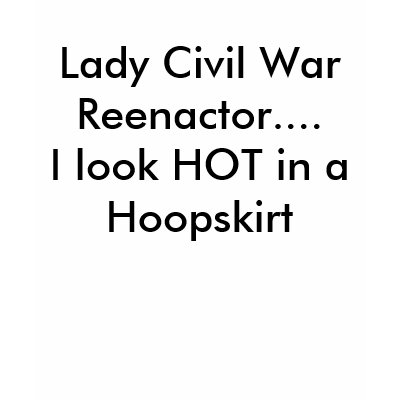
News: Are The Iraq/Afghanistan Wars Putting A Lid on Civil War Reenactments?

A Brief History Of Civil War Reenactment, Dan Fastenberg, Time.com, Saturday, July 3, 2010.

On July 4th, America's 300 million citizens will mark the 234th anniversary of the Declaration of Independence. The holiday weekend that's famous for fireworks, barbecues and apple pie is increasingly being used as an occasion for tens of thousands of Americans that identify as "hard-core" war reenactors to wear outfits made from 19th century fabric adorned with arcane military pins. For the July 4th holiday also marks another major American historical milestone — the anniversary of the Battle of Gettysburg, which took place from July 1st to July 3rd in 1863. For American war reenactors, the battle is the Gettysburg of their annual reenactment calendar.

"When you come to the fields of Gettysburg, you cannot help but feel the awe," said Andrea DiMartino, the media supervisor for Gettysburg Anniversary Committee. DiMartino, who moved to the southern Pennsylvania town fifteen years ago to be closer to the battleground site (and even has the number 1863 in her e-mail address) will help organize the weekend's reenactment festivities that runs from July 2nd to July 5th. Events are scheduled to run around the clock, and will include a reenactors' dance as well as live mortar-fire demonstrations. (In 2006, the U.S. National Park Service banned reenactment on actual battleground sites, saying, "Even the best-researched and most
 well-intentioned representation of combat cannot replicate the tragic complexity of real warfare.")

"Reenactment is a nice relief from today's electronic reality," said Kirk Davis, the president of the American Living History Educational Society, a group that has some 500 members reenacting battles from the French and Indian War up through World War II. "It's always a very safe scripted event. We have a lot of veterans, but all people like to hear the cannons going off."

War reenactment is by no means an American phenomenon. By all accounts, the impulse to dress up and play Hektor is as old as Hektor himself. Both the Greeks and the Romans infused elaborate battle scenes into their dramatic cultures. And many contemporaneous reenactors credit the tragedies of William Shakespeare, his stage designs at the Globe Theatre and his depictions of battles as a major inspiration for modern reenactment. Among the great reenactments: the 1066 Battle of Hastings that gave birth to modern England. The restaging of the Norman Invasion takes place every year in October around the same iconic hill in southeastern England, and on major anniversary years (those ending in one and six) the number of participants can reach as high as 5,000. The dressing up in 11th century war gear — medieval metal helmets and all — takes place under the auspices of a group called English Heritage, which is affiliated with the British government.

"There is something deeply democratic, and republican, in the attempt to make history your own, rather than to leave it to the academics and the schools, television stations and politicians," says Wolfgang Hochbruck, a history professor at the University of Freiburg in Germany, who was a one-time American Civil War reenactor. "Not that reenactment is necessarily progressive — a lot is politically backward at best."

In the U.S., which compared to England and Germany is a relatively young country, no conflict has spread the reenactment bug quite like the Civil War. Reenacting the War Between the States took off as early as the 50th anniversary of Gettysburg in 1913, when veterans from both the old Confederacy and the Union returned to that battlefield. The veterans, many in their 70s, were reduced to waving their canes as they reenacted Pickett's Charge, says Tony Horwitz, the author of Confederates in the Attic: Dispatches from the Unfinished Civil War. The septuagenarians were joined by then president Woodrow Wilson, who was hoping to use the event to mark the end of animosity stemming from the Civil War.

For some participants, reenactment can be more than just an outlet for relief. "Educators today do not want to show weapons, do not want to show war," said John Houck, a Maryland-based reenactor since 1991. "We're out there teaching to the American people. In school you have two weeks to teach four years of war. My ancestors fought four years as Confederate soldiers and I applaud that. We lost the war and that's fine. But let's tell the real story. We're all Americans."

Many Civil War reenactors are gearing up for a round of 150th anniversary encampments to begin in 2011 at South Carolina's Fort Sumter. As a testament to society's enduring fascination with the Civil War, reenactments of its battles takes place regularly throughout the world, from Northern Ireland to Australia.

But after a surge of popularity in the 1980's and 1990's, when Civil War reenactors became more professional about outfit specificity and military pins, thanks in part to movies like Gettysburg and Ken Burns' documentary, numbers have dropped over the last decade from their prior high in the 50,000 range. "When we have real wars going on, a fake war is less appealing," says Horwitz.

CWL: Time will tell. If the 150th Anniversary reenactments draw fewer reenactors and fewer large audiences, then the tide has turned for Civil War reenacting. On the other hand, you have reenactors not participating in large audience events in order to organize and participate in no audience or small audience events that lend themselves to a 'life as it was' experience.

Text Source: Time.com

Top Image Source: Kindred Blood

Middle Image Source: Zcache

Bottom Image Source: Zazzle