Wednesday, May 13, 2009

CWL---"... can never be whipped," Lewis Armistead, July 5 1863

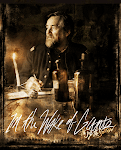
"Trust In God and Fear Nothing": General Lewis A. Armistead, CSA, Wayne E. Motts, Farnsworth House Military, 5 photographs, 2 maps, notes, bibliography, 64 pages, 1994, $4.95.

Gettysburg, the 1993 film, had just followed James McPherson's Battle Cry of Freedomand Ken Burns' The Civil War when I got into reenacting with the Ninth Pennsylvania Reserves. Gettysburg Pennsylvania was a wonderland of book stores, reenactment supply vendors and art galleries. It was a time before ghosts and the Farnsworth House had a large gallery and bookstore. Now the gallery has vanished and half the bookstore is a seance room. Farnsworth house in 1993 began publishing monographs on the primary characters of the battle. "Trust In God and Fear Nothing": General Lewis A. Armistead, CSA was the first in a short series that included Buford, Pickett, Reynolds, and Meade. All were reasonably price at $4.95 and still are at the American History Store at the corner of Steinwehr Avenue and Baltimore Pike.

Wayne Motts, currently the director of the Adams County Historical Society, produced a clear, concise and well cited monograph on Lewis Armistead, brigade commander in Pickett's division. Not overloaded with tangential photographs and maps, Wayne Motts used the 64 pages to provide the relevant stories of Armistead's life, career and death. There is not pretense of chapters in this booklet; CWL frequently finds these days that booklets, such as the McWhiney Foundation's series, have nearly as much white space as narrative. Motts has covered in detail Armistead's lineage, childhood, unfinished West Point education, military experiences in the Seminole War, the Mexican War and the Civil War; each page is full and only the few photographs don't fill a complete page. CWL will note that typesetting and layout was markedly different back in the early 90s; thank you Adobe Acrobat. The 52 pages of text have 96 bibliographic notes, generally from primary sources.

The Battle of Gettysburg does not overwhelm Motts presentation of Armistead's career. His Mexican War experiences, the death of his wife, and his farewell to Hancock, are presented with the primary sources left by the participants and those present. Poignant but not overwrought is Mott's telling of Armistead's charge, wounding, and death a the Spangler Farm field hospital. Mott sticks very close to the sources which are sufficient in this instance. Indeed, Mott provides a fine, well edited example of historical scholarship that would serve an advanced high school student or an undergaduate well as a model of what historians do.

Bottom Two Photos: The George Spangler Farm which became the 11th Corps' field hospital at Gettysburg. In this summer kitchen Lewis Armistead died, more from exhaustion than his wounds, concludes Waynes Motts from an eyewitness account. In the summer of 2008, the Gettysburg Foundation bought the farm and the first rehabilitation occurred in April 2009. See the April 24 entry on Civil War Librarian for the event. (Photograph: Rea Andrew Redd, April 2009)

News---Gettysburg' Electric Map May Revive Faltering Steinwehr Avenue Business District

Electric Map May Have Hound A Home, Scot Andrew Pitzer, Gettysburg Times, Tuesday, May 12, 2009.

A nonprofit group is working with the National Park Service to keep the historic Electric Map in Gettysburg. Historic Gettysburg-Adams County is talking to the park about obtaining the map and featuring it in a new museum, possibly along Steinwehr Avenue. “It’s quite possible that it could be coming out of storage,” HGAC President Curt Musselman said Monday morning.

Musselman was the guest of broadcaster Fred Snyder during the Breakfast Nook program on 1320 WGET. Musselman’s group has been working to obtain the map for “about a year,” and the group has set up a task force to acquire it. “We’re going to build a museum — a map museum — making the Electric Map a centerpiece for that,” said Judi McGee, chairwoman of the HGAC task force.

“The map itself will be restored,” McGee said. “We’ll also be able to preserve and restore some other period maps along the way and some artifacts.” She promised that the map will be staying in the Borough of Gettysburg, although she did not name specific sites. “We’re looking at an adaptive re-use of an old building,” McGee told Snyder. “We’re also looking at building something new. We’re looking at a number of sites.”

Steinwehr Avenue businessman Eric Uberman said Monday that he has land beside his American Civil War Museum to accommodate the group. He called the property an “optimum site” for the Electric Map. “We’re cooperating with them — we’re not buying the map,” said Uberman. “We have the space,” continued Uberman. “It’s the spot that has the most visibility, it’s in Gettysburg, and it’s literally right where the map was before.”

Gettysburg National Military Park spokeswoman Katie Lawhon confirmed Monday afternoon that the park is talking to the group, but stressed that “it’s very early in the process.” The park has entertained offers for the map in the past, but nothing panned out. “Their goals would certainly be in sync with the Park Service’s goals, which would be to display the Electric Map once again to the visiting public,” said Lawhon. “The goal is to work cooperatively and re-open it to the public.”

Uberman’s property is located across the street from the entrance to the old visitor center. He thinks that the map would “do wonders” in revitalizing Steinwehr Avenue, which has seen a dramatic drop-off in commerce since the old visitor center closed. “It would be a tremendous boost to Steinwehr,” said Uberman. “I really hope that the town fathers support this group. It would be a tremendous tax benefit to the area, and maybe pull back some of the revenue that has been lost since the new visitor center opened.”

The map was cut into four pieces in March and moved out of the old park visitor center. It is now being stored in a park facility along the Hanover Road, just east of Gettysburg. The map was not incorporated into the plans for the new $103 million Battlefield Visitor Center, which opened in April 2008 along the Baltimore Pike. “I just think in their new design, the Electric Map didn’t fit in,” Musselman said. “Some day again, people will be able to see it.”

McGee noted that “there are some issues there with asbestos and construction that we need to address,” and that talks are ongoing between the federal government and HGAC. HGAC has worked with the Park Service on other projects, said Musselman. The group is aiming to have the map on display again in time for the 150th anniversary of the Battle of Gettysburg, which occurs in 2013. “That would sort of be the time-line on the project, so don’t hold your breath waiting for it to happen,” Musselman said. “Everything would take time. It’s not just a little project.”

The map entertained millions of tourists over the years, when it was the park’s primary attraction. It used 625 flashing Christmas bulbs to illustrate the movement of troops during the Battle of Gettysburg. Opponents argue that the map’s technology is obsolete, while proponents believe that it’s an iconic American treasure. The current map dates back to 1962-63, although the original map dates back to the 1930s.

See the complete transcript of the Breakfast Nook interview by visiting www.gettysburgtimes.com/blogs.

Text Source: Gettysburg Times May 12, 2009

Photo:Emily O'Neil's father, Joseph Rosensteel, created the Electric Map at the Gettysburg Battlefield Visitors Center. (Jeb Kairchbaum, Baltimore Sun, October 18, 2007)

Review From H-Net: Civil War: Campaign for Corinth, Mississippi, Pivitol 1862 Battle

H-Net Review Publication: 'An Important Battle Packaged for Beginners'

Steven Nathaniel Dossman, Campaign for Corinth: Blood in Mississippi. Civil War Campaigns and Commanders Series. Abilene McWhiney Foundation Press, 2006. 128 pp. $14.95 (paper), Reviewed by Daniel Sauerwein (Department of History, University of North Dakota)Published on H-CivWar (March, 2009) Commissioned by Hugh F. Dubrulle

An Important Battle Packaged for Beginners

Steven Nathaniel Dossman, a McWhiney Fellow, has produced a simple yet important examination of the campaign and battle for the Mississippi rail junction of Corinth in 1862. From this work, the reader will obtain a basic understanding of the battle, major figures involved, and overall importance of this battle to the Civil War. The Corinth campaign was an important event in the Civil War that is worth studying as it allowed the Union army to push further into the Confederacy in the West. Dossman used many good sources, including the Official Records of the War of Rebellion (1880) and Ulysses S. Grant's memoirs, to provide the necessary information on the campaign.

This book has several great strengths. The first is its readability. The prose is simple and to the point; it does not bog the reader down. The reader is treated to more of a story than a typical scholarly analysis of a campaign, making the book especially valuable and refreshing for beginning students of history, although it may frustrate scholars who are looking for a new examination of the event.

Dossman includes numerous useful features--brief biographies, images, maps, and appendices--all of which will assist readers in gaining a better understanding of the campaign and battle. Biographical sketches of many prominent officers on both sides provide background for the men associated with the battle, campaign, the western theater, and the war as a whole. The biographies will be helpful to readers unfamiliar with the leaders of the Civil War armies. In addition to the biographies, the book provides many images that detail battle scenes. These offer a visual break that complements the text and aids in comprehension of the battle. Furthermore, Dossman includes simple yet artistic maps to detail the movements of opposing forces in the various battles and skirmishes that were part of the Corinth campaign. Several appendices, which provide the orders of battle for the campaign, will also aid readers in understanding the battle. These additions discuss not only which units were involved, but also where and how the armies were organized.

The absence of a clear section on historiography hinders this book's usefulness to an academic audience. While Dossman does draw on some scholars, such as Peter Cozzens, he neglects others, like James McPherson and Steven Woodworth. His neglect of contemporary historiography may cause academics to ignore this work. However, general readers and students will breathe a sigh of relief at not having to wade through a review of the literature on the subject. Furthermore, many of his sources are older and reflect more traditional schools of historical thought. They do not, for example, discuss social history or issues associated with minorities. While this work provides necessary factual information surrounding the campaign, it presents an old-fashioned interpretation.

In addition, while the biographical sketches are useful for persons unfamiliar with the war and battle, they also present a problem. They break the flow of the book, forcing the reader to constantly pause and take a detour from the narrative. A different location for these sketches would have solved this problem; such material is better suited for an appendix, where readers can look at it after reading the book.

Overall, Dossman has provided a simple work on an important campaign during the Civil War. This book is a good start for those new to history, as it presents the battle in an easy to understand format. It is also useful for high school classrooms, as well as undergraduate classes, since it will provide students with basic knowledge of the battle. Academics may find elements of Dossman's work problematic, but perhaps it will lead other scholars to write more about the battle, incorporating social history and newer schools of thought while reshaping the existing historiography. Campaign for Corinth is a good start for this renewed examination of this event by future scholars. Yet, due to problems with scholarship, interpretation, and organization, this work shows room for improvement.

Citation: Daniel Sauerwein. Review of Dossman, Steven Nathaniel, Campaign for Corinth: Blood in Mississippi. H-CivWar, H-Net Reviews. March, 2009. URL: H-Net

CWL: The McWhiney Series is uneven with a notably superficial effort as Longstreet in the West that is overly padded with tangential maps and photos. On the other hand some volumes are very successful such as The Emergence of Total War Daniel E. Sutherland in which the author examines The Second Manassas Campaign and various elements of the war upon civilians. Those seeking a more thorough discussion of the Corinth campaign should examin Struggle for the Heartland: The Campaigns from Fort Henry to Corinth by Stephen D. Engle and The Darkest Days of the War: The Battles of Iuka and Corinth by Peter Cozzens.

Wednesday, May 06, 2009

New---Was The South Becoming Like The North?

Modernizing a Slave Economy: The Economic Vision of the Confederate Nation, John Majewski, 256 pages, The University of North Carolina Press, $39.95.

University of North Carolina Press' Civil War America series usually breaks new ground. Modernizing a Slave Economy: The Economic Vision of the Confederate Nation is not an exception. How closely was the South to become economically like the North before the Civil War? If the war hadn't occurred when it occurred would the South have become a modern economic society with a healthy mix of agriculture and industry?

What would separate Union and Confederate countries look like if the South had won the Civil War? In fact, this was something that southern secessionists actively debated. Imagining themselves as nation-builders, they understood the importance of a plan for the economic structure of the Confederacy. The traditional view assumes that Confederate slave-based agrarianism went hand in hand with a natural hostility toward industry and commerce. Turning conventional wisdom on its head, John Majewski's analysis finds that secessionists strongly believed in industrial development and state-led modernization. They blamed the South's lack of development on Union policies of discriminatory taxes on southern commerce and unfair subsidies for northern industry.

Majewski argues that Confederates' opposition to a strong central government was politically tied to their struggle against northern legislative dominance. Once the Confederacy was formed, those who had advocated states' rights in the national legislature in order to defend against northern political dominance quickly came to support centralized power and a strong executive for war making and nation building.

Early Reviews:
"Majewski makes an argument that is quite novel for antebellum history in its consideration of the possible economic role to be played by government in the South. Well researched and clearly presented, Majewski's analysis merits attention and discussion." Stanley Engerman, University of Rochester and author of Time on The Cross a groundbreaking study of the economics of Southern slavery

"A well-crafted and insightful analysis of the arguments favoring economic development in the antebellum South and their connection to the creation of a southern nation. Writing with clarity and grace about important economic questions, Majewski offers a fresh approach to the old problem of assessing the strengths and weaknesses of Confederate nationalism."
--George C. Rable, Charles Summersell Chair in Southern History, University of Alabama, author of Fredericksburg! Fredericksburg!

John Majewski is professor of history at the University of California, Santa Barbara. He is author of A House Dividing: Economic Development in Pennsylvania and Virginia before the Civil War.

Source of some of the text: University of North Carolina Press

CWL---The Great March To The Sea

Southern Storm: Sherman's March To The Sea, Noah Trudeau, 35 maps, 42 black and white illustrations, order of battle, notes, bibliography, index, 671 pp., Harper Collins, 2008,$35.00.

Trudeau, former National Public Radio program producer and popular Civil War historian, addresses William T. Sherman's 1864 Atlanta to Savannah march through Georgia. Sherman's chief objective was to demonstrate to the Confederacy that there was no place in the South safe from Union troops. Industry and agriculture that supported the South's ability to make war was put to the torch as well as many civilian homes. Trudeau addresses the destruction and finds that it was similar to and did not exceed other campaigns by Northern and Southern armies. Nevertheless, the campaign shocked Georgians who had not experienced the war in any way other than sending soldiers, commissary goods, and armaments forth.

Confederate resistance was limited and what small defensive efforts were taken they were uncoordinated; there was not theatre commander to direct the Confederate resistance. The author does not go to great depths regarding Richmond's lack of leadership on this issue. Over and over again Trudeau shows that Sherman’s orders allowed his army have a great deal of latitude about what to burn and what to take. In a very thorough manner 60,000 Federal soldiers seized Georiga's food and forage. The destruction of Georgia railroads was one of the chief goals of the campaign and was thoroughly accomplished.

Trudeau concludes that Sherman's operational generalship was vastly superior to the Confederate resistance. Also Trudeau frequently shows that the Federal wing and corps commanders made significant tactical decisions. Both wing commanders, Howard Slocum as well as the cavalry corps commander, Kilpatrick, were Army of the Potomac veterans with mixed records in the east. The relationship between Sherman's operational decisions and the other commanders tactical decisions was founded upon the army's engineer officers who produced quickly superior maps for brigade, divisions and corps commanders. Trudeau offers abundant civilians' voices as well as those from enlisted Federal and Confederate ranks. His work is an enlisted men's, civilians' and generals' story.

The army's engineers also transported and installed pontoons and repaired and built bridges from materials on hand. Houses closest to the river nearly always were torn down to provide materials for bridge construction. It appears most destruction of family dwellings that occurred during the campaign was done in order to build bridges. At the operational level, Sherman kept the Confederate commanders guessing as to his destination. Was it Charleston or was it Columbia South Carolina? What it Mobile, Alabama? Was it Savannah, Georgia? This lack of knowing kept Confederate forces fractured.

Trudeau moderately approaches the campaign's myths and gently turns them over. Not necessarily brutal but similar to other armies' campaigns, Sherman's March was neither a lark nor complete desolation. Confederate soldiers fought bravely and against the odds but were often ill-led and themselves victims of meager central planning. Did Sherman abandon runaway slaves to following Rebel guerrillas? Yes. Sherman's policy allowed single families to join the march as employed servants but he refused to escort large bands of runaways through Georgia. As his army lived off the land, he would not allow it to forage for large numbers of blacks. He never put Andersonville prison on the list of the campaign's objectives due to the fact the the army could not absorb 24,000 diseased and starving prisoners and still march.

CWL notes that the maps were very handy and contained weather information; this is similar to Trudeau's maps in Gettysburg that had a clock and weather temperatures. CWL relied upon Earl McElfresh's watercolor campaign map to see the large operational picture and gain an understanding of the terrain and the numerous rivers that had to be crossed. McElfresh Maps are essential additions to CWL's library and are frequently consulted while on guided tours and reading books. The maps are printed on durable paper yet CWL has so frequently consulted the Gettysburg and the Antietam maps and that he has replaced them once.

Tuesday, May 05, 2009

New This Month---The Hated President

The Unpopular Mr. Lincoln: The Story of America's Most Reviled President Larry Tagg, Savas Beatie Publishing, 30 photos and illustrations, 456 pages, $32.95

Today, Abraham Lincoln is a beloved American icon, widely considered to be our best president. It was not always so. Larry Tagg's The Unpopular Mr. Lincoln is the first study of its kind to concentrate on what Lincoln's contemporaries actually thought of him during his lifetime. Be forewarned: your preconceived notions are about to be shattered.

Torn by civil war, the era in which our sixteenth president lived and governed was the most rough-and-tumble in the history of American politics. The violence of the criticism aimed at Lincoln by the great men of his time on both sides of the Mason-Dixon line is simply startling. Indeed, the breadth and depth of the spectacular prejudice against him is often shocking for its cruelty, intensity, and unrelenting vigor. The plain truth is that Mr. Lincoln was deeply reviled by many who knew him personally, and by hundreds of thousands who only knew of him.

Boisterous and venomous enough to be good entertainment, The Unpopular Mr. Lincoln rests upon a wide foundation of research that includes years of searching through contemporary newspapers. Tagg includes extensive treatment of the political context that begat Lincoln's predicament, riding with the president to Washington, and walking with him through the bleak years of war and up to and beyond assassination. Throughout, Tagg entertains with a lively writing style, outstanding storytelling verve, and an unconventional, against-the-grain perspective that is sure to delight readers of all stripes.

Lincoln's humanity has been unintentionally trivialized by some historians and writers who have hidden away the real man in a patina of bronze. Once readers learn the truth of how others viewed him, they will better understand the man he was, and how history is better viewed through a long-distance lens than contemporaneously.

The bicentennial of Lincoln's birth will be celebrated in 2009 and will be the biggest year ever for public interest in Abraham Lincoln. The Abraham Lincoln Bicentennial Commission created and funded by Congress will "inform the public about the impact Abraham Lincoln had on the development of our nation." The year will also witness the release of Steven Spielberg's long-awaited movie on President Lincoln. Of all the Lincoln books slated for publication, The Unpopular Mr. Lincoln will be the "must-read" title for general readers and scholars alike.

Born in Lincoln, Illinois, Larry Tagg graduated from the University of Texas at Austin. A bass player/singer of world renown, Larry co-founded and enjoyed substantial commercial success with "Bourgeois Tagg" in the mid-1980s. He went on to play bass for Todd Rundgren, Heart, Hall and Oates, and other acts. He currently teaches high school English and drama in Sacramento, California. Larry is the author of the bestselling book The Generals of Gettysburg, a selection of the Military Book Club.

CWL: Larry Tagg's The Generals of Gettysburg is an essential book for aspiring Gettysburg Licensed Battlefield Guide exam takers. CWL looks forward to putting this on the summer reading stack.

For a Reader's Review: James Durney

Text Source: Savas Beatie Publishing

Sunday, May 03, 2009

Forthcoming: The Letters of Israel B. Richardson

Until Antietam: The Life and Letters of Major General Israel B. Richardson, U.S. Army, Jack C. Mack, Southern Illinois University Press; October 19, 2009, 288 pages, $29.95.

While researching this book, Jack C. Mason made the kind of discovery that historians dream of. He found more than one-hundred unpublished and unknown letters from Union general Israel B. Richardson to his family, written from his time as a West Point cadet until the day before his fatal wounding at the Battle of Antietam, the bloodiest day in American history. Using these freshly uncovered primary sources as well as extensive research in secondary materials, Mason has written the first-ever biography of Israel Bush Richardson.

Richardson’s letters span more than twenty years of service in the U.S. Army. He served on the front lines of the Seminole War, chasing Indians through the swamps of Florida; fought in every important battle of the Mexican-American War, during which he distinguished himself by capturing a Mexican artillery piece and turning it against the enemy at the Battle of Cerro Gordo; guarded dangerous outposts in southwest New Mexico; and raised a regiment at the start of the Civil War that would become the 2nd Michigan. During the Civil War, Richardson fought at the First Battle of Bull Run, patrolled the area south of Washington, D.C., and led his division in the Peninsular Campaign. He rose quickly through the ranks of the Union Army over the first year of the war, as he was admired for his common sense, motivating leadership, and straightforward approach to combat.

Mason traces Richardson’s growth as a soldier, through his experiences and the guidance of his superiors, and then as a leader whose style reflected the actions of the former commanders he respected. Though he was a disciplinarian, Richardson took a relaxed attitude toward military rules, earning him the affection of his men. Unfortunately, his military career was cut short just as high-ranking officials began to recognize his aggressive leadership. He was shot while leading his men at Antietam and died on November 4, 1862.

Until Antietam brings to life a talented and fearless Civil War infantry leader. Richardson’s story, placed within the context of nineteenth-century warfare, exemplifies how one soldier’s life influenced his commanders, his men, and the army as a whole.

Jack C. Mason is a Department of Army civilian and a lieutenant colonel in the U. S. Army Reserve. He serves as an instructor for the Command and General Staff College and has published several articles in Army magazine.


Text Source: Amazon.com
Image Source: Richardson canon at Antietam

Thursday, April 30, 2009

CWL---The Newseum, The Telegraph and Chasing Booth

In the past two years you haven't passed a bookstore that didn't have several copies of James Swanson's Manhunt: The 12 Day Hunt for Lincoln's Killer. In the next year Harrison Ford will track John Wilkes Booth across the widescreen. Soon Swanson's very readable and suspensful account will deserve a paragraph in any discussion of the Civil War in American popular culture. Along with The Spy Museum, The Newseum is among my favorite non-Smithsonian sites to visit in Washington D.C.

This spring the Newseum opened a special exhibit on the media's coverage of the assasination and burial of Lincoln. Virtually you can find a portion of it at Newseum Exhibit on Manhunt: Chasing Lincoln's Killer. The exhibit includes rare artifacts such as a fragment from the dress worn by "Our American Cousin" lead actress Laura Keene that was stained with Lincoln’s blood, a lock of Lincoln’s hair framed with dried flowers from his coffin, and a rare bronze set of Lincoln life mask and hands, created by noted sculptor Augustus Saint-Gaudens in the 1880s directly from the 1860 plaster life mask and hands by Leonard Volk. Virtually visit the exhibits and Swanson's presentation his thesis in a 40 minute talk

Friday, April 24, 2009

CWL---Cleaning Up the George Spangler Farm At Gettysburg

On Friday April 17 CWL joined 299 others in cleaning up the George Spangler farm at Gettysburg. The farm served as the Federal 11th Corps hospital and includes the summer outdoor kitchen in which Confederate general Lewis Armistead died.

The other 299 were members of Tourism Cares which is an association of those working in the tourist industry as planners; the association exists only to provide historic sites with volunteer labor. In the past Tourism Cares has rehabilitated Louis Armstrong Park in New Orleans and a portion of George Washington's plantation at Mount Vernon. At the clean up event, Tourism Cares presented a $10,000 check to the Gettysburg Foundation which owns the farm.

I am telling you that these tour planners and sales folk know how to plan reception. On Thursday evening at the Visitors Center I signed in, picked up a Yingling, lots of tender beef roast, roasted vegetables on a stick, another Yingling, more more roast beef. Then I found the desserts: cheesecake in cupcake papers and dark chocolate dipped strawberries. After have just gotten out of the car at the end of a four hour drive from Pittsburgh, I was ready to indulge. The registration fee for a volunteer was $99. I started to feel good about doing yard work in a National Park with these guys.

On Friday morning, shuttle buses from the Visitors Center dropped us off at the farm which is located about a half to three-quarters of a mile due south of Powers Hill. Short saws, rakes and branch shears were distributed along with gloves. Three empty tractor trailer-sized dumpsters were filled by noon. Fence posts and wire fencing, cinder blocks, old farm debris, vines, and stones were cleared from the farm lane, the buildings, and the farm boundaries. The farm house and the sheads were cleaned out. The barn was not touched. The weather boarding is attached with square head nails and the entire building appears for the most part untouched since 1863.

On Friday evening a reception was held at the Gettysburg Hotel on the square. I worked the food, beer and desserts fairly hard for about 90 minutes while enjoying a Civil War era dance band and then two guys in Hawaiian shirts, synthesized music and decent vocals singing Motown. About 8:30 I realized I had been sunburned that day and needed to cool down outside. I took a stroll over to a cigar shop and then up Baltimore Street to the Reliance Mine saloon to meet Jim Glessner of the American History Store on Steinwehr.

Are you familiar with the saying, "Beer on whiskey, mighty risky. Whiskey on beer, never fear"? I live by it; so it was Jameson's neat for the rest of the night. With a group portrait of the Gettysburg Licensed Battlefield Guides over the bar and a stack of William Frassanito books on the shelf, I settled comfortably into a group discussion of where Farnsworth's Charge actually occurred. Then Bill Frassanito came in with 30 Batchelder maps and the evening became wonderfully suspended until about 1p.

On Saturday morning I joined the Tourism Cares Association's bus tour of the battlefield with a licensed guide. Afterward I drove over to the Adams County Historical Society located in the famed Seminary building west of the borough and studied the society's files on the Spangler Farm. More to come later on the George Spangler Farm, Lewis Armistead and the 11th Corps hospital.

Thursday, April 23, 2009

CWL---New: The Sultana, The War, and The Story of Their Victims

Sultana: Surviving the Civil War, Prison, and The Worst maritime Disaster in American History, Alan Huffman, Smithsonian Collins Press, 300 pp., bibliography, index, 2009, $26.99.

In the past 20 years there have been six books on the Sultana, several magazine articles and one History Channel program. Huffman's effort, written in an engaging style, offers a somewhat unique point of view that both embraces and diverges from others' work. In Sultana Huffman personalizes the story in an unique way. Never fully removing himself from the story, there are frequent references to what science tells us today about starvation, exhaustion, brain functions, infected wounds, and survival in water of soldiers, prisoners of war, and victims of mechanical catastrophes. He uses the words of Civil War soldiers to illustrate his discussion and move the narrative forward. Where the soldiers are silent, Huffman advances the story with today's knowledge of the impact of personal catastrophes similar to those suffered by the soldiers.

So frequently does the author offer the soldiers' words on events that CWL wishes that an annotated list of characters were in the book. Huffman's brings the reader to these engaging characters and then moves on leaving the reader wondering if a particularly interesting individual will be in the story again. Some are and some aren't. Not all the soldiers Huffman introduces are on the Sultana but they leave their remarkable story with the reader. Several Indiana soldiers often come to the fore, then step aside, intermittently return thereafter until the Sultana docks and begins to load Federal former POWs.

There is just enough discussion of the Sultana as a vessel to move the narrative forward. CWL wishes that the ship itself would have been developed by Huffman as he had developed the soldiers. Also missing is any discussion of the possibility of Confederate sabotage of the vessel. North and South Magazine a few years ago published the story of the successful construction by Rebels of hollow coal filled with gunpowder. The North and South author, successfully in CWL's mind, found the possibility of Confederate saboteurs at both the explosion of a ship at Grant's Headquarters in City Point, Virginia and at the Memphis, Tennessee docks where the Federals embarked on the short fateful voyage. Also unfortunately the book has neither illustrations nor maps. It is certainly not the definitive (and CWL doesn't like that word at any time) telling of the Sultana. Huffman's accomplishment is that the soldiers are at the center of the story. Their experiences are those of brave men, some who endured and some who did not endure, passing through the rapture of war.

Wednesday, April 08, 2009

CWL---150th Anniversary: John Brown, Harpers Ferry, and The 'Crimes of This Land' Purged With Blood

John Brown's Raid On Harpers Ferry: A Brief History With Documents, Jonathan Earle, Bedford St. Martins Press, 158 pp., selected bibliography, index, 3 illustrations, 2 maps, questions for consideration, 2008, paperback, $12.95

On October 16, 1859, abolitionist John Brown and 19 others seized the United States Armory and Arsenal at Harpers Ferry. The actions of Brown's men brought national attention to the emotional divisions concerning slavery.

In the summer of 1859, John Brown with 21 others took up residence near Harpers Ferry on the Kennedy farm a few miles northeast of Harpers Ferry in Maryland. He trained a group of twenty-two men, including his sons Oliver, Owen, and Watson, in military maneuvers. On the night of Sunday, October 16, Brown and all but three of the men seized the armory, Halls Rifle Works and hostages from nearby farms. The first Harpers Ferry citizen to confront the raiders was Hayward Shepard, an African-American railroad baggage handler.

In general, the plan was to seize weapons and to add African-Americans to the party. Within 12 hours from the beginning of the raid, authorities in Washington ordered Colonel Robert E. Lee and an infantry detachment to Harpers Ferry. At 6:30a on the morning of Tuesday, October 18, Lee ordered a group of men to storm the engine house. In the brief but dramatic assault, Brown was received a serious head wound. Brown was taken to the Jefferson County seat of Charles Town for trial.

In his brief history of Brown and his raid, Jonathan Earle sketches the key elements of Brown's life, the political condition of the nation, the raid and the immediate responses to it. One historian has describe the responses to John Brown as being being in one of two categories. Brown was incompetent and a sociopath or Brown was martyred by slaveholders.

Earle's work is among the best concise introductions to the event of 150 years ago. Brown receives a new biography about every 20 years. Recently, Stephen Oates' To Purge This Land With Blood and David Reynolds John Brown have done much to redeem Brown's reputation. Those biographies from the 1920s through the 1960 focus on the irrationality and religious fundamentalism of the man. As justice and race issues came to the fore beginning in the 1950s through the present day, Brown's life and crimes have been reinterpeted in the light of the issues of the 1850s and 1860s.

Additionally, terroristic acts motivated by religion are more common today than Americans wish. Brown's understanding was that America was at war in the 1850s. The enslavement of about four million Africans was warfare against the Judeo-Christian God's desire for complete equality among all humans. Most abolitionists did not see Blacks, enslaved or free, to be equal. Abolitionists for the most part wished to do away with slavery but not inequality. Brown wished to do away with both slavery and inequality.

By offering a brief history, 16 relevant documents, a chronology, a list of relevant participants, and 2 maps, Jonathan Earle's book is an approachable introduction that will probably generate an interest for further study and possibly a visit to Harpers Ferry National Historic Park.

Sunday, April 05, 2009

You Tube: "I Saw Lincoln Shot."


I've Got A Secret was a very popular TV show that aired during the 1950s. This guest was a man who saw Lincoln shot. Samuel Seymour, 96 years old when this episode aired recalls Booth's fall and hoped that "the man who fell out of the balcony didn't get hurt." Seymour died a few weeks after the show. The cause of death was an injury received when he fell down steps at the hotel before the filming of this episode.

Here is the You Tube link: I've Got a Secret has a Winston cigarette commercial included. The commercial boasts that "Winston tastes good like a cigarette should."

Text Below is located at Inner Tube

On February 9th, 1956, 96 year old Samuel Seymour appeared as a guest on 'I've Got A Secret'. (The celebrity guest that night was Lucille Ball.) Mr. Seymour was the last surviving witness to the assassination of President Lincoln, and he was five years old at the time. He had gone with the family of one of his young friends.
All Mr. Seymour remembered of that fateful and fatal night was that a man fell out of the balcony and onto the stage. It wasn't until after they had escaped the pandemonium in the theater did the little boy find out that the President had been killed. Mr. Seymour lived in Maryland and he died in April of 1956, 91 years after the assassination of Abraham Lincoln.

Thursday, April 02, 2009

News---Historic Guiding Without A License? A Free Speech Issue?

Philadelphia Tour Guides Say Licensing Quiz Treads on Them, Barry Newman, Wall Street Journal, March 30, 2009.

Ben Franklin's 80 Progeny and Other Myths Raised Hackles; Now It's a Federal Case.

When in the course of human events, some tour guides are caught saying things like "Ben Franklin had 80 illegitimate children," the City Council shall force every tour guide in town to take a history test. Whereupon, some of the guides will pursue the blessings of free speech. In court.Case in point: Ann Boulais, tour guide and plaintiff. "Who can tell me why they decided to write the Constitution?" Ms. Boulais asked a trolley-load of tourists near Independence Hall one afternoon. "What's it there to protect us from?" When no one spoke, Ms. Boulais offered an answer of her own: "How about ourselves?"

The "ourselves" Ms. Boulais has had uppermost in her mind of late are her city's own elected leaders. A year ago, they made it illegal to talk about history for money in the city center without a license. Feeling tyrannized, Ms. Boulais and two fellow guides summoned the constitution's protections by suing the city in Philadelphia Federal court. The history test, they claimed, breached the Bill of Rights -- a set of rules, as any good guide should know, that took effect while Congress sat here at 6th and Chestnut streets, on Dec. 15, 1791.

A guide who wanted a license would have to know the answers to 65% of 150 questions about the city's historic sites. But the before testing could begin, the court granted the guides an injunction. That has left the test suspended for months in what scholars view as a fuzzy zone of judicial disputation over freedom of speech. The city, in its court filings, calls its law "an economic regulation" that has only an "incidental effect on speech." It notes that New York and Washington have similar rules. The guides point out that another crucible of revolution, Boston, has no such law, and note that speech is anything but "incidental" to a guided tour. "America," says Mike Tait, a tour guide and one of the plaintiffs, "was founded by people who stood up and said to the king of England, 'What you're doing isn't fair.' That's pretty much the same thing here." Except that the Philadelphia tour-guide rebellion's bête noire is Ron Avery, another tour guide.

Mr. Avery, a 67-year-old former newspaper reporter, writes books ("City of Brotherly Mayhem: Philadelphia Crimes and Criminals") and fills file drawers with Philly ephemera. A few years ago, he took a bunch of tours himself and came away convinced, he says, "that maybe 50% of the tour guides didn't know what the hell they were talking about." Of the flubs he overheard, Mr. Avery compiled a list of 91 beauts (including the one about Ben Franklin's progeny). A sampler of egregious Washingtoniana: George Washington is buried in Washington Square; he once lunched with Abraham Lincoln at Powel House; the equestrian statue near the Philadelphia Museum of Art is actually Frederick the Great with George's head.

A tour guide, Mr. Avery feels, cannot tell a lie. He showed his list to the City Council, and it unanimously agreed. History is so central to its "branding, messaging and identity," Philadelphia says in its court briefs, that its millions of visitors must be sheltered from "a great proliferation of misinformation." "The idea is a basic test -- no trick questions," says Mr. Avery. "It would force guides to study a little. What's the big deal?"

To Ms. Boulais -- who is 50, and named a pet guppy after Thomas Jefferson when she was 10 -- the big deal is the Constitution. She airs dirty laundry (slavery) and debunks myths (it's highly doubtful, in fact, that the Liberty Bell rang out when Independence was declared), but her tours aren't lectures -- they're shows. Ms. Boulais no more thinks she needs a license to tell a tall tale than a comedian needs one to tell a joke. Passing an Embassy Suites Hotel, she wasn't above letting her tourists in on a "rumor" that "the prince of Monaco proposed to Grace Kelly in there." Outside Betsy Ross House, she said: "I'm not going to dash the dreams of a second-grader that she sewed the American flag. I have to think she sewed it. That's my opinion." (Some historians aren't so sure.)

Listing Philadelphia's "firsts" (revolving doors, root beer) she cited Bassetts as "America's oldest ice-cream company," omitting that it was founded in New Jersey. At Congress Hall, she said the Senate is the "upper house" because "it met on the second floor," a notion the Senate Historical Office deems incorrect. Stuck in traffic on Market Street, Ms. Boulais did put one fallacy straight: "When was the Declaration of Independence signed?" she asked. A man in back yelled, "The third," and she took his cue to explain that it was "ratified" on the Fourth of July, 1776, and printed on the sixth, but that the signing didn't start until Aug. 2, and wasn't over until 1777. "That's a much better story," she said.

As her tour ended, Ms. Boulais briefly told her tourists about Philadelphia's license test and her view of it. Slipping her a tip on the way out, one of them hugged her and said, "Fight 'em!" That's how lawyers reacted at the Institute for Justice, a libertarian Washington law firm that up to now has mainly fought against licensing of hair braiders and casket salesmen. As Robert McNamara, a lawyer who took on the case, distills his argument, "Government can't make sure you understand the Constitution before it has to abide by it."

Tour guides, Mr. McNamara says in his briefs on their behalf, aren't like accountants, who say things people act upon. A license, he argues, would restrain the content of a guide's spiel because speech alone is at issue; leading a group "while entertaining them with show tunes" wouldn't require a test or a license. He proposed an optional test, but city officials (who declined to comment on the litigation) said no. If Philadelphia can license librarians, its briefs say, it can make sure guides are "capable of knowing something about what they are selling...." Once tested, it promises, guides can say whatever they please -- that Benjamin Franklin "should not have believed in natural rights, or anything else."

With the trial date due to be set on April 7, First Amendment experts can't call the outcome. "There's no apparatus for judges to figure out what they're doing in this area," says Prof. Robert Post of Yale Law School. On one point, though, there is no debate: Even if the city can't control what's said outside the nation's birthplace, the federal government can dictate what's said on the inside. Tours of Independence Hall, with its Windsor chairs and quill pens, are run by the National Park Service. A park ranger was in its Assembly Room not long ago, holding up a copy of the Declaration of Independence for a group of tourists. "The signing takes place in this room," he was saying, "on the second of August 1776."

His talk over, he stood at the door inviting questions. Wasn't the signing completed after Aug. 2? "Some people did come and sign later," said the ranger. And what did he think of the Philadelphia tour guides' lawsuit? "Ludicrous," he said. "People come here to get the truth." The ranger asked not to be quoted by name. Under park service rules, he wasn't authorized to speak.

Did the unlicensed guides make mistakes? A Tour Guide's List of Mistakes. See an interactive map of some of the flubs made in tours of Philadelphia.

Text and Image Source: Wall Street Journal March 30, 2009.

Wednesday, April 01, 2009

News---Alabama's Reconstruction Heritage Legislation

Legislature Honors Reconstruction Era Lawmakers, Associated Press - March 26, 2009.The Alabama Legislature has passed a resolution honoring black lawmakers who served during the Reconstruction era following the Civil War. The resolution by Democratic Rep. Alvin Holmes of Montgomery says black Alabama residents played an integral part in the Legislature from 1868 to 1878. At the height of Reconstruction in 1874, there were 33 blacks in the Legislature.

Holmes' resolution received final approval Thursday when the House went along with changes made by the Senate. The resolution now goes to Gov. Bob Riley for his approval. The resolution calls for the names of the black lawmakers to be placed on plaques located in the rotunda of the state Capitol, on the grounds outside the Capitol and inside the entrance to the Alabama Statehouse.

Text Source: Associated Press

Image Source: Encyclopedia of Alabama
This 1872 lithograph by Currier and Ives depicts the African Americans elected to the 41st and 42nd Congress during Reconstruction. Alabama representative Benjamin Turner is pictures second from the left.

News---Slaveholding Republic History Month Legislation

Confederate Holiday Provokes A War Between The Souths, Dahleen Glanton, Los Angles Times, March 28, 2009.

In a cultural war that has pitted Old South against New, defenders of the Confederate legacy have opened a fresh front in their campaign to polish an image tarnished, they say, by people who do not respect Southern values. With the 150th anniversary of the start of the Civil War coming up in 2011, efforts are underway in statehouses, small towns and counties across the South to push for proclamations or legislation promoting Confederate history.

Alabama, Virginia, Mississippi, Texas, Louisiana and Florida observe Confederate History Month in April. Georgia has recognized it by proclamation since 1995, and the state Senate recently passed a bill that would make it official -- assuming the measure passes muster in the state House, which could be problematic. Most Southern states recognize Confederate Memorial Day as a legal holiday. Some celebrate it on the June birthday of Confederate President Jefferson Davis, but Texas and Arkansas observe it on Jan. 19, the federal holiday for the Rev. Martin Luther King Jr.

More than a thousand municipalities hold parades and festivals on the holiday, said Charles McMichael, commander in chief of the Sons of Confederate Veterans, and efforts are underway to spread it nationwide, state by state. "It has been our experience over the last 30 years or so that when the Confederacy is addressed at all historically, it is done in a way that serves a political agenda. . . . We want the truthful history about all aspects of the Confederacy told," McMichael said. "There are some good things that you can learn, and we think there are more good than bad."

But for many Americans, the Confederacy evokes the atrocities of slavery. The negative image has long angered some white Southerners, particularly those whose ancestors died in the Civil War. In their view, the war is a source of Southern pride. In recent years, they have sought to redefine the Confederacy in multicultural terms, saying that Jews, Latinos and blacks fought for the South. They argue that the war had little if anything to do with slavery. And they've become vocal in opposing white supremacist groups that use the Confederate flag as a symbol of hate.

"Slavery is a part of American history, not just Confederate history," McMichael said. "The Confederacy has gotten a bad rap because we ended up on the losing side and therefore the wrong side of history." But that multicultural interpretation is dubious, one historian said. Commemoration of the Confederacy as a noble cause began shortly after the Civil War ended in 1865, said Jonathan Sarris, associate professor of history at North Carolina Wesleyan College. The multicultural angle is an effort to appear more inclusive, he said, but it ignores the facts.

"To say that it is not racist but about multiculturalism is an attempt to adopt a modern mind-set," Sarris said. "You can call it a victory for the forces of multiculturalism when even the defendants of the Confederacy feel they have to pay some lip service to the idea of tolerance." Georgia state Sen. John Bulloch, a Republican who sponsored the bill recognizing Confederate History Month, said the observance would help tourism, particularly in areas with Civil War battlegrounds. It is no different, he said, from Black History Month.

But Georgia state Rep. Tyrone Brooks, a Democrat and longtime civil rights leader, said the South has lagged behind the nation by trying to hold on to the past. He said the bill will face opposition in Georgia's more diverse House. "These Southern states really still have not come back into the Union," he said. "That is why it's been so difficult over the years to get the states to recognize that flying the Confederate emblem on the flag, holding reenactments and pushing these calendar events as a matter of law is a reflection . . . of their Confederate mentality.

"This is a new day," Brooks said. "The Confederacy lost, and the majority of the American people will not accept these ideas about a renegade group of folks who decided they would overthrow the U.S. government."

Text Source: Los Angeles Times March 28 2009
Image Source: Trucker Plate
Image Source: Rebel Flag Flip Flops

April 1st News---Undersecretary of State to Wed Bin-laden


Tauscher To Wed bin-Laden, April 1st News Service, April 1, 2009

Congresswoman and soon to be Undersecretary of State Ellen Tauscher (D-Alamo), shocked national and international diplomacy and fashion circles today when she announced she would wed Osama bin-Laden in a wedding to be held at a secret location in Nairobi this June. Supporters were elated for the couple and were relieved that the secret was finally out as a 2-year tryst between Tauscher and bin-Laden was about to be exposed on Entertainment Tonight.

“This is the reason Ellen was named to State,” said a source close to the couple. Indeed, President Barack Obama has agreed in principle to name Tauscher as a special envoy to al Qaeda in the hopes of reaching a detente with Fascist Islamic terrorism.

The happy couple plans to honeymoon at bin-Laden’s villa in Iran before they take up their trendy bi-mountain lifestyle; spending time between semi-permanent residences in a lavishly remodeled cave nestled in the hills overlooking downtown Kabul, Afghanistan, and a brownstone walkup in the rolling countryside of Pakistan near the Afghan border. The couple registered at Target and Penney’s.

With a twinkle in his good eye, bin-Laden—clowning his world famous Johnny Carson imitation—said he was looking forward to riding Ellen like a goat. “Barefoot, naked, and in the pen at the back of the cave, that’s the right place for women.”

Monday, March 30, 2009

Online: Soldier Studies

The editors of Soldier Studies are honored to present, over the next 10 months, a series of articles written by some of the leading historians and authors on the American Civil War. The focus of this series are the soldiers themselves. Though they suffered great hardships, endured battle and fatigue, through it all they left behind for posterity a wealth of correspondences and reflections that have helped historians reconstruct what it was like to have been a soldier in the American Civil War. It is our hope that this series makes a respectable contribution to the study of soldiers and their experiences. - Chris Wehner, Curator & Founder, SoldierStudies.org.

November 2008: The Blue and the Gray in Black and White: Assessing the Scholarship on Civil War Soldiers, Aaron Sheehan-Dean

Aaron Sheehan-Dean is an associate professor of history at the University of North Florida. He is the author of Why Confederates Fought: Family and Nation in Civil War Virginia and the Concise Historical Atlas of the U.S. Civil War and the editor of The View From the Ground: Experiences of Civil War Soldiers and Struggle for a Vast Future: The American Civil War.

December 2008: How Men Feel in Battle, S.H.M. Byers

S.H.M. Byers was a member of the 5th Iowa Volunteer Infantry Regiment and wrote several articles about his experiences after the war. Byers' insights and descriptions of combat are visceral and poignant, and honest and straightforward. This selection is perhaps one of the best contributions from a soldier of the great conflict concerning what soldiers felt, didn't feel, and how they survived the mental and physical horrors of battle.

January 2009: “With a Trembling Hand and an Aching Heart" Letters of Notification of Death and Condolence, Mark Dunkelman

Mark H. Dunkelman is the author of Brothers One and All: Esprit de Corps in a Civil War Regiment and other books on the 154th New York. An artist, writer, and musician as well, he lives in Providence, Rhode Island.

February 2009: Ten Questions with Lance J. Herdegen, Chris Wehner

Lance Herdegen is the former director of the Institute of Civil War Studies at Carroll University, Lance Herdegen was an award winning journalist. He is currently a historical consultant for the Civil War Museum of the Upper Middle West. He is the author of numerous articles and books, among them, Four Years with the Iron Brigade: The Civil War Journal of William Ray and most recently Those Damned Black Hats: The Iron Brigade in the Gettysburg Campaign. He took time from his busy schedule to e-chat about his latest book, Those Damned Blackhats! The Iron Brigade in the Gettysburg Campaign, published by Savas Beatie, LLC. - Chris Wehner is author of 11th Wisconsin in the Civil War: A Regimental History, published by McFarland & Co. and he teaches classes online at the (i) History Network.

March 2009: Studying Civil War Soldiers: The State of the Art and Science, Michael Barton

Michael Barton is currently Professor of American Studies and Social Science at Pennsylvania State University at Harrisburg. He is the author of Goodmen: The Character of Civil War Soldiers and co-editor, with Prof. Larry M. Logue, of The Civil War Soldier and The Civil War Veteran
Text Source: Soldier Studies

Sunday, March 29, 2009

CWL---Gettysburg Battlewalks: Herbst Woods, A Witness To Courage

Gettysburg Battlewalks: Herbst Woods, Scott Hartwig, Pennsylvania Cable Network, DVD format, 2 hours 25 minutes, 2006, $19.95.

Herbst’s Woods, popularly but inaccurately known as McPherson’s Woods, are a part of the 160 acre John Herbst farm. The northern boundary of the woods is also the southern boundary of the McPherson farm and the McPherson buildings are closer than the Herbst buildings. The western boundary of the woods is Willoughby Creek and the eastern boundary is the crest of McPherson Ridge. The wood lot during the battle consisted of about 18 acres of trees but no underbrush. Visibility in the woods was about 100 yards. Farm animals grazed through the woods and kept it clear of most vegetation and low hanging branches. The woods contained heavy fighting between the Federal Iron Brigade and the Confederate brigades of Archer, and elements of Brockenbrough’s and Pettigrew’s brigades. It also contains the location of the death of Federal Corps commander Reynolds. The 26th North Carolina and 151st Pennsylvania fought each other here.

Scott Hartwig's GNMP Anniversary Battlewalk 2006 was attended by about 300, including CWL who leaves his physical graffitti on many minutes of the film. As on that day, CWL viewed the DVD with McElfresh's watercolor map in his hands. Based on Cope's map, McElfresh's maps have the tree and fence lines, the farm buildings and crops clearly marked. The elevation lines are simple and shown by green hash marks. Among Hartwig's many fine tours, the 2006 Herbst Woods tour ranks very high in clarity of both units' arrivals and movements on the field and human interest details of the soldiers. The Harmom Farm woods and wheatfiels , through which the Confederate assault came is now (or was until January 2009) the Gettysburg Country Club. Archer's, Brockenbrough's, Pettigrew's and Fry's assaults upon the Iron Brigade and the 151st Pennsylvania of the Biddle's brigade. The 26th North Carolina and the 151st Pennyslvania met in the east section of Herbst's Woods; that fact was the basis for a 2008 Gettysburg Licenced Battlefield Guide Exam question.

Hartwig covers numerous accounts of verbal command orders, flag losses, color gaurd losses in the words of the soldiers themselves. He sets forth both the command and control issues of the engagement in Herbst's Woods as well as the testing of individuals' courage. It was a fine 2006 battle anniversary morning and it made a fine PCN Battlewalk dvd.

Image Source: Daughters of the 24th Michigan

Saturday, March 28, 2009

The Forthcoming Complete Gettysburg Guide Is On Facebook

The Complete Gettysburg Guide book has a Facebook page.
Here's the link.

Here's a map posted there. Looks clear and sharp. CWL likes: the clock in the upper right hand corner, the 1863 fence lines, wood lines, and farm buildings. The scale is marked in 500 and 1000 feet and that's a nice feature to use at home. Quibble: the Wentz house is not show but it is in the middle of the 2nd New Hampshire's line, showing and labeling the house might clutter the map; but on the other hand the Staub house is shown and it is usually left off most other books' maps. There are 70 maps like in The Complete Gettysburg Guide.

When taking anniversary tours of the battlefield with NPS rangers CWL 's cargo pants' pockets carry the Friend's Maps, McElfresh Watercolor Maps and the Trailhead map. Hopefully The Complete Gettysburg Guide will fit in the wide side pockets, because it looks like it will be travelling on the battlefield with me.

Friday, March 27, 2009

Forthcoming In May---The Complete Gettysburg Guide For Walking and Driving the Battlefield

The Complete Gettysburg Guide: Walking And Driving Tours of the Battlefield, Town, Cemeteries, Field Hospital Sites, and other Topics of Historical Interest by J. David Petruzzi and Steven Stanley, Savas Beatie Publishing, 320 pages, 70 maps, photographs, index, bibliography, $39.95.

The Complete Gettysburg Guide is the first and only of its kind - this scholarly full-color book contains complete walking and driving tours of the June 26 skirmishes, the entire battlefield (much more than the park's auto tour provides), East Cavalry Field, the battles of Hunterstown and Fairfield, the National Cemetery and Evergreen Cemetery, the field hospital sites, and even a special tour of all the known rock carvings on the battlefield. Written by noted Gettysburg scholar J. David Petruzzi, the book features the beautiful photography and maps of Steven Stanley, widely acclaimed for his cartographic work for the Civil War Preservation Trust and "America's Civil War" magazine. Even GPS coordinates for many outlying stops and spots are included, making this guide the easiest to use.

Table of Contents

Introduction by J. David Petruzzi and Steven Stanley
Foreword by Eric A. Campbell, Gettysburg National Military Park Ranger/Historian
Helpful Hints for using the Guide
Overview of the Battle and Campaign of Gettysburg
Tour of the Marsh Creek skirmish and Witmer Farm skirmish, June 26, 1863
Tour of the First Day of the Battle of Gettysburg
Tour of the Second and Third Day of the Battle of Gettysburg
Tour of the July 2 fight at Brinkerhoff's Ridge and July 3 battle at East Cavalry Field
Tour of the July 2 battle of Hunterstown
Tour of the July 3 battle of Fairfield
Tour of Historical Sites in the town of Gettysburg
Tour of the Soldiers' National Cemetery at Gettysburg
Tour of Gettysburg's Evergreen Cemetery
Tour of Rock Carvings on the battlefield
Tour of Field Hospital sites
Bibliography
Index

Text Source: The Complete Gettysburg Guide

CWL: A copy is on pre-order at Amazon.com and CWL will immediately open the box when it comes. Though CWL winces at any media with the words 'Complete' or 'Definitive' in the titles, it is likely that this book will be the best of its kind to date and will probably be essential to those aspiring to take the Gettysburg licensed battlefield guide exam.

Monday, March 23, 2009

News---Gettysburg Battlefield Guide Prez Steps Down, Dissatisfaction of Members Cited

Battlefield Guide Chief Resigns Under Pressure, Scot Andrew Pitzer, Gettysburg Times, Monday, March 23, 2009

The two-year leader of the Licensed Battlefield Guide Association in Gettysburg has resigned, citing internal pressure from the 118-member group. “For the good of the organization, I feel that I have no choice but to step down,” said Rick Hohmann. “If you took a vote of the organization, I think I would have the support of the majority. But we’re at the point where the minority has power.”

Hohmann’s resignation stems from a Feb. 26 newspaper letter to the editor, and subsequent letters to two federal Pennsylvania officials, in which he called for oversight of Gettysburg National Military Park Supt. Dr. John Latschar. The letters, signed by Hohmann, cite “possible ethics violations” by Latschar. Hohmann signed the letters using his title of president, upsetting other guides.

“To some, the resignation might look like a win for Latschar, but I think he’s got other problems,” said Hohmann, naming an ongoing U.S. Inspector General’s probe as an example. He announced his resignation during the group’s membership meeting Friday night. “I’ve stood up for the guides for two years,” says Hohmann. “I just don’t think there’s anything else that I can do for the organization.”

Reportedly, some guides threatened to leave the organization if Hohmann didn’t step down, which would have resulted in a loss of membership dues. According to Hohmann, proceeds from a book — written by former ALBG President Frederick Hawthorne — may have also been pulled if he didn’t resign. The proceeds generate about $5,000 annually, representing the group’s largest source of income. Hawthorne did not immediately return a call Sunday seeking comment. “I’m not going to be blackmailed,” said Hohmann, adding that he didn’t leave the association. He did, however, resign as president. “I don’t quit,” Hohmann says.

Association member Roy Frampton is replacing Hohmann as president. The group will appoint a vice president at its executive board meeting in April. “That’s the way our bylaws work,” says ALBG Treasurer Phil Lechak. “(Frampton) was our vice president, so he automatically becomes the new president.” Even though he represented the group as president, the views expressed in Hohmann’s letters did not please other guides. Hohmann asked Congress to explore possible “abuses” and “malfeasance” related to Latschar’s role in creating the new $103 million Battlefield Visitor Center.

The U.S. Inspector General (IG) is reviewing the issue, as well as many other allegations. His letters were written when the IG investigation became public. Hohmann also wrote letters to two federal officials, U.S. Rep. Todd Platts and U.S. Sen. Bob Casey, seeking congressional hearings. Hohmann and Latschar have clashed over the years on matters such as a new tour reservation system, park rules and regulations, and Latschar’s wife taking notes at association meetings. Hohmann led the group during a period of growth and change.

In Jan. 2008, the membership voted to vacate its headquarters at the old park visitor center on Taneytown Road, after voicing displeasure about the park’s new scheduling system. The group branched out to sub-locations, and now has an office at Patriots Point along Steinwehr Avenue.

Text and Picture Source: Gettysburg Times

CWL: Yep, that's right. It is 'of the people, by the people, and for the people' and is not 'I am the one that I've been waiting for.'

Saturday, March 21, 2009

News---GNMP May Buy Country Club on July 1 Confederate Assault Path

National Park Service May Buy Country Club, Scot Andrew Pitzer, Gettysburg Times, Friday, March 20, 2009.

The National Park Service is interested in purchasing the 60-year-old Gettysburg Country Club. According to Gettysburg National Military Park spokeswoman Katie Lawhon, talks are ongoing between the park and the club’s owner, Susquehanna Bank. The club closed in 2008 because of financial difficulties. “We have been in touch with the new owners,” Lawhon said this week. “We’ve been in negotiations with other owners for years, but could never come to a successful agreement. Now, it’s beginning again with the new owners.” The 120-acre property along the 700 block of Chambersburg Road is listed as a “high priority” in the park’s land protection plan of 1993. It sits within the boundaries of the 6,000 acre park. “Essentially, we would buy the rights to subdivide the property,” Lawhon said. When asked what the park would do with the land, Lawhon replied that the purpose of obtaining the property would be to save it from future development. “It’s developed, but it’s not like there are 120 houses,” she said.

The Park Service would likely maintain the property as open recreational space. Also, vegetation may be cleared to enhance the area’s historic viewshed. The club sits on the site of the historic Abraham Spangler and Harmon farms, according to the park. Confederate soldiers advanced and retreated over the farmland during the Battle of Gettysburg, July 1, 1863. Now, the property includes a nine-hole golf course, tennis courts, a swimming pool, other recreational areas, and a clubhouse. “All of that could stay, and continue to be used for recreational use,” Lawhon said. For the first time since 2001, the federal government is allocating funds to GNMP for land acquisition purposes. The park is slated to receive $2.2 million in 2009. Some of those funds could potentially be used to acquire the country club.

“It’s a very long process for the Park Service to acquire the land,” Lawhon noted. There is no word on the property’s potential selling price, but there are a few signs. During a sheriff’s sale in January, the “upset” bid for the club was announced at $2.79 million, meaning that the bank would not sell it for less than that amount. No bids were submitted, so the property went back to Susquehanna Bank, the financial agency that foreclosed on the property last year. “Banks are not generally in the business of running country clubs,” bank attorney Eugene Pepinsky said previously.

Gettysburg Country Club, 730 Chambersburg Road, had been open since 1948 but found itself in dire straits in 2008 when club officials said its financial situation had “never been more serious.” The club racked up more than $3.6 million in debt over the past several years to various groups. It owed $2.9 million in mortgage for a new clubhouse and tennis courts, and the club owed money to at least 16 different organizations. The new building has a 70-seat conference room; a pub that can hold 60 people; and a ballroom with a capacity of 250. Following a costly development project in 2006-07, the club’s financial problems forced it to close in May 2008. Club members paid to reopen the pool in June 2008, and the county sheriff seized the land in Sept. 2008.

Text and Image Source: Gettyburg Times, March 21, 2009

Friday, March 20, 2009

New In the Personal Stack: Infantry Tactics of WWII

Infantry Tactics of the Second World War, Stephen Bull, Gordon L. Rottman, Osprey Publishing, photographs, maps, illustrations, diagrams, index, bibliography 224 pages, 2008, $24.95.

When CWL is not reading in the American Civil War, then World War II and modern wars are a substitute. A common thread among each of the wars is house to house fighting. Recently CWL has posted on Fallujah and Saigon and is looking at accounts of street fighting in the American Civil War. With an query regarding house-to-house and street-to-street fighting to online discussion group, an appetite grew for a greater familiarity with World War I and World War II infantry tactics. I managed to find a great deal on a new book from Osprey Publishers. Heavily illustrated with drawing, photographs and maps, Infantry Tactics of the Second World War covers squad and platoon, company and battalion, and anti-tank tactics of the European and Pacific Theatres. Diagrams of weapons, watercolors of street fighting highlight the chapters. I'll be looking for a companion volume on World War I. For upcoming reading on Leningrad, Moscow, Sicily and the Italian peninsula CWL will keep Infantry Tactics of the Second World War close by.

Wednesday, March 18, 2009

Among the Best of 2008: General Lee's Army From Victory To Collapse

Joseph T. Glatthaar. General Lee's Army: From Victory to Collapse, New York Free Press, 41 illustrations, 19 maps, notes, bibliography,index, 600 pp., 2008, $35.00.

Like his March to the Sea and Beyond: Sherman's Troops on the Savannah and
Carolinas Campaigns
and Partners in Command: Relationships between Civil War Leaders Glatthaar in General Lee's Army extensively relies on the voice of the soldiers found in primary documents and the quantitative research that is sometimes more hidden within the primary sources. The world of individuals, the world of ideas and the world of quartermasters are brought together in a way that is reminiscent of Bell I. Wiley who relied on the primary source but did not rely on the numbers like Glatthar.

He repudiates Lost Cause historiography that preaches that neither Lee nor his army had faults. Loyalty and courage, desertion and cowardice have a place in the narrative. Glathaar created a database of 600 soldiers and tested it for the number of killed, wounded, and lost to disease; at the end of the war only 25% of the soldiers were untouched. Their median age was 24 in 1861 and they in a slightly higher portion from the well-to-do. In the course of the war, 14% of the Army of Northern Virginia deserted at one time or another. Glatthaar work shows that it was not necessarily a rich man's war and a poor man's fight.

CWL notes that Glatthaar has come to understand that every social class supported slavery as the cornerstone of the Confederacy. Close to 50% of the 1861 Rebel army lived in households that used slaves. Like McPherson, Glatthaar sees the community, the government, the hearth, manhood, and hatred of the enemy as motives for joining the military. Glatthaar offers an evenhanded discussion of desertion. The book is driven by chronology but Glatthaar is a subtle writer and themes of are woven throughout. Food, arms, post-traumatic stress, the lack of health care and substantive nutrition.

Glatthaar's quantitative research is an important element in the narrative but it never becomes tedious. It is not hard to imagine that General Lee's Army has set a new standard for writing Civil War armies' history. Readable, enjoyable, bring new insights to the story, General Lee's Army is not a battle history but a social history of men who passed through the experience of being a Civil War soldier.

Sunday, March 15, 2009

Of All The New Lincoln Books . . . .

Bruce Trinque of Amston, CT feels this way about Lincoln on Race and Slavery , Henry Louis Gates Jr. (Editor, Introduction), Donald Yacovone (Editor), Princeton University Press, 408 pp., 2009, $24.95.

"In this bicentennial year of Abraham Lincoln's birth, there has been a flood of new books about him. I suspect that Henry Gates's "Lincoln on Race & Slavery" may turn out to be the one volume among that pile which will prove the most important in understanding the most important American figure of the mid-Nineteenth century and his relationship of the most important question of mid-Nineteenth century America.

Gates's approach is dramatically straight-forward. He presents, in chronological order, all of Lincoln's major public and private declarations (speeches, letters, etc., dating from the 1830s until a few days before his death in 1865) upon the separate but related threads of slavery, race, and black colonization (the movement aimed at relocating blacks to colonies in Africa or Latin America to avoid the inevitable complications and frictions arising from free blacks and whites living side by side in America). Gates introduces each statement with a lucid explanation of the context for Lincoln's words.

The picture which emerges is more complex and subtle than either the hagiographic myopia that often presents Lincoln as a flawless secular saint or ill-natured vitriol that condemns Lincoln as a racist who fails to meet standards of the late Twentieth or early Twenty-first centuries. Gates ably demonstates that we must view Lincoln as a man in transition over decades of public life, with opinions and actions evolving with time. Although Lincoln abhorred slavery from the beginning, actions he undertook in the midst of civil war to suppress it were beyond his imaginings as a political candidate in the 1850s. A man who declared himself opposed to the idea of black citizenship and voting in the 1850s came to advocate exactly that idea, at least for black veterans and the "very intelligent", by the time of his death. While Lincoln fervently defended blacks' equal rights to life, liberty, and the pursuit of happiness, he never openly embraced the notion that in general blacks were fully equal to whites in ability. Gates shows that we must judge Lincoln in his own Nineteenth-century context to genuinely appreciate what Lincoln accomplished." Bruce Trinque, Amston, CT from cwdg@yahoogroups.com