Sunday, April 25, 2010

News---Village Site of Slaves/Contrabands/Freedmen Once Located At Arlington Cemetery

Arlington's Lost Black City, Jesse J. Holland, The Associated Press, April 25, 2010.

Now covered by graves, Freedman's Village was a thriving town for former slaves. Charter buses roll up to Arlington National Cemetery every day, depositing tourists who scramble uphill to see the eternal flame on President John F. Kennedy's grave. People stream in all directions, toward the Tomb of the Unknowns or to remember at tombstones of loved ones lost to war. Few, however, head downhill to a quiet corner near the Iwo Jima Memorial.

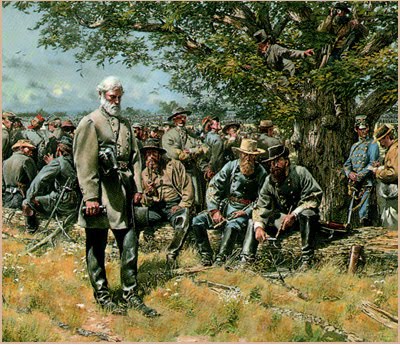
Down here, there are no memorials to ancient battles, no ornate headstones honoring long-dead dignitaries. There are only rows of small unassuming white tombstones, many engraved with names like George, Toby and Rose. They are the only visible reminders that part of the nation's most storied burial ground sits atop what used to be a thriving black town -- "Freedman's Village," built on land confiscated from Confederate Gen. Robert E. Lee.

Milton Rowe recently shuffled around the famous grounds, slowly making his way up a hill with Wayne Parks. There's nothing here now to tell visitors that freed slaves once lived here, but the two men say they feel a kinship, a connection with this land because they can both trace their ancestors to Freedman's Village. Mr. Parks said he remembers his grandfather repeatedly bringing him to the cemetery as a child to explain the bond. Mr. Parks' great-grandfather, James Parks, lived in Freedman's Village and other locations around the cemetery after being freed from servitude to the Lee family.

"I was sitting on this wall gazing out over the cemetery and all of a sudden I got it," Mr. Parks said. "Our DNA is intrinsically intertwined in this property, integrated in this property. The spirits of my ancestors continue to exist here in this property, so I find like my grandfather, I now come here for strength, I come here to commune with them."

Arlington National Cemetery was established on land confiscated from Lee and his family in 1861 after the general took command of the Confederate forces.
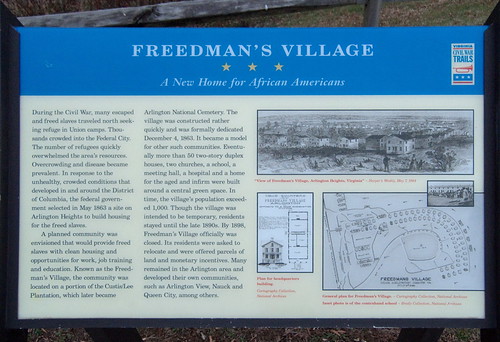
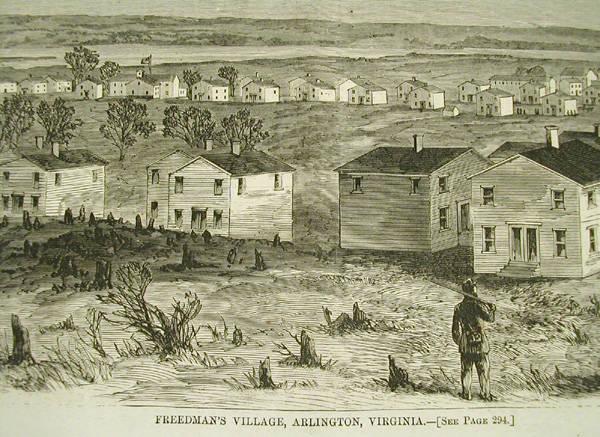
The Civil War leaders of the Union buried dead soldiers on the property in hopes that Lee would never want to return, and Parks' ancestor dug the very first grave near the Freedman's Village burial site. The federal government turned some land about half a mile north of Lee's mansion into a town specifically for freed slaves, referred to as contraband, who had nowhere to go. Freedman's Village was no ramshackle camp. At its height, more than 1,100 former slaves lived in a collection of 50 one-and-a-half story duplexes surrounding a central pond.

Although the town was supposed to be temporary, the freed slaves put up churches, stores, a hospital, mess hall, a school, an "old people's home" and a laundry -- to make a life for themselves. "I think it would have very much resembled a town anywhere in America today with that population. They had the same needs as anywhere, and they sustained themselves by working," said Thomas Sherlock, historian at Arlington National Cemetery.

Living in Freedman's Village wasn't free. Workers with government jobs on nearby farms or those doing construction were paid $10 a week, but half their salary was turned over to the federal government to pay for running the town. Everyone else who lived on site was charged between $1 and $3 rent. Dignitaries from around the nation came to see -- and sometimes stay -- with residents. The most famous was Sojourner Truth, the fiery black abolitionist and preacher, who spent about a year at Freedman's Village as a counselor and teacher.

Truth taught courage and urged residents to stand up to nearby white landowners who had taken to raiding the village to kidnap children for slave labor. Freedman's Village parents who had reported the kidnappings earlier had been thrown in jail. But when authorities came to jail Truth for encouraging parents to keep complaining, she swore to "make this nation rock like a cradle" if they tried to silence her. They backed down, and the raids soon ended. Life was difficult. Virginia residents resented the villagers, and threats were made against their lives. Freedman's Bureau record show that on July 27, 1865, an Army assistant commander ordered "the arrest of W. J. Miner (white man) near Freedman's Village for threatening the lives of colored people, collection of unjust claims" and other crimes. There's no indication an arrest was ever made.

Eventually, the village site, with a spectacular view of the nation's capital and the Potomac River, became more and more desirable for development. Despite impassioned protests from the freed slaves, the federal government paid the residents $75,000 for the buildings and property, and tore down the town in 1900. "Unfortunately our government didn't see the historic value of some of those things," Sherlock said.

Saving the city would have been a "gift to the American people to remember the struggles which seem like was a long time ago, but 150 years is not that long ago," Mr. Sherlock said. When the villagers dispersed into nearby cities and towns, many brought along bits and pieces of Freedman's Village. To this day, the 84-year-old Mr. Rowe and his family attend a nearby church, Lomax AME Zion Church, that got its start in Freedman's Village in 1863.

Several villagers later held prominent positions around the former town's site. William Syphax was elected to the Virginia General Assembly. After Mr. Rowe's great-grandfather, blacksmith William A. Rowe, left Freedman's Village, he became the first black policeman in Arlington County, Va., and later held other county posts, Mr. Rowe said. "They were very instrumental in setting up Arlington County when they moved out," he said.

Arlington National Cemetery holds little to tell people that Freedman's Village ever existed. There's a model of the town inside Arlington House, Lee's former home, but no markers or plaques on the town's site. The only trace of Freedman's Village left on the grounds are the lonely graves in Section 27 near the Iwo Jima Memorial. Walking among the gravestones, Mr. Parks points to the word "citizen" on some, and "civilian" on others -- a recent addition. Originally, Freedman's Village residents were buried with the word contraband on their gravestones. "As time went on and the headstones started to deteriorate and they were being replaced, the historian saw fit to give them the honor they were due and affirmed their status as civilians," Mr. Parks said.

More people should know about the struggles of the villagers, Mr. Parks said. We hope people will "continue to tell their stories, to bring their stories to light, in part really to give them back their dignity that the institution of slavery robbed from them but also to let the current generation know the sacrifices they made and the triumphs they had over extremely adverse circumstances," Mr. Parks said.

CWL: Was Freedman's Town ever 'LOST'? Was it ever a city? It appears not. Below is the city of Arlington's information on the village.

Freedman’s Village survived long after the Civil War, thriving for 37 years and sowing the seeds of Arlington’s African American community. Arlington’s Mount Zion and Mount Olive Baptist churches both descended from the village’s Old Bell Church. Residents of Freedman’s Village gained political influence in the 1870s, enabling villagers to elect officials who went on to become some of Arlington’s most prominent leaders. After 25 years of existence, the village was closed in 1888, and the land returned to military control. Former Freedman Village residents who remained in the area established such continuing neighborhoods as Arlington View, Butler-Holmes, Halls’s Hill and Nauck.

Text Source: Pittsburgh Post-Gazette.com

Top Image: Freedmans' Village Roadside Marker

Second Image: Flickr

Third Image: Library of Virginia

Bottom Image: Arlington Cemetery

Thursday, April 22, 2010

New and Noteworthy---Jerusalem Plank Road: Poems of Petersburg and Memory

Jerusalem Plank Road, Brendan Hamilton, Durga Press, 2009, paperback $12.95, digital download, $8.95.

Brendan Hamilton offers 18 poems drawn from "all kinds of historical material" including the oral testimony of his grandfather, a World War 2 veteran who also lost a brother in the war. Hamilton's focus are the losses of the siege of Petersburg: life, youth, futures, and the city.

The poems contain images of earthworks with bomb craters and gabbions. Descriptions of soldiers' brogans, open shirts, muzzle flashes, Rebel yells, 'great Smokey Mountain chuckles', and dirt like that of Golgotha are in the poems. Memories of the past at Fort Mahone lie in the shadow of a Walmart sign. Fort Gregg in the battlefield's military park is bordered by a building that once housed the first hospital in America exclusively for the treatment of mental disease in the Negro. This collection of poems is illustrated with black and white photographs from the Library of Congress collection; many of the photos may be familar to Civil War readers. Several though appear to have limited or little previous circulation. Others are segments of cropped photographs that are revelatory. A notable segment of a cropped photograph is the book's cover that shows an officer probably taking Christian communion.

Brendan Hamiliton lives in Louisville, Colorado with his wife, Kris and their dog, Oliver. A lifelong student of the Civil War, Brendan is a recent graduate of Naropa University’s M.F.A. Writing & Poetics program. He also has a B.A. in history from the College of William & Mary. This is his first book of poetry.

Order information for Jerusalem Plank Road is found at lulu.com

Text by CWL.

Wednesday, April 21, 2010

Off Topic News--- OK Corral Gunfight Documents Made By Coronrer Found

Arizona Court Discovers Original OK Corral Papers, Jonathan J. Cooper, Associate Press, April 21, 2010.

A missing handwritten transcript from a coroner's inquest done after the legendary gunfight at the OK Corral has resurfaced in a dusty box more than 125 years after the most famous shootout in Wild West history.

The document resurfaced when court clerks stumbled on the box while reorganizing files in an old jail storage room in Bisbee, about 20 miles south of Tombstone. Stuffed inside was a modern manila envelope marked "keep" with the date 1881. Court officials turned the document over to state archivists on Wednesday. Experts will immediately begin peeling away tape, restoring the paper and ink, and digitizing the pages.

The first pages could show up on the library's website for historians to review as soon as next week. It's unlikely the transcript will provide any shattering revelations, since historians have already reviewed photocopies of the document and the inquest was covered in detail by local newspapers at the time.

But history buffs said the transcript is enlightening nonetheless, clearing up fuzzy points in the copies and revealing small notes that might not have appeared on the photocopies. "They were handled by the people of that moment, and they're the actual artifact that encapsulated that time period," said GladysAnn Wells, Arizona State Librarian.

The 1881 gun battle between the forces of law and a gang of rustlers left three men dead, made folk heroes of Wyatt Earp and Doc Holliday and inspired numerous movies about the untamed Old West. The inquest was done on the same day Earp, his two brothers and Holliday confronted a gang of drunken outlaws, sparking a 30-second gun battle in the streets of Tombstone that killed Frank and Tom McLaury and Bill Clanton.

The document has been missing for decades — last seen when it was photocopied in the 1960s. The pages include verbatim testimony from eyewitnesses to the shootout. The document is legible, but the paper has darkened to an amber beer color and is brittle like a potato chip, said Cochise County Court Clerk Denise Lundin. The handwriting can be difficult to read because the court reporter was rapidly taking notes, she said.

Even if the document doesn't reveal new information, the discovery helps historians feel more comfortable with the record, said Gary Robertson, a Wild West historian and author of the book "Doc Holliday, the Life and the Legend." But most importantly, it sparks the imagination. "Every time you find one it gives you hope that maybe you'll find some more," Roberts said. "Maybe there will be something else that we've all been dying to get our hands on."

Lundin is convinced that somewhere in her courthouse are records of the inquest for Johnny Ringo, another legendary outlaw. "These things aren't something you can go search for," she said. "You really just have to watch for them."

Text and Image Source: Associate Press/YahooNews.com

Off Topic Fiction---A Classic Story for All Readers, a Gothic Murder Mystery and a Modern Horror Story

The Secret Garden, Frances Hodgson Burnett, Sterling Press, Unabridged Edition, 248 pp., 2004, $9.95.

Recognized as a classic but unread by CWL until his wife said it was her most favorite of all books. How favorite? The Secret Garden was the first story she down loaded when CWL gave her a Kindle for Christmas. Born in India, the unattractive and willful Mary Lennox is in the care of her parents and their servants until the cholera comes. She inadvertently avoids the plague by happily being alone in her room expecting the servants to come and dress her soon. Passed along by relatives who are not willing to keep an ugly and spoiled child, she is sent to live with an uncle, whose wife has died and whose rural Yorkshire estate seems full of latent mysteries. There is an abandoned and locked walled garden, a curmudgeon garden keeper, a boy that talks to animals who actually listen to him, a variety of servants, an uncle who abandons her upon her arrival and a voice crying in the night within the mansion. Pulling yourself outside of yourself by recognizing your faults, overcoming anger, and a quiet belief that nature can bring healing and reconciliation are the hallmarks of the well written, character driven that all may read for entertainment and insight.


The Glass of Time: A Novel, Michael Cox, W. W. Norton & Company, 592 pages,
$14.95, 2009.

The sequel to the first rate Gothic thriller The Meaning of Night: A Confession is set in 1876, follows the fortunes of 19-year-old orphan Esperanza Gorst who resides in Paris. Her guardians trains her to go undercover as a gentle lady's maid. Without knowing the motive for this subterfuge, Gorst gains the employment, then respect, then friendship of Baroness Tansor, the fiancée of the villain, Phoebus Daunt who were central characters in The Meaning of Night: A Confession Gorst quietly learns her mistress has many secrets, including her partial responsibility for several deaths. Michael Cox talent lies in his abilituy to convey the heroine's inner conflicts regarding the deception of her employer. Lady Tansor has a difficult and sympathetic personal story and a fierce manipulative way of handling money issues. Crooked lawyers, Victorian homicidal scum, faithful servants, lost children and police detectives complicate, endanger and prompt the heroine to boldness and a great degree of personal risk.

The author’s first novel, the chilling The Meaning of Night (2006), is set in London in 1854 and was told from the viewpoint of a scholar who became a murderer. This sequel, set some 20+ years later, is narrated by a naive orphan.
A childhood of Parisian luxury by her guardians, an excellent education by her tutor was seemingly arranged for her for one purpose which is called The Great Task. Lady Tansor proves to be a difficult employer, given to hysterics of grief over the death of the love of her life, the poet Phoebus Daunt, a murder victim. Cox so cleverly uses the plot of his first novel. The sequel can be read by both those who have not read The Meaning of Night. Both works have wonderful period atmospheres, intricate plots, and intelligent narrators. Both novel may be enjoyed for there history and their mystery.


The Birthing House, Christopher Ransom, 320 pages, St. Martin's Press, 2009, $14.95.

Supernatural and psychological distress await. In Ransom's The Birthing Housea relatively young couple descend into moral confusion and blurred reality after the occupationally challenged husband purchases on impulse a 140-year-old Victorian house in Wisconsin. A screenwriter with no sold screenplays, Conrad Harrison, has a crumbling marriage and way too many pet snakes. Maybe he does and maybe he doesn't. The reader realizes that Conrad is an unreliable narrator.

Joanna, Conrad's economically successful wife, moves into the house and then takes the first opportunity to live by herself in Detroit for eight. Being alone is not good for Conrad. The spiders in the house are pregnant. Conrad's male snakes have become transgendered and are pregnant too. The neighbor's teenage daughter is pregnant. Conrad's wife is not.

Conrade begins to hear crying newborns, sees dark shadows, discovers a photo album that is a yearbook of occupants of the house. Past occupants include a white trash family with a history of birth defects and a semi-religious cult with a dominant male and unwilling females. Prerequisites are met: gory climaxes, sexual climaxes, and ambiguous climaxes. A malevolent female ghost encourages Conrad's progressively unstable mind to teeter and totter. There is quick and superficial characterizations in the novel. Narrative is either a trickle or a torrent. Yet there are some very good scenes in the book. Especially enjoyable is the conversation that Conrad has with the white trash father and former occupant of the house. One of the few better scenes in the novel is their angry bantering in the bar.

Text by CWL.

Tuesday, April 20, 2010

CWL on No Quarter: The Battle of the Crater, 1864

No Quarter: The Battle of the Crater, 1864 , Richard Slotkin, Random House, 2009, 410 pp., maps, index, notes, bibliography, $28.00.

Richard Slotkin's account of the July 30 1864 battle is remarkably wide in its context and deep in it details. Strategy, tactics, and personalities are used to frame this kaleidoscopic portrait of brutality. The Battle of the Crater was a terrifically bloody and brutal fight on a nauseatingly hot day at Petersburg Virginia. After two and a half months of the Overland Campaign, the siege of Petersburg began. Within six weeks of the start of the siege the 511 foot tunnel with a double cassion of eight tons of gun powder was under the Confederate line at Elliot's Salient. The tunnel was dug, built and loaded by the Irish miners in the 48th Pennsylvania Infantry preparation by the troops of the Federal Ninth Corps, the Federals exploded a 511 foot long tunnel that travels from the Federal picket line to beneath a Rebel salient.

Slotkin states the purpose of writing No Quarter: The Battle of the Crater 1864 "is to give the reader a clear and accurate account of the strategic setting and the battle action as it developed by hour by hours, and to show how the culture and politics of the place and time shaped the way the soldiers fought and the meanings they saw in their experience of war". Slotin does precisely that. Keeping a steady and suspenseful narrative pace, crisply setting the personalities into the story, and revealing the mindset of the characters regarding race, war exhaustion, the 1864 Rebel and Union elections, and desertion. For the most part this is a soldiers' story but Slotkin judicially handles politics, politicians and political attitudes to reveal the culture in which the soldiers fought and sacrificed.

The author has captured episodes that are memorable. In the 1st Michigan Sharpshooters were trained scouts and crack shots from the Chippewa, Ottawa as well as other tribes. They appear several times briefly throughout the book. Slotkin offers a final glimpse of them in the Crater. They are huddled with their shirts over the heads and plaintively chanting their tribe's death songs.

The possibility and perception of atrocities against blacks is addressed by Slotkin. The Crater was fought in the shadow of the awareness of the 1864 tragedies at Fort Pillow, Poison Springs and Saltville. The 25th North Carolina's war record is covered including their first encounter against black Federal soldiers, freedmen and white Southern collaborators during the 1864 Plymouth, North Carolina campaign. The North Carolina's had a different response towards each group. The violent response varied toward each group with the black the degree of violence meted out. The regiment's second encounter with black Federals is at the Crater. Going into battle the USCT brigades were told that as the Confederates gave no quarter to black troops
they would give no quarter during this battle. The unspoken words by the USCT captains was the no quarter would be given to the Southerners during this day of battle. The blood gets deep in the Crater and in the entrenchments beyond it.

Slotkin describes the tedium of trench warfare and the unexpected brutality of death by mortar round, by sharpshooter or by dysentery. Colonel Pleasant of the 48th Pennsylvania, architect of the tunnel, Brigadier General Ferraro, commander of the USCT Division, Major General Burnside, commander of the Ninth Corps, and Major General Meade, commander of the Army of the Potomac among the many Federals are well described and fully presented. Major General Mahone, Brigadier Generals Ransom, Weisger and Sanders, General Lee have succinct and well craft portraits.

Within the chapter 'Preparation for Battle' the reader is able to locate 15 decisions that caused the attack to fail at the Crater. The tactical objective was to seize Cemetery Hill and cut control the Jerusalem Plank Road. Slotkin is not forceful in describing these harbingers of failure but he allows the reader to think through the conditions and choice made and not made. The author is well practiced in the art of narration and as a story No Quarter: The Battle of the Crater 1864 is extremely well paced and even suspenseful. Slotkin drive carries the story past the battle to the truce and into the Court of Inquiry. Readers of traditional battle studies will find issues not generally encountered. Provocative issues are addressed by Slotkin. Soldiers' opinions on race and politics, their hearth and homes, and slavery and freedom.

A few quibbles: CWL likes maps. There are four that cover the Overland Campaign, the siege and the battle. More maps would have been helpful, especially those showing the maze and labyrinth of Rebel earthworks behind Elliott's Salient. Also, a brief discussion of newspaper illustrations and photographs depicting the battle would have been enjoyable. Coverage of The Crater in historical memory would have been welcomed also. Slotkin does offer material on the post-battle newspaper coverage and the court of inquiry (August 6-September 9, 1864). An order of battle for the Federal Ninth Corps and those Rebel troops brigades would have been convenient.

Text by CWL.
Middle and Bottom Images: The entrance to the mine. Photography by Civil War Librarian.

Friday, April 16, 2010

News: Confederate History Month, Slavery, Treason and Courage

Confederate History Storm: Slavery, Treason, And True Southern Courage, Allen C. Guelzo, Christian Science Monitor, April 9, 2010.

Governor Bob McDonnell’s controversial proclamation of Confederate History Month should help us remember the South’s rebellion for what it really was.

“I am no minister of hate,” wrote the black abolitionist Frederick Douglass in 1871. But as he watched Northerners in the years after the Civil War turn to teary-eyed embraces of their former Confederate enemies at postwar reunions and veterans’ meetings, he was appalled. “May my tongue cleave to the roof of my mouth if I forget the difference between ... those who fought to save the Republic and those who fought to destroy it.”

Douglass can be forgiven a certain measure of resentment toward the Confederacy. After all, he was born a slave in Maryland, escaped as a runaway in 1838, turned to a public career as an abolitionist newspaper editor and lecturer, and sent two sons to fight in the Union Army. But he had a point that Virginia Gov. Bob McDonnell (R) might have been wise to ponder before Tuesday, when he proclaimed April as Virginia’s “Confederate History Month.” Just what is it, exactly, that Governor McDonnell is proposing to honor?

McDonnell’s proclamation is actually a comparatively bland statement, asking Virginians to acknowledge those “who fought for their homes and communities and Commonwealth in a time very different than ours today.” Absent were any endorsements of states’ rights and the “Lost Cause.” It was simply a declaration that Virginia’s decision to secede from the United States and attach itself to the Confederacy in 1861 “should be studied, understood and remembered by all Virginians.”

The problem lies with something else McDonnell airbrushed out of his initial proclamation: slavery. The proclamation describes the Civil War as “a four year war between the states for independence.” That is true, but it’s like saying that the Titanic sank because it filled up with water.

The proclamation only raises the question of why Virginia and the other confederate states should have yearned for independence in the first place. Twist and turn as we may, the answer to that question always comes back to this: the enslavement of 3.9 million black people. This is not to say that other factors didn’t come into play.

The Southern states had serious grievances with their Northern counterparts over economic policies. Foreign visitors and commentators noted that Southerners had developed a distinctly different regional culture. And there was a long history of disagreements about how much political autonomy individual states possessed within the federal Union created by the Constitution. But if slavery was not the only issue that went into the making of the Confederacy, it was unquestionably the paramount one.

None of the others would ever have brought matters in 1861 to civil war had it not been for the razor-edge given them by slavery. And you do not have to dig very far into the letters, diaries, and speeches of Confederate soldiers and civilians to find out how important the defense of slavery and white racial supremacy was to them.

“Slavery is the only base on which a stable republican government ever was or ever will be built,” announced a Nashville newspaper on the eve of secession. Although only a third of white Southern households owned slaves at the outbreak of the Civil War, as many as 50 percent of Southern households had owned a slave at some time.

Even those who did not own slaves regarded slavery as the bulwark of white supremacy: “The strongest pro-slavery men in this States,” boasted a Louisville newspaper editor, “are those who do not own one dollar of slave property.” And slaveholders and the sons of slaveholding families were generously represented in the Confederate armies. In Robert E. Lee’s Army of Northern Virginia, rates of slaveholding ran as high as 47 percent.

Defending the slave system is scarcely something Virginians can look back on with pride. But even less admirable was the willingness of Virginians to commit treason as part of that defense. Treason is not an easy word to use these days. In modern ears, it has the ring of jingoism and Joe McCarthy, and in our multicultural reverence for diversity, we find it’s become easier to label as “dissenters” people who ask God to damn America or who sell their country’s weapons blueprints to the highest bidder.

But what other word are we to use for American soldiers (like Robert E. Lee) who repudiated the oath he had sworn to defend the Constitution? Or for US senators (like Jefferson Davis) who raised their hand against the flag they were born under and brought on the deaths of 620,000 Americans?

And why is Virginia’s governor celebrating secession, when 31 of Virginia’s westernmost counties in 1861 balked at joining the Confederacy and formed, first, a pro-Union government-in-exile, and then a completely new state of West Virginia in 1863?

If treason has become too embarrassing a word, then so has loyalty, and we may as well forget the courage of the west Virginians, as well as those 300,000 other Southerners from Tennessee, Alabama, North Carolina, and (yes!) Virginia who stayed faithful to the Union and fought in its ranks during the Civil War.

We are now within a year of the Sesquicentennial of the Civil War, and unfortunately, McDonnell’s proclamation has been the most prominent reminder of that anniversary. Congress has failed to create a national commission like the one it authorized for the Civil War Centennial, and the states that have formed local Sesquicentennial Commissions have generally stacked them with political hacks and low-visibility museum managers.

The brouhaha over the proclamation forced McDonnell to issue a belated codicil to his proclamation Wednesday, apologizing for the omission of slavery. But this will probably only have the result of forcing celebrations of the Sesquicentennial further into the shadows, as it dawns on the politicos that any public mention of the Civil War is going to alienate some constituency. The only thing worse, as Frederick Douglass might have warned us, than remembering the Civil War wrongly, is not to remember it at all.

Allen C. Guelzo is the Henry R. Luce professor of the Civil War Era at Gettysburg College, and the author of “Abraham Lincoln: Redeemer President.”

Text Source: Christian Science Monitor, April 9, 2010

Image Source: Top, Gilbert Gaul; Middle and Bottom, Don Troiani

Wednesday, April 14, 2010

Reenactment: Battle of Bentonville, 2010

Re-creating the Civil War: Bentonville Battle Was Largest in N.C.,Drew Brooks, Fayetteville Observer, March 21, 2010.

With thousands of spectators cheering and shouting encouragement, one might have thought a major sporting event was being held this weekend in Bentonville, a small town just north of the Johnston County line.

But the "teams" the crowd was cheering for weren't playing a game. They were Civil War re-enactors and aimed guns and cannons at each other while playing out one of the last major Confederate offensives of that war.

Officials with the state Department of Cultural Resources, which oversees the event, said they expect well over 30,000 spectators over the weekend. The estimated 15,000 to 20,000 that came Saturday enjoyed steady breezes and a clear sky - that is, until smoke from cannons and muskets wafted over the crowds from the battlefield. Thousands watched the battle, including large contingents of uniformed Boy Scouts and soldiers.Jennifer Sakeagak, of Jacksonville, said she, her husband and three young children spent much of the day exploring mock civilian and military camps before watching the battle.

A self-described history buff, Sakeagak said she was impressed by the event, which is held once every five years. "We've been wanting to see a Civil War re-enactment for some time," she said. "I enjoyed everything." Sakeagak particularly loved the cannons, which shook the battlefield and rattled the rib cages of spectators. Her 5-year-old son also liked the battle, but he preferred watching the many Union and Confederate soldiers pretend to die.

While most re-enactors simply fell to the ground and were then either left there or "treated" by combat medics, others had more dramatic deaths. One Confederate soldier-turned-thespian, shot a few dozen feet from the Union front lines, fell to his knees and clutched his chest for more than a minute before finally falling over in a theatrical flourish. The re-enactment portrayed an event known as "the Fight for Morris Farm."

The Battle of Bentonville, which began on March 19, 1865, actually included three days of pitched battle involving 80,000 soldiers - 20,000 Confederates and 60,000 Union soldiers, according to state officials. It was the largest battle ever fought in North Carolina. The battle has been marked by a re-enactment every five years since 1990.

Text Source: Fayetteville Observer
Image Source: Civil War Librarian

Reenactment: Battle of Bentonville on Original Battlefield

Thousands Restage 1865 Civil War Fight,Sadia Latifi, Charlotte Observer, March 21, 2010.

Gen. William Tecumseh Sherman brought about 60,000 Union men and boys to Bentonville in March 1865, ready to crush Gen. Joseph E. Johnston's Confederate army.

This weekend, only about 1,100 of Sherman's troops - compared to about 2,500 Confederate soldiers - showed up at Bentonville Battleground to re-create the fight, the largest and last major Civil War battle in North Carolina.

Every five years, thousands flock to the site to remember and re-enact. They take great care to uphold historical accuracy. When they can. "Nobody wants to be a Union soldier," said Raleigh resident Wes Jones, 58, of North Carolina's 6th Cavalry Regiment, Company I. "Playing a Confederate is more fun. Even though we lose, you get to play the underdog."

The Union soldier shortage is a recurrent problem for Southern Civil War re-enactments. To participate at Bentonville, interested Yankees must often take vacation days and travel long distances to an area about 50 miles southeast of Raleigh. "You have to take off almost five days to come here," said Peter DellaVedova, 56, of the 104th Illinois Volunteer Infantry, based in Chicago. "We lost six of our guys on the way down here because a car broke down."

That part is historically accurate - sort of. Many members of the original Illinois unit died while traveling to North Carolina for the battle, DellaVedova said. To deal with the Union shortfall, organizers allow any Federal units to join the battle up to the day of the event. Confederate units must be invited. Sometimes a Confederate soldier, such as Jones, will don a navy blue jacket the first day to level out the numbers. And sometimes, dead Union soldiers come back to life to shore up the North's numbers. Not the boys from Chicago, though. "Our unit says that once you've been hit, you stay on the ground," DellaVedova said.

More than 3,500 war buffs have camped out in tents for days in Bentonville to re-enact the battle on its 145th anniversary. The original battle lasted three days - from March 19 to March 21, 1865 - and spread over 6,000 acres. Confederate dead or wounded . totaled 2,606. The much-larger Union army had 1,646 dead or wounded.

Text Source: Charlotte Observer, March 21, 2010
Image Source: Civil War Librarian

Reenactment: Bentonville North Carolina Battlefield Today

The park, founded in 1965 and portion was declared a National Historic Landmark in 1996. Today the Bentonville Battleground State Historic site includes 130 acres of the battlefield. A visitor's center and the restored Harper House, which served as a hospital for Union soldiers during the battle is on the site.

The Bentonville Battlefield Historical Association and the Civil War Preservation Trust also owns portions of the battlefield not included in the state park, including 901 acres by the CWPT alone. The photograph above is of Confederate reenactors assaulting the Federal entrenchments during the 145th anniversary event.

The photographs above and on the left show the Confederate assault on the Federal right wing. The musket barrel in the the left photograph belongs to Civil War Librarian.

Camping during the event was campaign-style on the original battleground that included Federal entrenchments. The event included two scripted battles. In both battles Federals dug and the Rebels charged.

Text and Image Source: Civil War Librarian

Reenactment: 145th Anniversary of the Battle of Bentonville

The Battle of Bentonville was fought March 19–21, 1865 in North Carolina, as part of the Sherman's Carolinas Campaign that occurred after the capture of Savannah, Georgia in late December 1864. Bentonville was the last major battle to occur between the armies of Sherman and Johnston.
After the battle Robert E. Lee, now the commander of all Confederate armies, received a telegram from Johnston. In the message Johnston confessed to Lee that at most he would be only an annoyance to Sherman.


The 145th reenactment was on a portion of the Bentonville battlefield that has been preserved by North Carolina. Picture above shows Federal reenactors constructing field entrenchments during the second day of the event. The Federal lieutenant is Nick Griffey, Ninth Pennsylvania Reserves, Company A; this organization hails from the Pittsburgh Pennsylvania metropolitian region.

On the first day of the battle (March 19), the Confederate army attacked the right Federal wing and routed two Union divisions. The rebels were unable compell a third division to retreat The next day (March 20), the left Federal wing arrived on the battlefield. On that day and the next (March 21), the armies skirmished and Johnston retreated.

Text and Image Source: Civil War Librarian

Thursday, April 01, 2010

News----Preservationists Attack Devil's Den, Steal Out House


Unable to wait any longer for the tardy National Park Service to act in regard to removing a non-period structure at Devils Den, Progressive Preservationists have stolen an outhouse from the battlefield. A note was discovered at the 'archaeological footprint' of the building. News that the heirs of the architect has sued the NPS to preserve the 1935 structure prompted this the group's aggressive tactics.

GNMP security officers at the time of the discovery nicknamed the group 'The Peepees' and doubted that the outhouse would be found intact. The self proclaimed 'Progressive Preservations' stated in the note that a second act would immediately follow. The outhouse was soon found with the boundaries of the park. While on the way to his office in the new visitors center, a ranger found the small structure.


Barry O'Bama, GNMP security officer, labeled the 'Progressive Preservationists 'as nothing more than a cadre of Toilet Talibans.'

Images Source: Gettysburg Daily

Wednesday, March 31, 2010

News---UNC Press & Penn State Civil War Center Team for New Peer Reviewed Journal of Civil War Era

Manuscripts are being solicited for a new, peer-review journal that incorporates a broad view of the Civil War era. Published in collaboration with The University of North Carolina Press and the George and Ann Richards Civil War Era Center at the Pennsylvania State University, The Journal of the Civil War Era will launch its inaugural issue in March 2011.

William Blair, of the Pennsylvania State University, serves as founding editor, and Anthony Kaye, Penn State, and Aaron-Sheehan Dean, University of North Florida, as Associate Editors. The new journal will take advantage of the flowering of research on the many issues raised by the sectional crisis, war, Reconstruction, and memory of the conflict, while bringing fresh understanding to the struggles that defined the period, and by extension, the course of American history in the nineteenth century.

Besides offering fresh perspectives on military, political, and legal history of the era, articles, essays, and reviews will attend to such topics as slavery and antislavery, labor and capitalism, popular culture and intellectual history, expansionism and empire, as well as native American, African American, and women’s history. The editors also intend The Journal of the Civil War Era to be a venue for scholars engaged in race, gender, transnational, and the full range of theoretical perspectives that animate historical practice.

The editors are recruiting an editorial board that reflects the wide range of specialties and theoretical engagements that form the scope of this publication. They include Stephen Berry, University of Georgia; David Blight, Yale University; Peter Carmichael, West Virginia University; Gary Gallagher, University of Virginia; Thavolia Glymph, Duke University; Stephanie McCurry, University of Pennsylvania; Tiya Miles, University of Michigan; Christopher Morris, University of Texas at Arlington; Carol Reardon, the Pennsylvania State University; Seth Rockman, Brown University; and Leslie Schwalm, University of Iowa.

The Journal of the Civil War Era has been adopted by the Society of Civil War Historians, providing a substantial readership base that will provide authors with visibility. With registrations for the Society’s conference this June, members will automatically receive a subscription to the journal beginning with the first volume year.

The editorial home for the journal is at the Richards Civil War Era Center, The Pennsylvania State University, 108 Weaver Building, University Park, Pa. 16802. For subscriptions and advertising, please contact Suzi Waters at The University of North Carolina Press at suzi_waters@unc.edu.

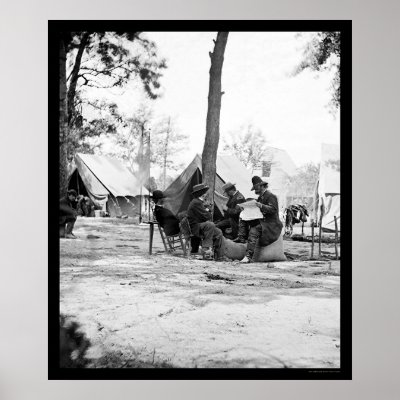
Top Image: Newspaper Sales in Camp

Bottom Image: Burnside Reading

News: John Brown Raider's Navy Colt Found By Private Collector; Used in Kansas and at Harpers Ferry, Virginia

Historian Reunites Abolitionist's Gun With Museum, Marylynne Pitz, Pittsburgh Post-Gazette, Wednesday, March 31, 2010.

Robin Rombach/Post-GazetteAn 1851 Colt "Navy" revolver once owned by abolitionist Owen Brown.Robert Hassinger bid farewell on Tuesday to an old friend, a revolver whose craftsmanship, hallmarks and engraving led him on a fascinating quest and fed his lifelong passion for American history.

"I like to do research," said the retired insurance investigator, who returned an 1851 Colt "Navy" revolver to the Chicago museum from which it was stolen 62 years ago. Inside the third-floor board room of Soldiers & Sailors Memorial Hall & Museum in Oakland, he donned a pair of white gloves and carefully removed the gleaming revolver from a brown valise.

"There's no pitting, no rust," Mr. Hassinger, 83, said as he showed it to Libby Mahoney, chief curator of the Chicago History Museum, who was visibly impressed by its excellent condition. "I can't really believe that it's resurfaced. You're an extremely honest person," said Kathleen Plourd, the museum's collections director.

At a gun show here in 1991, Mr. Hassinger traded an 1860 Army revolver for the earlier 1851 Colt model because its low serial number piqued his interest. He began researching its history, accumulating information in a neat binder. While paging through Man at Arms magazine in 2001, the North Hills man read an article headlined "John Brown's Colt Navies."

John Brown, a zealous abolitionist, led an ill-conceived raid in 1859 on a U.S. military arsenal in Harpers Ferry, Va. Afterward, he was tried and hanged. Three of his sons also died in the anti-slavery movement. But Brown's third son, Owen, escaped from Harpers Ferry, fleeing to Canada and later returning to the United States. The article reported that Owen Brown's gun, stolen in 1948 from the Chicago History Museum, remained missing and had a serial number of 43156.

Mr. Hassinger knew his Colt revolver bore the initials O.B. on its backstrap. He figured the initials were those of the soldier who used the gun but was never able to match the letters to anyone, even after examining regiment rosters. On the day he got it, Mr. Hassinger showed the O.B. initials to his wife, joking, "This stands for 'Oh, boy, look at the neat gun I got.' " As he matched the serial number to his revolver, he was electrified by the realization that he held Owen Brown's gun in his hand. Now, he faced a dilemma. "I didn't know what to do," he said.

Mr. Hassinger consulted Ronald J. Erhart, a lawyer he knew from the Greater Pittsburgh Civil War Roundtable, who contacted the Chicago History Museum. He got no response. "Maybe they were afraid I was after some money. I wanted some proof that it was stolen," Mr. Hassinger said. "No claim was made to the insurance company because they thought the gun wasn't worth anything."

Mr. Hassinger then consulted Mike Kraus, curator of Soldiers & Sailors. A collector of Civil War artifacts since boyhood, Mr. Kraus believes the revolver is worth between $100,000 and $250,000. Through colleagues, Mr. Kraus reached Ms. Mahoney, Chicago History Museum's chief curator. "She was very interested in talking to me, especially when she heard the phrase, 'Owen Brown's pistol,' " Mr. Kraus recalled.

Ms. Mahoney sent documents showing the Chicago Historical Society accepted the revolver in the 1920s from Frank Logan, a collector of John Brown and Abraham Lincoln memorabilia. The packet included a newspaper account of the gun's theft. That proof satisfied Mr. Hassinger. "I realized that it belonged to them and that it had to go back," he said.

But that didn't make it any easier for him to let go of his crown jewel. "This is what makes me want to get up in the morning. I would love to own this, display it and give talks on it. It's a symbol of the development of this country," Mr. Hassinger said. Collectors, he said, don't really own their artifacts. "We are just custodians of them during our lifetime."

He's sad because Chicago History Museum officials "couldn't guarantee that it would go on display." They also declined to reimburse him for the costs he incurred in acquiring and insuring the gun. "That was never a condition of returning it, [but] why couldn't they just hand me $500 or even $100?" he said.

According to Mr. Hassinger's research, the Army adopted this gun in 1855. The 1st and 2nd U.S. Cavalry were the first regiments to carry it. An image of ships engraved on the gun's cylinder portray a fictional encounter between the Texan and Mexican navies, leading soldiers to call it a "Navy" revolver. Samuel Colt, who invented an innovative revolver, ordered this model to be engraved to honor the Republic of Texas because the first revolver he produced in 1836 was later used by Texas Rangers in fighting Comanches. It was called a "belt pistol" because at that time, soldiers stuck it in their belts.

Mr. Hassinger has a theory on how the revolver wound up in Owen Brown's hands. His father purchased a number of Navy revolvers while living in Lawrence, Kan., from 1856-58. Owen Brown joined his father there, participating in conflicts to prevent that state from becoming a slave state. Kansas joined the Union as a free state in 1861. "The soldier it was issued to may have lost it or may have deserted and sold it," Mr. Hassinger said, adding that the Army rarely recorded which guns were issued to specific soldiers.

Or, in 1856, Owen Brown may have fought with a member of the U.S. Army at a Kansas town called Black Jack, and taken the gun from a soldier there. Black Jack is about 20 miles south of Lawrence, the scene of bloody skirmishes over slavery. The right side of the gun's grip bears the initials of Robert Henry Kirkwood Whiteley, who headed the arsenal on Governor's Island in New York. His stamp meant that the gun had passed inspection and authorized payment for it.

Some time after 1859, Owen Brown returned from Canada to be near his sister, Ruth Brown Thompson, who lived in California. After he died in January 1889, his sister sold weapons that belonged to him and his father to Mr. Logan, who donated the weapons to the Chicago Historical Society. There's a strong market for Civil War memorabilia. "Stolen property remains stolen property," said Mr. Erhart. "He could have sold it to somebody in the black market. He understood that he had a duty to return it to the rightful owner."

Today, Mr. Erhart said, many museums emphasize World War II, and the Civil War's significance is missed by many Americans. "They wouldn't know Owen Brown from Charlie Brown." Mr. Erhart hoped this gun is displayed, for the sake of Mr. Hassinger and history buffs like him. "It may very well never see the light of day again and that hurts him. He has no say in what they do."

Text and Top Image Source: Pittsburgh Post-Gazette, March 31, 2010.

Second Image Source: Owen Brown

Third Image Source: Owen Brown's Grave in California

Fourth Image: Kennedy Farm, Maryland: location of Brown's Provisional Army encampment immediately before the raid on Harper's Ferry, Virginia

Friday, March 26, 2010

Grand Army of the Republic Post Re-Opens In Pennsylvania

Restored Veterans Post On Display At Carnegie Free Library, Brad Hundt, Observer-Reporter, Washington, Pennsylvania, March 21, 2010.

The men gathered on the steps outside Carnegie's hilltop library are a wizened bunch.
Gray and white whiskers sprout from creased faces and a few waistlines demonstrate how a metabolism can slow with the accumulation of years. Tentative grins show up on a few faces, but, for the most part, they're a proud, poker-faced lot.

They're all survivors of America's Civil War, a lucky contingent that managed to dodge the minie balls and cannon fire in the War Between the States and lived to tell about it. We see them in a photo taken in 1906 on the steps of the Andrew Carnegie Free Library, marking the dedication of the Captain Thomas Espy Post of the Grand Army of the Republic.

The image looms over the restored Espy Post, which reopened in February. And the rebirth of the room where Civil War veterans would gather to reminisce about their exploits and curate artifacts from the battlefield is just a part of the library's effort to become a must-see stop for Civil War buffs and scholars.

"Civil War enthusiasts are passionate," said Maggie Forbes, the library's executive director. She envisions that tourism generated by the library could even be "a linchpin for the revitalization of Carnegie." To that end, the Duquesne Wind Symphony is teaming with "Ghost Whisperer" star and Pittsburgh native David Conrad for an April 11 performance of Aaron Copland's "A Lincoln Portrait" in the library's music hall. It will be a few days after the 145th anniversary of Robert E. Lee's surrender to Ulysses S. Grant at Appomattox, Va., and a few days before the 145th anniversary of Abraham Lincoln's assassination.

It will accompany "Abraham Lincoln: A Man Of His Times, A Man For All Times," an exhibit developed by the Gilder Lehrman Institute for American History, which will be at the library starting April 2. Re-enactors and scholars will be visiting April 10.

The library's immersion in all-things Civil War-related is so comprehensive that, a few years ago, it staged "Our American Cousin," the farce that Lincoln was enjoying at Washington, D.C.'s, Ford's Theatre when John Wilkes Booth crept into the president's box.

"It's very unique," said Rea Andrew Redd, the director of Waynesburg University's Eberly Library and the head of a Civil War re-enactment group. "You can have a type of communion with the past there."

Named after an Upper St. Clair merchant who died in a Confederate prison camp, the Espy Post functioned in much the same way that American Legion and VFW posts do today, offering community service and a place to socialize with comrades who endured similar triumphs and trials. When the last veteran who haunted the Espy Post died in 1937, it was basically forgotten.

"They didn't know what they were going to do with it, so they locked it up," said library director Diane Klinefelter. Until the 1980s, the Espy Post was mothballed. Unused desks were shoved in the room. Coal dust covered the dishes that the veterans used at mealtimes. The roof started leaking.

Once library officials realized they had a historical treasure chest on their hands, though, they faced the Herculean task of trying to refurbish it. But "the fact that it had been ignored for 50 years is probably what saved it," Klinefelter pointed out. Otherwise, it could have been dismantled or pilfered by antique-hunters and souvenir-seekers.

A full-blown restoration of the room has always been on the library's drawing board, but a combination of donations and grants in 2008 provided the library the wherewithal to get it done. It now has its own security and heating and cooling systems and glass windows that protect against ultraviolet light. It was also studied by researchers at a Bryn Mawr laboratory to determine exactly what color the walls once were (they settled on pumpkin chiffon).

Among the items it contains are original chairs, weapons from the battlefield like swords and carbines, a uniform or two and leather-bound histories of the war and GAR posts. There's also a spittoon from those days with visible tobacco stains in it. "It was as if they were just in here," Klinefelter said.

CWL: Yes. That's my quote in the seventh paragraph.

Text Source: Observer-Reporter, Washington, Pennsylvania

Images' Source: Carnegie Free Library, Carnegie, PA

Wednesday, March 24, 2010

The Civil War Did Not Take Place In The South

The Civil War Did Not Take Place, William Pencak, Rethinking History Journal, 6:2 (2002), pp. 217-221.

Upon upon comparing and contrasting the media's accounts of the the 1991 Iraq War and eyewitness testimony of the war, Jean Baudrillard in in 1995 declared that the Gulf War did not take place. Pencak makes the same claim that the for the American Civil War is a verbal construction and hides testimony that American citizens would rather forget.

Pencak reviews the history of 'civil war' as a term that signifies the events of 1861-1865. Five stages gauge imperfectly how book titles used the term to describe the great conflict. He finds that the five stages correspond to the historical periods that marked the gradual reconciliation of the two regions. From 1865 to 1872, the term 'civil war' only appeared in the scholarly works of Benson Lossing (1866-1868), J. W. Draper (1867-1870) and Guernsey and Alden (1867). Otherwise, Northerners generally wrote of 'the rebellion' or 'the war for the Union' and Southerners wrote of 'the war for southern independence. At this time Reconstruction issues were at the fore.

During the 1870s, the moral picture became complicated by the continued presence of Federal troops in the South, and political corruption among the friends of U.S. Grant. Democratic Party leaders such as Samuel Tilden, Winfield Hancock, Grover Cleveland relied on Southerners turning out the vote. Pencak notes that from 1873 to 1889 the word/phrase 'rebellion' and 'war for the Union' stilled dominated in the North and 'War Between the States' became dominant in the South. He declares that state sovereignty had not been dismissed in the minds of Southerners and/or that the two regions were national states.

By the late 1880s, the intersecting issues of European immigration, Populism, and urban disorders became more dramatic that inter-sectional antagonisms. In 1887 President Grover Cleveland returned captured Confederate flags and the 25th anniversary of the battle of Gettysburg was noted. Within 19 years the last Union veteran to be president, William McKinley, stated that North and South are not divided "upon the old lines, but upon principles and policies and the Spanish-American war saw the return of two Confederate generals to the ranks of the Federal army.

Memoirs began to pour forth and the term 'civil war' began to appear in the titles of the works in as many instances as the phrase 'the war of the rebellion' appeared.
For the first time the term 'civil war' was in the titles of books written by Confederate officers. From 1910 to 1920 the term 'civil war' was used in the majority of book titles. This trend continues to the present day. Pancak notes several popular culture references to the war; these anecdotes may indicate change away from the prevalence of the term 'civil war.'

Granny Clampett of the Beverly Hillbillies became outraged at the use of the term 'civil war' which she defined at a time when the North invaded the United States. Nostalgia for the Confederacy among Southerners and the membership increases in of The League of the South, a relative new organization, are advocating a return to post-war terms. Now 'heritage violations' are committed by Northerners who are unaware of the Declaration of Southern Cultural Independence and the state of Mississippi's attempt to establish the Jefferson Davis Presidential Library. Pencak notes that 'while refutation of historical error can never shake the true believer' it may encourage some to keep an open mind about labels and hidden agendas. Distortions of the past are avoided when historians pay attentions to the historicity of the 'Civil War' as a proper noun. 'The Civil War' is a compromise term.

Special attention should be given to the term during this era of neo-Confederate interpretations. Foremost, Southerners before 1861 insisted that the cause of the war was a fear that the Federal government would interfere with the expansion of slavery or infringe on slavery's current domain. After the war slavery in the Southern mind was diminished as a cause of the war and states' rights elevated as a prime cause. " . . . the only states' right the South really cared about was the right to" keep their slaves. Southerners contested other states' legislation to inhibit the return of runaways by the Federal authorities.

Pencak understands that the greatest myth regarding the war is the belief that the Confederacy laid down it arms and peacefully embraced reunion. Citing the 700 pages of Congressional testimony regarding incidents of violence committed before 1867, Pencak dismisses the notion that the South lost an essential tenet of the conflict.
From the 1865 to 1877, then from 1877 to the 1960s Civil Rights Movement, the South demonstrated a penchant for violence when ordering its race relations regarding land ownership, suffrage, labor contracts and social intercourse. Pencak's references his conclusions regarding the use of the terms 'civil war', 'rebellion' and others to a bibliography that is provided at the end of the article.

CWL feels that Pencak's essay is compatible with AP history courses and undergraduate students. His writing style is clear, concise and cogent. The essay is conducive to a classroom discussion on the nature of history and historical interpretations. The essay's length, with a list of bibliographic references, is five pages which is an amount that should not be intimidating to academic readers.

Image Source:
Top: Jefferson Davis Presidential Library
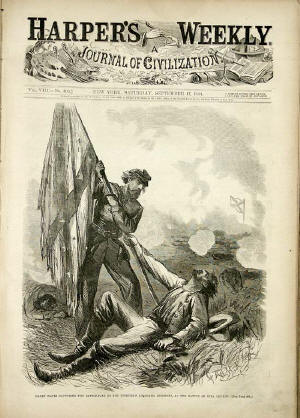
Second: Harpers Weekly Newspaper
Third: League of the South
Bottom: Penn State University

News---Did Doctor's Perscription Cause the Civil War?

The Little Blue Pills That Sent Abraham Lincoln Into A Rage, Heidi Blake, The Telegraph (UK), March 23, 2010

The Blue Mass pills taken as antidepressants by Abraham Lincoln contained dangerously high levels of mercury likely to have caused his notoriously wild temper, scientists have found.

The 16th United States President Abraham Lincoln The 16th President of the United States took the pills in the 1850s to alleviate what one contemporary described as the “cave of gloom” in which he lived. But researchers who analysed a recently unearthed sample of the medicine discovered it contained up to 120 times the acceptable daily intake of mercury.

Anti-obesity pill 'could cut weight by a quarter'Scientists at the Royal Society of Chemistry, where the tests were carried out, believe the high mercury content in the pills is what caused Lincoln’s famous verbal and physical rages.

On one occasion the President became so incensed that he grabbed a former aide and shook him “until his teeth chattered”. One contemporary describe his face in anger as “lurid with majestic and terrifying wrath”.

Blue Mass pills were used widely and often ineffectually in the 19th Century as a cure for ailments including toothache, constipation, childbirth pains and depression. Mercury is highly poisonous, and symptoms of toxicity include nausea, vomiting, dehydration and diarrhoea – a well as a violent temper. Lincoln decided to abandon the pills at the outset of the American Civil War in 1861 because they “made him cross”. He became renowned during the conflict for his calmness under pressure

CWL: Did the South feel unsafe and leave the Union because of Lincoln's temper?
How many Fire Eaters were taking the same medication?
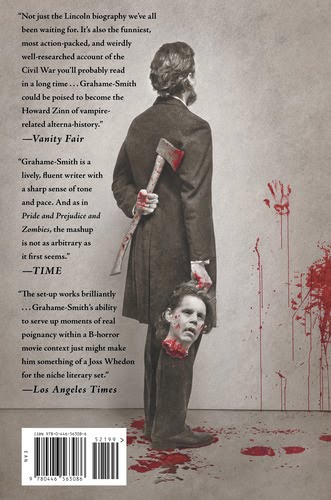
And vampires weren't safe around Lincoln either.
See Abe dispatch a vampire.

Text Source: Telegraph (UK)

Tuesday, March 23, 2010

News: Medal of Honor for Federal Canoneer at Gettysburg?


1st Lt. Alonzo Cushing Is One Step Closer to the Medal of Honor

Civil War hero from Delafield in line for Medal of Honor, Meg Jones, Milwaukee Wisconsin Journal Online, March 23, 2010.

In the hell that was the battle of Gettysburg, in the hailstorm of shells and shrapnel that extinguished so many lives on a hot July day, one bullet struck a blue-clad soldier from Delafield, Wis., in the head. A shell fragment already had pierced Alonzo Cushing's shoulder and shrapnel tore through his abdomen before the shot that felled the 1861 West Point graduate. Cushing died July 3, 1863, during Pickett's Charge at Cemetery Ridge next to the artillery guns he refused to leave. It was the third and final day of the Gettysburg battle. Cushing was just 22.

The 1st lieutenant's body was returned to his family and buried at West Point beneath a headstone inscribed "Faithful until death." Cushing's name didn't fade away - it graces a park in Delafield, and a white obelisk monument was dedicated there in 1915. However, a small but dedicated group wanted more for Cushing; they wanted his heroism recognized with the nation's highest military honor. Now, it appears that Cushing will be awarded the Medal of Honor for his actions on that Pennsylvania battlefield 147 years ago.

The secretary of the Army has approved the request, which must go through a few more hurdles before it can be signed by the president. Then the military will present the Medal of Honor to Cushing's family during a ceremony. "He's definitely my hero," said Phil Shapiro, 27, who started a "Give Alonzo Cushing the Medal of Honor" Facebook page in early February. "I always felt he deserved the Medal of Honor." The quest to recognize Cushing's valor began in the 1980s, first with then-Sen. William Proxmire and later with Sen. Russ Feingold, who eventually shepherded the request through military and congressional channels.

Margaret Zerwekh, 90, who belonged to the auxiliary of Sons of Union Veterans of the Civil War, has three inch-thick folders of paperwork relating to the effort. Normally, a recommendation for the Medal of Honor must be made within two to three years of the heroic action, and the medal must be awarded within three to five years. The length of time varies depending on the military branch, said Victoria Kueck, director of operations for the Congressional Medal of Honor Society. It takes an act of Congress to waive the time limits, which was done in Cushing's case.

The Medal of Honor dates to the Civil War. Of the 3,468 Medals of Honor awarded to U.S. military members, 1,522 were given out during the Civil War, though back then only a handful were conferred posthumously. It's possible Cushing was never recognized for his bravery because so many men valiantly lost their lives at Gettysburg or because so few Medals of Honor were awarded posthumously during the Civil War. Whatever the cause, Zerwekh believes Cushing is due.

"When Alonzo and his (three) brothers went off to the Navy and Army, their mother told them, 'Die my boys, but no dishonor.' That was probably one of the things he was thinking when he stood there at his last gun," said Zerwekh, who lives on property in Delafield once owned by Alonzo Cushing's father, Milton. Barbara Gruwell's father, Robert Cushing, who died this month at the age of 80, was part of the effort to recognize his ancestor. Gruwell, who is Alonzo Cushing's sixth cousin four times removed, was able to tell her father the good news before he died. "He was honored to know Alonzo had been recognized," said Gruwell, of Lodi.

Before Gettysburg, Cushing fought at Antietam, Fredericksburg and Chancellorsville as well as the Battle of Bull Run. Historic accounts of the Gettysburg battle place Cushing and his men of Battery A, 4th U.S. Artillery near a small grove of trees in a confined spot known as "the Angle" because of a stone fence used by Union troops during the third day of the battle.

This was the area of Pickett's Charge. Before that desperate and ultimately disastrous gamble, Confederate artillery launched a ferocious bombardment that decimated Cushing's unit. When the Confederate cannonade stopped, Cushing had only two working cannons and a few soldiers left. Despite being told by his superiors to seek medical attention, Cushing refused to leave the front line or disband what remained of his battery. He had been wounded in the shoulder and was holding in his intestines with his hand after shrapnel ripped through his abdomen and groin.
Battery A moved the two remaining guns to the stone wall and blasted away at the charging Confederates. Cushing was seen firing one of the cannons into the mass of Pickett's soldiers as they drew close to the stone wall. A few seconds after he yelled "I will give them one more shot," Cushing was struck in the mouth by a bullet that killed him instantly.

The location of Pickett's Charge and the Angle are among the most heavily visited places by tourists and re-enactors journeying to Gettysburg. A stone marker dedicated to Cushing was erected at the site in 1887. It's still there, right next to two cannons. "Many of the stories that surround Alonzo Cushing may seem like tall tales, but they're steeped in fact of his bravery on the battlefield," said Kirsten Lee Villegas, executive director of the Waukesha County Historical Society, which has numerous documents relating to Cushing in its archives. Cushing is mentioned in the Civil War exhibit at the historical society, which was responsible for the Cushing monument in Delafield in 1915.

Shapiro, the creator of the Facebook page dedicated to Cushing, learned of the Wisconsin hero when his father took him to Civil War battlefields as a boy. He wrote papers on Cushing for high school and college classes and bought two small crossed cannon pins similar to those worn by artillerymen such as Cushing. On a visit to Cushing's grave at West Point more than a decade ago, Shapiro left one of the cannon pins on the headstone. The other pin he keeps close.

Shapiro is an Air Force C-130 pilot based at Little Rock Air Force Base. He recently returned from missions in support of Haitian earthquake victims and last year was deployed to Iraq, where he flew cargo and passengers throughout the war zone. He's expecting to be deployed overseas again later this year. Shapiro wears the artillery pin fastened to the underside of his hat. "Sometimes if I get in a situation I'm nervous about, I look at it and touch it and try to remember I have courage. I've never been in a situation anything close to what Alonzo did, but if you could be 22 years old and do what he did, I can certainly put up with anything," Shapiro said.

Bottom Image Caption: First Lt. Alonzo Cushing of Delafield (middle, standing) was among Union officers at Antietam in 1862. At Gettysburg the next year, a wounded Cushing refused to abandon his post and was killed. A group has been pushing to honor him.

Sources:
Portrait Image:Cushing's Battery
Medal Image: Medal of Honor
Text and Bottom Image: Milwaukee Wisconsin Journal Online

Monday, March 22, 2010

A Just War, Just A War, Crusade or Jihad?: Yankee Soldiers and Their Motivations for Sacrifice

No Peace For The Wicked: Northern Protestants and the American Civil War, David Rolfs, University of Tennessee Press, notes, bibliography, index, 288 pages, 2009, $38.95.

No Peace for the Wicked: Northern Protestants and the American Civil War examines Northern Protestants' religious worldview, their motivations for fighting, and why the most religious generation in U.S. history fought America's bloodiest war. In the spring of 1861, young men throughout the Northern states rallied around the Union flag, eager to punish the Confederate renegades who had brazenly inaugurated civil war by firing on Fort Sumter. Often driven by their Protestant religious beliefs, many northern soldiers believed they were enlisting in a just war to save their Christian government from a "wicked" Southern rebellion.

These Protestant soldiers' faith was severely tested by the hardships and tragedies they experienced in the Civil War. The vast majority easily justified their wartime service by reminding themselves and their loved ones that they were engaged in a holy cause to preserve the world's only Christian republic. Others were genuinely haunted by the horrific violence of a seemingly endless civil war, and began to entertain serious doubts about their faith.

The first comprehensive work of its kind, David Rolfs' No Peace for the Wicked sheds new light on the Northern Protestant soldiers' religious worldview and the various ways they used it to justify and interpret their wartime experiences. Drawing extensively from the letters, diaries and published collections of hundreds of religious soldiers, Rolfs effectively resurrects both these soldiers' religious ideals and their most profound spiritual doubts and conflicts. No Peace for the Wicked also explores the importance of "just war" theory in the formulation of Union military strategy and tactics, and examines why the most religious generation in U.S. history fought America's bloodiest war.

In the Autumn 2009 Civil War Book Review, Robert Welch reviewed No Rest For The Wicked: "Within the last decade religion has become one of the fastest growing areas of this new research, with works by Steven Woodworth, Mark Noll, Harry S. Stout and others delving into concepts of faith, morality and the service in the face of civil conflict. David Rolfs seeks to build directly off the arguments of several of these authors at various points in his work through a study of the role of Protestant Christianity among Union soldiers and the post-Second Great Awakening environment that formed their beliefs.

Rolfs' discussion of religion among Federal soldiers centers on the analysis of archived letters and diaries representing both major theaters of the war, as well as soldiers from numerous states. . . . The rigorous work that Rolfs put into the development of his methodology, as well as the time necessarily spent in archives to find the letters of these Christian soldiers and the works of such ministers as Henry Ward Beecher, makes this book of interest to the social historian of the Union army. . . . Rolfs' overall work is an informative read, giving new insights to the religious world of the Federal soldier during the Civil War and the society that shaped him. It should provide an interesting addendum to the library of anyone researching the role of religion as part of the overall experience of the mid-nineteenth century and who wishes to understand the motivations, compromises and conflicts of faith faced in the midst of America's bloodiest and most challenging conflict."

David Rolf states:
First developed as an extensive 2000-2002 disseration project under the guidance of Professor James Jones and Sally Hadden at FSU No Peace for the Wicked: Northern Protestants and the American Civil War was a vision inspired by the work of James M. McPherson. In the afterword to the groundbreaking 1998 work Religion and the American Civil War McPherson challenged historians to explore "the ways in which ordinary northerners and southerners, inside and outside the army, managed to rationalize the killing" of the American Civil War.

As a young graduate student, socialized in the more pacifistic just war traditions of the Catholic Church, I was particularly interested in how devout Reformed Protestant soldiers in the Union army managed to justify not just the killing, but a terrible and protracted civil war that seemed to contradict some of their earlier beliefs concerning the nature of man, the justice of the Union cause, the certainty of Union victory, emancipation, and God's purposes in the war.

From the inside cover:
In the spring of 1861, young men from all over the Northern states flocked to join the Union arm, eager to crush the newly fomented Southern rebellion. Many were driven by their Protestant religious beliefs, convinced they were joining a holy cause to save the Union from the "wicked" Confederacy. Those religious ideals were quickly put to the test by the vicious nature of the Civil War. Some soldiers rationalized their violent actions, telling themselves that they were engaged in a noble conflict to preserve the ideals of the Union, while others were huanted by the horrors of war and eventually lost their faith altogether. The motives, dilemmas and justifications of these men are now brilliantly captured in David Rolf's No Peace for the Wicked.

The first comprehensive work of its kind, this book takes the reader into the minds of these often-conflicted soldiers. Drawing from a rich trove of letters, diaries, and published collections, Rolfs offers a penetrating examinination of the religious motives of these Christian warriors, who represented a variety of denominations and social backgrounds. Many of their innermost thoughts--both their ideals and their torments--are shared in the pages of this book. "No Peace for the Wicked" also explores the importance of "just war" theory in the formulation of Union military strategy and tactics.

Recommendations:

"Civil War armies were probably the most religious in American history. Products of the Second Great Awakening in American Protestantism, many Northern soldiers believed they were fighting for God as well as country. Their faith helped them confront danger and possible death. In this fine study, David Rolfs shows how this war over secular issues was nevertheless infused with Christian rhetoric and convictions." James M. McPherson

"This book makes an outstanding contribution to our understanding of the Civil War in general and to the place of religion in Northern common soldiers in particular . . . In its use of primary materials (supplemented by printed letters), the book's scholarly content rises to the level of the very best `people's histories' of the Civil War." Mark Noll

No Peace for the Wicked is a deeply thought provoking book that reveals an often overlooked aspect of Northern soldiers' motivations and inner struggles. Those wishing to understand the Civil War soldiers--or the cultural landscape of nineteenth-century America--will not want to miss this book." Steven E. Woodworth

David Rolfs was born in Chicago, David Rolfs grew up in southeastern Wisconsin, where he attended the University of Wisconsin at Madison and Whitewater. He earned his Ph.D. in nineteenth-century American history at Florida State University, where he also minored in the history of the Middle East. David's research interests include early American history, the American Civil War, World War II, Holocaust studies, Middle East civilization, and the theme of conspiracy in American history. He has authored articles on just warfare, the Holocaust, and the religious history of the American Civil War. When he is not teaching or writing, he enjoys spending time outdoors with his wife and five-year old twins.

Text Sources:
Civil War Book Review
Amazon.com
University of Tennessee Press