Monday, May 17, 2010

News---Stones' River Battlefield Flooded By May 16 Thunderstorms

About 30 miles south of Nashville, Tennessee is the National Park which commemorates the December 30 1862-January 3 1863 battle of Stones' River. Within Stones' National Military Park boundaries is the 20 acres Stones' River National Cemetery, with 6,850 internments of which 2562 are unidentified. Just outside the cemetery is the Hazen's Brigade Monument was built by Federal soldiers during the spring of 1863.

It is the oldest surviving American Civil War monument standing in its original location. An even earlier monument was erected after the Battle of Manassas in Virginia but is no longer extant.

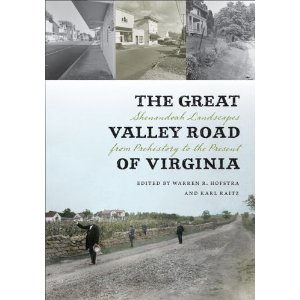
The thunderstorms of May 16 filled the Tennessee River which flooded Nashville. The deluge also flooded Stones' River which spilled over its banks and covered part of the Stones River National Military Park. At top left is a photo of the cemetery at Hazens' Monument.

Image Sources: Nashville Public Radio

Thursday, May 13, 2010

News---Fort Stevens, Wilderness, Cedar Creek, Thoroughfare Gap, South Mountain Among Most Endangered Virginia & Maryland Battlefields

Fort Stevens among Most Endangered Civil War Battlefields, Michael E. Ruane, Washington Post, May 13, 2010;

The Civil War Preservation Trust announced Thursday that Washington's beleaguered Fort Stevens, where Abraham Lincoln came under enemy gunfire in 1864, has again been placed on the trust's annual list of most endangered Civil War battlefields.

The fort, off Georgia Avenue at 13th and Quackenbos streets NW, is one of 10 endangered Civil War sites threatened by development and other factors across the country, the trust said as it in issued its annual "History Under Siege" report at the National Press Club. The list comes ahead of next year's 150th anniversary of the war.

"All across the country, our nation's irreplaceable battlefields -- these tangible links to our shared history -- are threatened by inappropriate development, misguided public policy . . . and, in some cases, simple apathy," the trust's president, James Lighthizer, said in written statement. "Next year marks the sesquicentennial of the bloodiest conflict in our nation's history, and [this] . . . is an opportune time to shine a spotlight on the places that tell America's story." Also on the endangered list are three sites in Virginia, one in Maryland and one in Pennsylvania.

Fort Stevens, which also made the list in 2006, was among the ring of forts that protected Washington from Confederate forces during the war. Lincoln came under rebel sniper fire when he visited the fort in 1864 during a Confederate campaign that reached the city's suburbs. The fort has largely been absorbed into the city's Brightwood neighborhood and now faces the construction of a large church community center planned in the vicinity, the trust said.

In Virginia, the trust listed the Wilderness battlefield, west of Fredericksburg, as endangered. The Wilderness was the site of a bloody struggle in 1864 between the chief armies of the Union and Confederacy in the war's eastern theater. It was the first battle between Ulysses S. Grant and Robert E. Lee, both of whom suffered heavy casualties, and marked the beginning of the war of attrition that eventually led to Lee's surrender nearly a year later. The trust said the battlefield is threatened by a massive commercial development that could put a Wal-Mart and other retailers near its border.

Also in Virginia, the trust said the Cedar Creek battlefield, site of a another 1864 battle, near Strasburg, is threatened by the expansion of a limestone mine. Cedar Creek also made the list in 2008. The third endangered Virginia battlefield is at Thoroughfare Gap, near Haymarket in Prince William County, where the site of an 1862 battle is threatened by the possible erection of a tall cell phone tower. In Maryland, the trust said the South Mountain battlefield, near Frederick, was threatened by the possibility of the construction of a natural gas compression station.

And at Gettysburg, just across the Maryland border in Pennsylvania, the trust said the war's most storied field still is threatened by the possibility of a gambling casino on the outskirts of town. The Washington-based trust says its endangered list has helped protect more than 29,000 acres of battlefield in 20 states.

"Nothing creates an emotional connection between present and past like walking in the footsteps of our Civil War soldiers," Civil War author Jeff Shaara, who also appeared at the list's unveiling, said in the statement. "I hope that by drawing attention to endangered Civil War battlefields, Americans will this see hallowed ground in a new way and understand that these sites must be preserved for future generations to experience."

Text Source: Washington Post

Top Image Source: Cedar Creek

Second Image Source: Fort Stevens

Third Image Source: Cedar Creek

Vexed by Vexillology? ----The Six Flags of the Confederacy

Tom Clemens, Hagerstown Community College professor and scholar writing on the Maryland Campaign, provides a six minute lesson on the six flags of the Confederacy. Actually its the four flags of the Confederacy with one precursor and one modern adaptation.

Here is the the YouTube link to the lesson. Tom's most recent published work is the first of two edited volumes of Ezra Carman’s account of the Maryland Campaign. Here is the Amazon.com link for it.

Image: First National Confederate Flag with the seven stars for the deep South early secession states. This flag was updated by adding stars for the second wave of secession that occurred during April 1861.

Wednesday, May 12, 2010

Off Topic---A Preface to Satan: The Devil We Know, Maybe

Satan in America: The Devil We Know, W. Scott Poole, Rowan and Littlefield Publishing, bibliographic essays, 242 pp., index, $39.95

The Preface: 'Night Stalker': American Exceptionalism and the Reality of Evil, ix-xxiv.

There is not much connective tissue among Poole's generalizations. Poole slides from Richard Ramirez (Night Stalker of the mid-1980s), to he Pequot War of colonial Massachusetts, on to the Philippine Insurrection at the turn of the century, and then winds up at the MyLai Massacre of 1968. Poole believes that war and serial killers are synonymous. "The American nation is not alone in perpetuating evil," he states. Moral evil is the substance of the human experience and humanity's tendency to destroy. For Poole, history and culture stands in contradiction to each other. History does not allow humanity to stand apart from the reality of evil but the contemporary white, suburban American culture's goal is to isolate individuals from pain and the awareness of pain. History is at war with culture.

To explain this struggle Poole relies on Sigmund Freud's vast but disputed generalizations and ipso facto declarations. Monotheism created Satan; white, American culture has embraced monotheism; white American culture has created Satan. "The study of American history is not the story of . . . the devil's decline into invisibility. Rather, is is a study of his ascent." The image of Satan is integral to all aspects of American culture. (xv)

Poole states that 'radical evil has been part of America's collective history.' Slavery, territorial expansion, the Mexican War, the variety of wars with the Native Americans are indicative of a serpent that 'coils at the root' of American liberty tree. Racism, sexism and classism are the works of the 'conservative forces with American society'. (xvii)

Poole ranks evil countries; 1. Nazi Germany, 2. Stalinist Russia, 3. America. The United States' understanding of its own evil has been clouded by mythology structured by religion. (xx) 'A culture gets the devil it deserves,' states Poole. American leaders have marginalized groups and views them as being Satanic. (xxi) Also, a belief in Satan correlates with a restriction of civil liberties. (xxii) 'America is the fallen angel that never knew it fell,' states Poole. (xxii) So, Poole sees America as the fallen angel, Lucifer, Satan.

Man, I am glad W. Scott Poole did not disguise or hide his interpretative framework. Now, Satan in America can be read in light of its own prejudice. CWL turns to the first chapter and wonders: Is Lucifer a victim of America too? Was Saddam and the Ayatollah right?

New & On The Library's Shelves---The Great Valley Road of Virginia In The Heart and Mind

The Great Valley Road of Virginia: Shenandoah Landscapes from Prehistory to the Present, Warren R. Hofstra et al., University of Virginia Press, 320 pages, extensive maps, photographs, charts and illustrations, notes, index, 2010, $50.00.

The Great Valley Road of Virginia contains historic landscapes from frontier to modern times. It is not a coffee table book but is an fine combination of academic history and popular culture. An accessible narrative with a foundation of solid research in local, state and regional documents contains much on the American Civil War and ranges from the Shenandoah Valley's prehistory to the presetn.

Native Americans had used this great Appalachian valley for kinship and commerce travelling before Europeans began their settlements. A segment of a path that began in southeastern Pennsylvania and ended in northern Georgia, the Valley Road was essential to Native American communities. Americans used the Valley Road as a route through the Cumberland Gap to Tennessee and Kentucky.

When the Valley Road became a turnpike and played a vital role in the economic and social life of Virginia and the South before the Civil War. During the war it was the focus of two great Confederate military campaigns: Jackson's in 1862 and Early's in 1864. After the war the Valley Road was essential to the recovery of western Virginia. US Route 11 and Interstate 81 now carry the traffic.

There are eight chapters in the book; the 30 page fifth chapter that covers 1836 to 1865 is entitled 'Strategy and Sublimity: A Gallery of Valley Pike Images during the Civil War'. There are 24 illustrations selected by an associate professor of art; the text is written by an associate professor of history. Both are on the faculty of at Shenandoah University in Winchester, Virginia. For anyone who reads and studies Civil War history, The Great Valley Road of Virginia: Shenandoah Landscapes from Prehistory to the Present offers much in every chapter. The mindset aand cultural heritage of Virginia troops from the Shenanhoah Valley is revealed on nearly every page. CWL recommends this book to those who wish to understand what Virgina's western soldiers brought to the war.

To Find Out More: Great Valley Road

Tuesday, May 11, 2010

New and Noteworthy---Ezra Carmen's Classic Maryland Campaign, Annotated

Maryland Campaign of September 1862: Volume 1, South Mountain, Ezra Carman and Thomas Clemens, Savas Beatie Publishing, 624 pages, 10 black and white photos, 10 maps, notes, bibliograhy, index, $37.50

When Robert E. Lee marched his Army of Northern Virginia into Maryland in early September 1862, Maj. Gen. George B. McClellan moved his reorganized and revitalized Army of the Potomac to meet him. The campaign included some of the bloodiest, most dramatic, and influential combat of the entire Civil War. Combined with Southern failures in the Western Theater, the fighting dashed the Confederacy's best hope for independence, convinced President Abraham Lincoln to announce the Emancipation Proclamation, and left America with what is still its bloodiest day in history.

One of the campaign's participants was Ezra A. Carman, the colonel of the 13th New Jersey Infantry. Wounded earlier in the war, Carman would achieve brigade command and fight in more than twenty battles before being mustered out as a brevet brigadier general. After the horrific fighting of September 17, 1862, he recorded in his diary that he was preparing "a good map of the Antietam battle and a full account of the action." Unbeknownst to the young officer, the project would become the most significant work of his life.

Appointed as the "Historical Expert" to the Antietam Battlefield Board in 1894, Carman and the other members solicited accounts from hundreds of veterans, scoured through thousands of letters and maps, and assimilated the material into the hundreds of cast iron tablets that still mark the field today. Carman also wrote an 1,800-page manuscript on the campaign, from its start in northern Virginia through McClellan's removal from command in November 1862. Although it remained unpublished for more than a century, many historians and students of the war consider it to be the best overall treatment of the campaign ever written.

Dr. Thomas G. Clemens (editor), recognized internationally as one of the foremost historians of the Maryland Campaign, has spent more than two decades studying Antietam and editing and richly annotating Carman's exhaustively written manuscript. The result is 'The Maryland Campaign of September 1862', Carman's magisterial account published for the first time in two volumes. Jammed with firsthand accounts, personal anecdotes, maps, photos, a biographical dictionary, and a database of veterans' accounts of the fighting, this long-awaited study will be read and appreciated as battle history at its finest.

About the Authors: Ezra Ayres Carman was born in Oak Tree, New Jersey, on February 27, 1834, and educated at Western Military Academy in Kentucky. He fought with New Jersey organizations throughout the Civil War, mustering out as a brevet brigadier general. He was appointed to the Antietam National Cemetery Board of Trustees and later to the Antietam Battlefield Board in 1894. Carman also served on the Chattanooga-Chickamauga Battlefield Commission. He died in 1909 on Christmas day and was buried just below the Custis-Lee mansion in Arlington Cemetery.

Thomas G. Clemens earned his doctoral degree at George Mason University, where he studied under Maryland Campaign historian Dr. Joseph L. Harsh. Tom has published a wide variety of magazine articles and book reviews, has appeared in several documentary programs, and is a licensed tour guide at Antietam National Battlefield. An instructor at Hagerstown Community College, he also helped found and is the current president of Save Historic Antietam Foundation, Inc., a preservation group dedicated to saving historic properties.

Ethan S. Rafuse, author of McClellan's War: The Failure of Moderation in the Struggle for the Union and Antietam, and South Mountain, and Harpers Ferry: A Battlefield Guide: "Ezra Carman's long-unpublished history of the 1862 Maryland Campaign is an essential source on the operations that produced the bloodiest day in American military history and largest surrender of U.S. troops before World War II and there is no one better qualified than Thomas Clemens to bring it to print. Not only does this volume make Carman's study broadly accessible to students of the war, but Clemens's many years studying the events of September 1862 and unmatched knowledge of Carman and his work enable him to skillfully and authoritatively explain and scrutinize Carman's take on events. In addition to being a magnificent contribution to literature on the Civil War, this outstanding book will also advance the process of securing Clemens a place alongside Carman and Harsh in the pantheon of Maryland Campaign scholars. I cannot recommend it highly enough."

Text Source: Savas Beatie Publishing and Amazon.com

Second Image Source: Save Historic Antietam Foundation

New and Noteworthy---War Horse: A History of the Military Horse and Rider

War Horse: A History of the Military Horse and Rider, Louis A. DiMarco, Westholme Publishing, 432 pages, 50 black and white illustrations, notes, bibliography, $29.95.

For more than four thousand years, the horse and rider have been an integral part of warfare. Armed with weapons and accessories ranging from a simple javelin to the hand-held laser designator, the horse and rider have fought from the steppes of central Asia to the plains of North America. Understanding the employment of the military horse is key to understanding the successes and the limitations of military operations and campaigns throughout history. Over the centuries, horses have been used to pull chariots, support armor-laden knights, move scouts rapidly over harsh terrain, and carry waves of tightly formed cavalry.

In War Horse: A History of the Military Horse and Rider, Louis A. DiMarco discusses all of the uses of horses in battle, including the Greek, Persian, and Roman cavalry, the medieval knight and his mount, the horse warriors—Huns, Mongols, Arabs, and Cossacks—the mounted formations of Frederick the Great and Napoleon, and mounted unconventional fighters, such as American Indians, the Boers, and partisans during World War II. The book also covers the weapons and forces which were developed to oppose horsemen, including longbowmen, pike armies, cannon, muskets, and machine guns. The development of organizations and tactics are addressed beginning with those of the chariot armies and traced through the evolution of cavalry formations from Alexander the Great to the Red Army of World War II.

In addition, the author examines the training and equipping of the rider and details the types of horses used as military mounts at different points in history, the breeding systems that produced those horses, and the techniques used to train and control them. Finally, the book reviews the importance of the horse and rider to battle and military operations throughout history, and concludes with a survey of the current military use of horses. War Horse is a comprehensive look at this oldest and most important aspect of military history, the relationship between human and animal, a weapons system that has been central to warfare longer than any other.

Louis A. DiMarco teaches military history at the Army Command and Staff College, Fort Leavenworth, Kansas. A graduate of the United States Military Academy and retired lieutenant colonel, he is author of numerous military history articles as well as army manuals dealing with cavalry (mechanized), reconnaissance, and urban warfare.

Text and Book Cover Source: Westholme Publishing

Second Image Source: Second Cavalry

Wednesday, May 05, 2010

News---Virginia's 150th: Serious, All-Inclusive

Virginia Seeks Balance In Marking Civil War's 150th Anniversary, Rosalind S. Helderman, Washington Post, May 3, 2010.

When Virginia and the rest of the nation set out to mark the 100th anniversary of the Civil War in 1961, the party got off to a rocky start. Intricate plans were made to mark the military conquests of the Confederate and Union armies, but little attention was paid to the experience of individuals -- soldiers, civilians and slaves.

A massive reenactment of the Battle of Bull Run at Manassas was marred by too little water and too few bathrooms. Most jarringly, some adopted the events as an opportunity to celebrate the Confederacy in the face of the burgeoning civil rights movement. At last, President John F. Kennedy called on a 31-year-old historian to take over as the centennial's executive director, refocusing it on sober education.

Virginia has turned to the same man -- James I. Robertson Jr., a history professor at Virginia Tech and a Civil War expert -- to help the state avoid the same kinds of problems as it prepares to mark next year's 150th anniversary of the start of the war. With Robertson's guidance, a commission established by the General Assembly to plan the state's sesquicentennial events has spent four years trying to avoid the impression that they will amount to a celebration of the Confederacy.

There are no Confederate battle flags on the commission's homepage. One of its first events is a scholarly conference titled "Race, Slavery and the Civil War: The Tough Stuff of American History and Memory." Commission members, a bipartisan collection of 15 legislators, historians and others, even shy from the word "celebrate," preferring to use "commemorate" instead. "We're going to make it a serious thing, an all-inclusive thing," Robertson said. Virginia officials hope they can attract tourist dollars from war buffs from across the country during four years of events in the state with more Civil War battlefields than any other. The commission, founded in 2006, is funded through a $2 million annual appropriation from the legislature, as well as private grants. But they are keenly aware that Virginia was the capital of the Confederacy and home to many of its most famous figures. The commonwealth got a reminder of the sensitivities involved when Gov. Robert F. McDonnell (R) declared last month Confederate History Month, a proclamation he said would bring attention to the 150th anniversary.

McDonnell quickly apologized after facing stinging national criticism for omitting references to slavery. But an amended version that called slavery an abomination did not satisfy those who thought it was still too deferential to Virginia's role in a losing rebellion. At a recent event marking the preservation of a new 85-acre section of the battlefield at Chancellorsville, McDonnell told a crowd that the 150th anniversary will be about more than the Confederacy.

"I think people from all over this country and around the world will come here next year to learn the Civil War battles," he said on a podium set up in front of rolling field that saw a bloody Confederate charge during the 1863 battle. "They will also come to learn of a battle that pitted brother against brother and divided this nation like no other event in American history. They will pause to see the sites, like this one here at Chancellorsville, of the most bloody conflict on American soil. They will also pause to reflect on the fact that this was the war that eliminated the abomination of slavery from American soil."

After the event, McDonnell said the anniversary will provide additional opportunities to preserve battlefields as well as to educate Virginia's children. "I look forward to being a champion for racial reconciliation during that time," he said. One place he might start is at the September conference on slavery at Norfolk State University, which has 1,200 registrants. It will be chaired by James O. Horton, professor emeritus of African American history at George Mason University and an expert on slavery. Horton called the conference "very important to understanding the Civil War, understanding the issues that really shaped the tremendous and heated debates of history."

Slavery plays an important role, too, in a two-disc DVD set that's been produced by the commission and distributed to every school in the state. It emphasizes the experience of soldiers on both sides, African Americans -- free and enslaved -- as well as civilians on the home front. And in February, a 3,000-square-foot exhibit will open at the Virginia Historical Society with an emphasis on telling the Civil War story from all perspectives. After a run in Richmond, the exhibit will tour the state. The commission also has plans for high-tech kiosks at state parks and other sites with information about local battlefields and databases of soldiers who fought there, allowing visitors to track their ancestors. The Library of Virginia will make a major push to digitize newly unearthed Civil War-related letters and diaries.

The commission's work has not been without critics. The Richmond Free Press, a black-owned newspaper, has run several editorials criticizing the commission as a waste of taxpayer money whose work is bound to invite four years of Confederate flag waving. "Most eighth-graders know that Virginia's participation [in the war] was hardly worthy of promoting," publisher Raymond H. Boone wrote last year.

At the same time, members of the Sons of Confederate Veterans say the commission is running a politically correct event that will ignore their ancestors' sacrifices. "I think they're so afraid of offending someone, hurting someone's feelings, that they're just going to do this generic, bland commemoration, where at the end, we know we've commemorated something, but we're not quite sure what," said Frank Earnest, a Virginia Beach resident and chief of the heritage defense for the group.

This article continues at this Text Source: Washington Post

Top Image Source: Robertson

Middle Image Souce: Virginia 150th

Bottom Image Source: Richmond Virginia's 150th

Tuesday, May 04, 2010

Rifled Muskets: Reality and Myth---GNMP's Scott Hartwig Looks at Earl Hess' Work

The Rifled Musket in Civil War Combat: Reality and Myth, Earl J. Hess, University Press of Kansas, 2008. Pp. 288. Cloth, $29.95.

D. Scott Hartwig, Gettysburg National Military Park in Civil War History June 1, 2010, pp 230-232. :

"It is commonly believed that the introduction of the rifled musket on a mass scale revolutionized warfare during the American Civil War but that the generals failed to appreciate its real impact and blindly continued to employ outmoded tactics, until 1864 when losses drove both armies to dig in and fight from entrenchments. Earl Hess challenges this conclusion, arguing that many of the assumptions about the rifled musket’s impact on the war either do not hold up under careful study or are exaggerated. His evidence is impressive and persuasive.

Hess builds the context of his case with a brief but adequate survey of the history of the smoothbore and rifled musket heritage before the Civil War. This is followed by a review of both the U.S. and C.S. governments’ efforts to equip their soldiers with rifled muskets and an examination of the gun culture of Civil War soldiers. The heart of the book is the study of the rifled musket in battle, which includes chapters on skirmishing and sharpshooting/sniping.

By analyzing data about numerous battles from a variety of contemporary sources Hess draws some interesting conclusions. Most infantry combat with rifled muskets took place at relatively short range, an average of just under 100 yards. That combat did not regularly occur beyond this range had to do with terrain but more with the problems inherent with the parabolic trajectory of the minie ball. To fire at a target, say 300 yards away, the individual soldier had to set the sight on his rifle for the range before firing. Because of the slow trajectory of the bullet, it traveled in an arc to reach its target at longer ranges. For over the third of the distance a bullet fired at a target at this range traveled above the height of an average man, which meant that anyone advancing in this particular zone was safe. Since soldiers did very little target practice and the process of hitting targets at longer ranges was complicated for combat conditions, most infantry officers did not let their men begin firing until the enemy was within the same range of a smoothbore musket, which was effective.

Since combat generally took place within the effective range of smoothbores, Hess argues that the linear tactics developed for smoothbore weapons remained relevant and effective and were used successfully on numerous battlefields. It is difficult to disagree with this conclusion since the rate of fire of the rifled musket was no greater than that of the smoothbore, and there had been no improvements in command and control at the tactical level. Command still consisted of voice or hand signals.

But eventually both armies began to dig in regularly and the standard explanation for this is the lethality of the rifled musket forced men to burrow to reduce casualties. Hess disputes this and contends that what drove the trench combat which characterized the Atlanta Campaign and Overland Campaign of 1864 was the daily close proximity of the two armies. With constant contact the possibility of enemy attack was ever present, which created the need to fortify lines to defend against it, and that even had the armies been armed with smoothbores they would have done so.

To support his case that rifle muskets did not render combat more deadly, Hess draws a comparison between the Civil War’s major battles and sixteen major battles fought with smoothbores in Europe from 1704 to 1815. The battles fought with smoothbores were far bloodier. Hess has not written the last word on the rifled musket and its influence on the Civil War, but he has produced an important, well-documented book that provides the first systematic study of the rifle’s true impact on the battlefield.

Image of Scott Hartwig: Bull Runnings

Monday, May 03, 2010

New---366 Decisions of Lincoln's Presidency

366 Days in Abraham Lincoln's Presidency: The Private, Political, and Military Decisions of America's Greatest President, Stephen A. Wynalda, Skyhorse Publishing, 624 pages, 24 illustrations, $29.95.

"For the first time ever, the intimate thoughts and political decisions of Abraham Lincoln’s entire presidency—day by day. In a startlingly innovative format, journalist Stephen A. Wynalda has constructed a painstakingly detailed day-by-day breakdown of president Abraham Lincoln’s decisions in office—including his signing of the Homestead Act on May 20, 1862; his signing of the legislation enacting the first federal income tax on August 5, 1861; and more personal incidents like the day his eleven-year-old son, Willie, died. Revealed are Lincoln’s private frustrations on September 28, 1862, as he wrote to vice president Hannibal Hamlin, “The North responds to the [Emancipation] proclamation sufficiently with breath; but breath alone kills no rebels.”

"366 Days in Abraham Lincoln’s Presidency includes fascinating facts like how Lincoln hated to hunt but loved to fire guns near the unfinished Washington monument, how he was the only president to own a patent, and how he recited Scottish poetry to relieve stress. As Scottish historian Hugh Blair said, “It is from private life, from familiar, domestic, and seemingly trivial occurrences, that we most often receive light into the real character. Covering 366 nonconsecutive days (including a leap day) of Lincoln’s presidency, this is a rich, exciting new perspective of our most famous president."

Text and Image Source: Skyhorse Publishing

Thursday, April 29, 2010

News---Antietam NMP Added To Curriculum of Military Medicine School

Origin of Military Medicine Is Backdrop for Teaching Future Medical Leaders,Uniformed Services University of the Health Sciences, April 28, 2010

When service members are injured on the battlefields of Iraq and Afghanistan, there is a system of care in place to quickly attend to life threatening injuries, evacuate the injured to local field hospitals, and if needed, transport them for more advanced care at military hospitals in Europe or back in the United States. This system of care, while more advanced today than ever, began on a battlefield much closer to home during the Civil War.

More than 150 medical students from the Uniformed Services University of the Health Sciences, or USU, will converge on the Antietam National Battlefield in Sharpsburg, Md., April 29, as part of their first-year curriculum. They will be joined by more than 60 graduate nursing students from USU.

“We’re attempting to give students a sense of not only the strategies used at Antietam, but also how this battle significantly influenced the development of our modern day medical system,” said Air Force Lt. Col. Sheila Robinson, who oversees the exercise as USU Department of Military and Emergency Medicine course director.

Originally intended for the military medical students to break in their combat boots, the Antietam March serves to teach students, from a historical perspective, the basic tenets of battlefield healthcare. In the mid-1800s, then-Army Surgeon General of the Potomac Maj. Jonathan Letterman, recognized that care on the front lines, medical logistics and evacuation assets under the direction of a physician were key to delivering battlefield care. Letterman is also known as “The Father of Battlefield Medicine.”

USU partnered with the National Museum of Civil War Medicine in Frederick, Md., to ensure an authentic focus on the medical lessons learned and innovations resulting from the Battle of Antietam. University students will march in small groups, stopping at stations along the route to hear USU faculty members discuss conditions, battlefield strategies and medical aspects of the battle. Each student will be assigned the name of a real Civil War soldier, whom they will be able to follow from the time the soldier was injured until they arrived at a field hospital.

The Battle of Antietam, which took place Sept. 17, 1862, is considered the bloodiest single-day battle in American history. More than 23,000 men were killed or wounded.

The USU educates health care professionals dedicated to career service in the Department of Defense and the U.S. Public Health Service. The university provides military and public health-relevant education, research, service, and consultation to the nation and the world, pursuing excellence and innovation during times of peace and war. Many graduates are supporting operations in Iraq, Afghanistan and elsewhere, offering their leadership and expertise. Approximately 25 percent of all active-duty military medical officers are USU graduates.

Media interested in attending the road march should contact the Office of External Affairs at (301) 295-3981 by noon, April 28. For additional information on USU, visit our Web site at www.usuhs.mil.

Text and top Image Source: Uniformed Services University of the Health Sciences

Other Images: Antietam NMP

Wednesday, April 28, 2010

News---1862 Battlefield On South Mountian Endangered By Transmission Line

Woman Works To Preserve Middletown Valley, Karen Gardner, March 25, 2010, News-Post, Middletown, Maryland.

Elizabeth Bauer lives in the shadow of South Mountain. She can see the area where the Battle of South Mountain was fought and the rolling farmland that has characterized the area for generations.She is taking on the fight to preserve the mostly rural area. Bauer is the new president of Citizens for the Preservation of Middletown Valley, an organization formed two years ago to oppose plans to build a gas transmission compressor station in the area. In January 2009, Dominion Transmission bought an old stone farmhouse known as Fox's Tavern and 135 surrounding acres. Two months later, the Civil War Preservation Trust included the tavern as one of the nation's 10 most endangered Civil War sites.

Preservation Maryland and Maryland Life magazine recently named Fox's Tavern one of the 11 most endangered historic sites in Maryland. It's one of many privately owned sites historians and land preservationists consider threatened. Dominion's purchase of the land spurred the national historic preservation group to add the area to its endangered list. Bauer, her husband and two sons have all been active in Civil War living history. Her husband, Claude, and younger son, Brendan, 21, have participated in battle re-enactments. Her son Cameron, 25, joined the rest of his family to serve as extras in the Civil War movie "Gods and Generals."

Dominion plans to build a compression pump for its natural gas transmission line on the property, which is zoned agricultural. The pump is not likely to be built soon, but company representatives said it is part of long-range plans. The pipe moves natural gas from underground sources to markets in the mid-Atlantic region. The preservation group wants Dominion to reconsider building a compressor station on land zoned agricultural. The group said the noise generated by a compressor makes it more suitable for an industrially zoned area. "The Dominion issue is going to loom over us until 2015," Bauer said.

In the meantime, she hopes to get the group active in other land preservation and zoning issues in Frederick County. The group supports Frederick County's new comprehensive plan, which has tightened development possibilities around the county.
The group hopes to reach out to preservation-minded people throughout the county, she said. She also plans to look into the process used to extract natural gas from underground stores and research the ramifications for those whose properties are above the gas supply. "We have not been assertive in our approach," she said. "I want to get the hackles up. If you can get anger, you can get interest. It's amazing the number of people who know nothing about this."

Bauer is hoping to build the group's membership. It is applying for nonprofit status and Bauer is considering mass mailings to increase visibility and financial contributions. "I don't think the community realizes it's the board that keeps us going financially," she said.

Rich Maranto served as the organization's first president. Maranto, Bauer and Randy Buxbaum started the group in November 2007 and were the first board members. Buxbaum remains the group's treasurer. Bauer, 54, works in human resources for an intelligence firm. Most of her work is done from her home. She volunteered for many years with the Arthritis Foundation when the organization had a Frederick County office. She suffers from rheumatoid arthritis, which limits her living history acting to warm-weather events.She plays a civilian, and this summer will probably adopt the persona of a cook or seamstress.

Her interests and experience with arthritis combines with her volunteer work. At work, she sees herself as an advocate for her employees."When I retire, I want to become a health care advocate for seniors," she said. "People do not want to challenge their doctor's opinion, and they don't understand the long-term effects. "I'm a very caring person, but I'm also a force to be reckoned with. Not in a rude way, but I can be forceful."

Top Image: Fox's Gap--- The old Sharpsburg Road. This is the scene of the "Bloody Lane" during the battle of Fox's Gap that took place on September, 14th 1862. This is also the same road used by Breckinridge's troops in 1864 as they advanced toward Middletown. John Allen Miller, Photographer.

Second Image: North Carolina Monument at Fox's Gap

Bottom Image: Wise's Farm at Fox's Gap

New Film---Law & Order: Lincoln Assasination Unit

Conspirator Follows The Drama After Lincoln's Death, Anthony Breznican, USAToday, April 28, 2010.

Any grade-school student can tell you the story of the 1865 assassination of Abraham Lincoln in Ford's Theater at the hand of John Wilkes Booth. But what happened next? Robert Redford's new film, The Conspirator, follows the race to hunt down the small band of Confederate sympathizers who helped plot the attack. Think of it as Law & Order: Civil War Unit.

James McAvoy (Atonement) stars as a decorated Union soldier who reluctantly agrees to defend one of the accused, boarding-house owner Mary Surratt (Robin Wright), whose son was the lone conspirator to escape the manhunt. "There was a question of whether she was complicit, guilty by association, or even more guilty," says Redford, who directs but doesn't star in the movie. "The lawyer that defended her didn't want to defend her. He was a Union soldier who became a lawyer." His contempt for the suspect gives way to a fear that she is being prosecuted solely to bring her fugitive son out of hiding.

The Conspirator is independently financed and doesn't yet have a distributor. It's the first project made by the American Film Co., which plans to create historical dramas. Redford says he didn't want to simply re-create Lincoln's assassination and deals with that mainly as setup. "All the President's Men was very similar, because you had this big historical event taking place, but what people didn't know was what these two reporters did, digging in under the radar. You didn't need to show Nixon a lot," he says. Redford starred in that 1976 film about the fall of President Nixon.

Surratt was tried by a military commission instead of a civilian court, and with attorneys who represent accused enemies of the state still finding their integrity questioned, The Conspirator may strike present-day nerves. "I don't want to hit that too hard because then it sounds like agit-propaganda," Redford says. "I don't think Americans respond to well to that. But you can show them something and let them decide."

Text and Image Source: USAToday April 28, 2010

Images: Claudette Barius photographer, The American Film Company Productions, Caption One: Director Robert Redford says The Conspirator uses Lincoln only as a setup, the same way All the President's Men "didn't need to show Nixon a lot." Caption Two: Robin Wright plays Mary Surrat opposite Robert McAvoy as her reluctant attorney.

News---New National Archives' Exhibit: Original 13th Amendment Continued Slavery Forever, POWs Executed, CSS Alabama Digital Comic Book

Archives Exhibit Explores Little-Known Aspects of Civil War, Michael E. Ruane, Washington Post Staff, April 27, 2010.

The Confederate prisoners were lined up 15 paces from the Union firing squad. The order was given, and the six rebels died instantly. Five of them were shot through the heart, the Union officer in charge reported, adding that the execution was conducted to "my entire satisfaction."

So what if they were innocent POWs. A band of rebels had massacred captured Union soldiers and their commanding officer a few weeks before. Now, Union commanders just needed to select a Confederate officer for death, to complete the eye-for-an-eye transaction. There was no gallantry to this bloody affair in 1864, no stirring charge worthy of Currier and Ives. It was but a dark footnote to the epic of the American Civil War. And it was just what the National Archives sought for the major exhibit that will debut Friday: "Discovering the Civil War."

The exhibit, designed to launch Washington's celebration of the coming 150th anniversary of the war years, seeks to explore more of the little-known aspects of the battle and glimpse some of the dimmer corners of the conflict that remade the country and that so many Americans think they know so well. Yet 150 years later, the anniversary of the war that tore the nation apart finds a country that remains racially divided, politically fractured and historically split -- even over the causes and legacy of America's most wrenching conflict.

The governors of two Southern states, Virginia and Mississippi, sparked controversy this month by neglecting or sounding dismissive of the role of slavery in the war. And one noted Civil War historian says the nation might be too divided to properly mark the key unifying event in its history. "I think it's going to be impossible to get all the American people to gather to commemorate a portion of American history that's so important to the country," said Virginia Tech's James I. Robertson Jr., who 50 years ago directed the U.S. Civil War Centennial Commission. "People just aren't that together anymore.

"The nation is far more polarized and politicized now than it was" in the centennial, he said. "Every subject seems to become an issue." But another scholar disagreed. Princeton historian James M. McPherson said that the Civil War centennial coincided with the civil rights movement. "On the issue of race, I think there was much sharper polarization then than now," he said. McPherson said recent uproars point to "the way in which the war still resonates in American culture."

"Issues having to do with race and slavery and regionalism and federalism -- all of those are hot-button issues in American politics and American culture, and the Civil War looms over all of them," he said. The war, which began in 1861 and ended in 1865, claimed more than 600,000 lives -- 2 percent of the population then. Today, that would mean 6 million dead, historians say. One battle in 1862, near Sharpsburg, Md., killed four times the number of American casualties on D-Day in 1944.

But the archives' exhibit seeks to probe beyond the sagas of the grand battles that pack the shelves of bookstores. It will present, for instance, an earlier, and long forgotten, proposal for what could have been the 13th Amendment to the Constitution. The actual 13th Amendment, ratified in 1865, abolished slavery in the United States. But in December 1860, Congress proposed a very different version.

Although never ratified, it read: "No amendment shall be made to the Constitution which will . . . abolish or interfere, within any state, with the domestic institutions thereof, including that of persons held to labor or service by the laws of said state." This was a 13th Amendment that would have protected slavery, instead of abolishing it, archives historians say. The exhibit, which is free, features reproductions of recruiting posters, letters and photographs, including one haunting portrait of an African American drummer boy from a Union regiment of black soldiers.

The exhibit also uses touch-screen computer technology to illustrate chapters of the war. The saga of the notorious Confederate commerce raider, CSS Alabama, which preyed on Union shipping until it was sunk in 1864, is told as a touc screen "graphic novel" with comic book-style cartoon panels. The tale of the vengeful executions in Missouri is rendered with a touch-screen tour of the documents found in the archives' stacks.

"It's kind of a guided research experience," said senior curator Bruce Bustard, "where the visitor will be able to follow the research through the steps."
It is not a pleasant story. "It struck me as not the way I remembered the Civil War growing up, which is generally pictured as great armies clashing on a battlefield like Gettysburg," he said.

The tale begins with the killing of six Union POWs and their commander, Maj. James Wilson. They had been captured in a skirmish at Pilot Knob, Mo., on Sept. 27, 1864. But their captors handed them over to a rebel guerrilla commander named Tim Reves, or Reeves, Bustard said. There appears to have been bad blood between Reeves and Wilson, Bustard said, but the record on that is not clear. Documents indicate that Wilson and his men were killed by Reeves and his band Oct. 3.

After the bodies were found weeks later, outraged Union officers ordered the execution of the six rebel POWs at a prison in St. Louis. And on Nov. 8, Confederate Maj. Enoch O. Wolf was selected to be shot in retaliation for the killing of Wilson. Wolf proclaimed his innocence, condemned the killing of the Union soldiers by a "bush whacker" and in a letter to a Union general requested time "to prepare for death." Somehow, word of his plight reached the White House, whose chief resident -- and the Civil War's main protagonist -- was known for staying executions.

Bustard duly found in the archives a scrawled note on War Department stationery dated Nov. 10, 1864. It read:

"Suspend execution of Major Wolf until further order, (and) meanwhile, report to me on the case. A. Lincoln." Wolf was spared, survived the war and lived well into old age.

See the C.S.S Alabama Touch Screen Comic Book

Text Source: Washingtion Post
Top Image Source: Mental Floss
Middle Image Source: Footnote.com
Bottom Image Source: Confederate POWs at Belle Plain, Virginia, 1864

Tuesday, April 27, 2010

New and Noteworthy---Civil War Campaigner, Number 1 April/May 2010

Civil War Campaigner is a new publication that is available in a print or digital edition that bears a striking resemblance in layout style and editorial content to Civil War Historian magazine which gave up the ghost late last year.

Covering a wide range of topics related to Civil War era cultures, the magazine benefits both military and civilian reenactors. Number 1 April/May articles cover the material, military, and political cultures of the era. Also, reenacting on and the preservation of historic sites is a focus. The magazine has photographs on nearly every page; there is a single page with text only. That's helpful when the article is how to load and fire a musket from a prone position, clay smoking pipes of the 1860s and Federal painted haversacks. Many of the photographs of textiles and the smoking pipes are large and the details are visible.

Unfortunately there are instances when references are incomplete or non-existent. In Setting forth information on Antietam battlefield farms, the articles' bibliography cites newspapers with no dates and an essay from a collection of essays. If a reader wished to locate Elise Manning-Sterling's essay on the cultural impact of the battle of Antietam battle on an agrarian landscape, there is no indication that her work appears in Archaeological Perspectives on the American Civil War edited by Clarence R. Geier and Stephen R. Potter (2000).

In its 105 pages there is little advertising. Several of the articles appear to be brief but are loaded with details. In particular the article on the 1860 Republican Convention in Chicago is allocated two pages of which about 1/3 is text. Reading the article, a reenactor will be able to gather and grasp the pertinent facts and be able have a brief conversation on the topic during a living history event. So though short the article seems satisfactory regarding the intent of the magazine.

Civil War Campaginer magazine's annual subscription for six issues is $14.95. Visit the website. CWL is a pleased subscriber.

Text by CWL.

CWL on "The Blade Was At My Own Breast": A Runaway Slave Mother Kills Her Child

'The Blade Was At My Own Breast': Slave Infanticide in 1850s Fiction, Sarah N. Roth, American Nineteenth Century History, 8:2, June 2007, 169-185.

Anti-slavery authors searched for events to fictionalize so as to heighten the agitation of a northern readers. In January 1856 such an event occurred. In a year that included John Brown's Pottawatomie Massacre and Preston Brooks, one of South Carolina's representatives, attempted homicide of Massachusetts Senator Charles Sumner, other attempted murders and a homicide occurred. On January 27, Margaret Garner attacked her four children and killed one of them, a two year old. Garner and her children had runaway from Kentucky but were surrounded by slave catchers in Ohio. It was a front page story in the North but never appeared in print in the South.

Garner's infanticide caused a dilemma for Northern authors. Would white, middle class readers have sympathy for a murdering mother? Having committed an 'unnatural act' such as killing her own child, would Margaret Garner's story turn audiences away from slave mothers? If slave mothers were savages then why should they be set free on Northern soil?

Later that summer, Harriet Beecher Stowe author of Uncle Tom's Cabin published Dred. It contained an instance when a slave mother killed her two children. Other authors did attempt to portray such an instance in their own fiction. Race, femininity, motherhood, enslavement and violence directed toward children became entwined in these novels.

Garner herself was of West African descent, lived her entire life as a slave, and had murdered one of her own children. Northern readers were far removed from her.
Authors added attributes to their fictional Garner in order to develop sympathy in the readers. In two novels, Garner became nearly white with only a tincture of black blood. In other stories Garner's character spoke of salvation of death for the female child who would later be sexually assaulted by a white slaveholder. In the Victorian ante-bellum world a mother who murdered a child violated the sacred charge given to all mothers to protect their children.

Authors stressed that the Garner character was fulfilling rather than rejecting this sacred charge. With only one option of putting a child out of harm's, mothers slew their children. Infanticide was not an act of beast-like violence but one of desperate sacrifice. Women characters in antebellum fiction could engage in violence in only one way---suicide. Suicide was self-determination. In suicide, women remained victims.

A large number of antebellum fictional characters who were female slaves, committed suicide. In Uncle Tom's Cabin, Lucy drowned herself when she learned her child had been sold away from her. In another story, a female slave drank poison rather than submit to her new owner, a rapist. In Another story, a female slave threatened suicide after her rescuer from slavery attempted rape. When mothers killed children to prevent the child's destruction at the hands of a rapist, they were also committing suicide by suppressing their innate maternal instincts to preserve the child.

Women in antebellum sentimental novels resorted to violence to protect their chastity, their faith and the safety of their child. Violence became logical when the choice was made in the face of abuse and harm by a slaveholder. Yet during the course of the plot, slaveholders who attacked women and young adults were not assaulted by women. The slaveholders were undone by other circumstances in the story.

Traditional abolitionist images of women as victims were there in antebellum stories. Yet they became more assertive and defiant in the face of violent authority.

Text by CWL.

Top Image Source: Newspaper Clipping

Second Image Source: Painting

Monday, April 26, 2010

New---Rebel Agents Plot Terror Against NYC Financial District


A Vast and Fiendish Plot: The Confederate Attack on New York City, Clint Johnson, Citadel Press, 308 pp., index, 25 illustrations, selected bibliography, notes, $15.95.

The Confederate agents' attempt to burn Manhattan is one of the Civil War's intriguing and compelling stories. Clint Johnson's story of the attack on the city is an engaging presentation of motivations and personalities. The chemistry of the incendiaries is broadly covered and the reasons for the non-ignition of the devices. Solid, yet fast moving, the narrative does not linger to long on any one character or activity.

During the night of November 25, 1864 an incendiary chemical, known as Greek Fire, was planned to ignite spontaneously on contact with air at almost 20 hotels. The reasons for the failure in part the chemistry of the devices, the planning by the principals, and the nature of the plan. Johnson states if the schedule had been pushed back from 8p to 3a then the fires would not have been discovered by guest.
If the docks had been targeted then oxygen supply for the ignition would not have been a problem.

The motivation was payback for a Federal raid that took the life of Confederate cavalry leader, John Hunt Morgan who was out of uniform at the time of his death, and retribution for the destruction of barns in the Shenandoah Valley by the Federal army under Sheridan in 1864. The feelings behind the fires are similar to Jubal Early's burning of Chambersburg Pennsylvania in the summer of 1864 in response to Federal burning of the Virginia Military Institute in the late spring of 1864. Johnson sets the Confederate mis-adventure within the war's path through civilian populations.

Hoping to damage the Lincoln administration, the Confederate cabinet coached the agents top decided make the assault before election day. Help from Copperheads was expected. Discovery of the plot five days the fires were to occur promoted the administration to rush Federal troops into the city. As the Copperheads back out of the plan two of eight Confederate agents retreated into Canada. The remaining six agents went ahead with the attempt.

Early in the story, Johnson dwells on how New York financial powers were tied to the South and why Copperheads were prevalent in New York City. The credit, insurance, and merchant marine industries were closely linked to The Cotton Kingdom before the war. Yet, it is hard to understand the link between the agents, the financial districts interest in terminating the war and the selection of targets. Why burn the financial district when it was the financial district that most desired peace and could pressure the administration to produce it?

Johnson sometimes introduces topics, characters and incidents which appear to lead away from the main thrust of the story, such as the Battle of Gettysburg. Also, there are some unsupported generalizations regarding John Hunt Morgan's death as being a genuine contributing factor to the agents desire to burn New York City. Post-war memoirs are taken at face value by Johnson and at times don't seem to bear very well the weight of some conclusions. Yet, the book is enjoyable and is readily accessible to most readers.

Text by CWL.

Second Image: The Lost Museum Archive

News---WWI to Present War Museum Opens 2014 In Virginia

Wartime Museum To Open In Prince William County In 2014,Jennifer Buske, Washington Post, April 25, 2010.

People will get a chance to feel what it was like to hunker in the trenches during World War I or don medical gear and serve as a military nurse when the Wartime Museum comes to Prince William County in 2014. "When you think of a museum, you think of a building where you read displays and see artifacts," said Allan D. Cors, chairman of the museum's board of trustees. "We will have that, but we are also going to give you a chance to actually experience what those who served experienced."

The $50 million museum, in the works for nearly a decade, is set to open Veterans Day 2014 on a 70-acre plot donated by the Hylton family just off Interstate 95 and Dale Boulevard. The museum is expected to draw about 300,0000 people annually and have an economic impact of $10 million to $25 million a year. "It is fitting that the Wartime Museum will be located in Prince William County, where the military has played a significant role in our community's history," said Corey A. Stewart (R-At Large), chairman of the Prince William Board of County Supervisors, after plans for the museum were announced this month. "Our community has always been proud that many soldiers, sailors, airmen, Marines and Coast Guardsmen have called Prince William home. . . . This museum will honor our veterans from all services."

The mission of the Wartime Museum is to honor, educate and inspire through interactive displays and docents who will explain their experience on the battlefield and the home front, museum officials said. The museum will recognize all branches of the military and cover every major battle from World War I on. "I think the museum has a unique opportunity to make [the wars] more real and more understandable, so people can appreciate what other citizens have done and are doing on our behalf," said Craig Stewart, president and chief executive of the museum. "We want to inspire visitors . . . and tell the story about ordinary people doing extraordinary things."

What will make the museum unusual, Stewart said, is that it will be largely outdoors, featuring reenactments in which the public can partake, as well as a proposed obstacle course and heliport. Cors is also donating numerous military vehicles. Cors, a Prince William resident, began collecting military vehicles almost 30 years ago, storing his collection of roughly 90 tanks, trucks and jeeps on his "tank farm" in the county. Cors said he became interested in military history after reading newspapers as a child during World War II. Collecting vehicles, he said, was then a way to experience history by touching, driving and smelling them. Although Cors invites people once a year to view his collection and hear from a veteran, he said he wanted to donate the vehicles and open a museum so people could have the same experience year round.

"When Mr. Cors' collection of tanks go on display once a year . . . you can see the impact it has on the general population," said John D. Jenkins (D-Neabsco), a county supervisor and Vietnam War veteran. "I think a wartime museum is a great idea, and I wanted to do something like this because of my own service. I wanted to leave some memories for my grandchildren." Cors said the plan is to run some of the vehicles at the museum, giving people a chance to hear them and possibly go for a ride. Although still in the planning phases, other ideas for the museum include a laser shooting range, a helicopter simulation in which people can feel the vibration and the wind produced when it lands on the field and replicas of battlefront scenes, such as the jungles in World War II that people can wander through.

Cors said museum officials will work closely with the designer Gallagher & Associates -- which worked on the International Spy Museum in the District -- to determine the best way to integrate artifacts, inside and outside displays and people to best tell the story of war. "We have so much land, which is a blessing," Cors said, adding that the museum will be laid out by war era. "We are limited only by our imagination."

Although museum officials looked at counties up and down I-95 to host the museum, they said, Prince William was the best fit with the generous land donation, the cooperation from county officials and the proximity of Cors's collection. The museum will also fit in with the National Museum of the Marine Corps to its south, a proposed army museum on its way at Fort Belvoir and the Civil War battlefields in Manassas. It will brand the county, Corey Stewart said, as a corridor of military history. Because the museum is a nonprofit operation, officials said, they will need to charge an entry fee, probably around $10. Craig Stewart said museum officials are raising funds to get the doors open and need an additional $40 million to complete the full project. "We are extremely proud that the Wartime Museum will be located in Prince William County and in Virginia, the heart of American history and patriotism," Craig Stewart said. "We look forward to the day when we will open the doors . . . to veterans, schoolchildren, families and visitors from all walks of life."

Go to the Wartime Museum's wwwsite. Text and Top Image Source: Washington Post.

Second, Third and Fourth Image Source: Wartime Musuem Media Tab

News---Gettysburg NMP, Woodhaven Development In Talks Over July 1 Heth's Division Assault Path

Park Service Committed To Protecting Country Club, Andrew Scot Pitzer, Gettysburg Times, April 26, 2010.

Even though the Gettysburg Country Club was recently sold to a private developer, the National Park Service is continuing its fight to protect the 120-acre property.According to Gettysburg National Military Park Supt. Bob Kirby, the park is in discussions with the property's new owner, Woodhaven Building & Development LLC, of Maryland. Previous attempts by the park to acquire the land west of Gettysburg were unsuccessful, since the closure of the 60-year-old Country Club in 2008. "It's an item of great important to the park," said Kirby, adding that the park is "considering its options."

The property, along Chambersburg Road, is within the park's 6,000-acre boundary, but is not owned by the Park Service. There are about 690 acres of land within the park's boundary that are privately-owned, such as the Country Club. "We don't have any federal protection on it right now. That's what we're trying to do: acquire it by fee - buying it outright from the owner - or acquiring an easement which would protect it from further development or subdivision," explained GNMP spokeswoman Katie Lawhon. "Right now, we don't have either one," she said. "We've been directed to do something about it," concluded Lawhon, noting that the site is listed as a "high priority" in the park's land protection plan of 1993.

Both Lawhon and Kirby noted that real estate negotiations involving the park are private, so they were unable to divulge specific information. The 120-acre site is often referred to by the park as the "field of Pickett's Charge on the First Day" of the three-day Battle of Gettysburg, in 1863. "It's renowned for being a costly part of the battle, with those wounded and captured," said Lawhon.

The club went bankrupt and has remained closed since May 2008. A sheriff's sale in Jan. 2009 failed to produce any significant offer. The Maryland based Woodhaven Building & Development obtained the property for $1.45 million from Susquehanna Bank in March. The club sits on the site of the historic Abraham Spangler and Harmon farms, where Confederate soldiers advanced and retreated during the Civil War battle. Now, the property includes a nine-hole golf course, tennis courts, a swimming pool, other recreational areas, including a renovated clubhouse.

Text Source: Gettysburg Times

Image Source: GNMP

Forthcoming---God's People During A Peoples' War

God's Almost Chosen Peoples, A Religious History of the American Civil War, George C. Rable, University of North Carolina Press, November 2010, 624 pp., 12 illusrations, notes, bibliogrpahy, index,$35.00.

Throughout the Civil War, soldiers and civilians on both sides of the conflict saw the hand of God in the terrible events of the day, but the standard narratives of the period pay scant attention to religion. Now, in God's Almost Chosen Peoples, Lincoln Prize-winning historian George C. Rable offers a groundbreaking account of how Americans of all political and religious persuasions used faith to interpret the course of the war.

Examining a wide range of published and unpublished documents--including sermons, official statements from various churches, denominational papers and periodicals, and letters, diaries, and newspaper articles--Rable illuminates the broad role of religion during the Civil War, giving attention to often-neglected groups such as Mormons, Catholics, blacks, and people from the Trans-Mississippi region. The book underscores religions presence in the everyday lives of Americans north and south struggling to understand the meaning of the conflict, from the tragedy of individual death to victory and defeat in battle and even the ultimate outcome of the war. Rable shows that themes of providence, sin, and judgment pervaded both public and private writings about the conflict. Perhaps most important, this volume--the only comprehensive religious history of the war--highlights the resilience of religious faith in the face of political and military storms the likes of which Americans had never before endured.

George C. Rable holds the Charles G. Summersell Chair in Southern History at the University of Alabama. He is author of Civil Wars: Women and the Crisis of Southern Nationalism, The Confederate Republic: A Revolution against Politics, and Fredericksburg! Fredericksburg!, which won the Lincoln Prize.

CWL---owns and has read Rable's work. He is an outstanding Civil War historian who handles well the military fronts, the home front and the ideas held by popular cultures of the era. He delivers his research with a fine narrative style.

Text and Image Source: University of North Carolina Press