Wednesday, March 03, 2021

Prisoners of War: Handwritten Newspaper By Confederates Held in Delaware


Confederate prisoners of war confined at Fort Delaware produced this newspaper by hand in 1865. The  New York Historical Society holds one of four surviving copies, each of which was likely passed around and read by multiple prisoners. The paper numbers four pages in total.

Like camps holding Union prisoners in the South, Fort Delaware, located on the Delaware River, was not a pleasant place. More than 40,000 Confederate prisoners of war cycled through the brick-walled prison between 1862 and 1865. Overcrowding, poor handling of sanitation, and short rations resulted in the deaths of many prisoners. Astonishingly, 56,000 men fighting on both sides died while imprisoned during the conflict. The paper numbers four pages in total.

Despite these conditions, the men at Fort Delaware evolved an informal economy, staged entertainments, and formed clubs. This newspaper was mostly concerned with covering these aspects of the prison experience. In their introductory column, the editors of the paper warn the reader that “nothing political will be indulged in” and promise instead to promote “public improvements, the Fine Arts, and Advancement of Literature.”

The “ancient toast” printed in the central column refers to “the old chivalric time.” Southerners before and after the Civil War were particularly intrigued by chivalry, knighthood, and the literature of Sire Walter Scott and this offering reflects that taste.  The newspaper also carries paid advertisements for barbershops, “washing and ironing,” dental services, and music instruction. If the first issue is any indication, the editors had no problem finding prisoners willing to underwrite this venture with their advertising dollars.

In The Civil War in 50 Objects, historian Harold Holzer wrote about this newspaper and  surmises that this edition of the Prison Times was probably one of very few produced. Vol. 1, No. 1 was “printed” the same month that the war ended.

Source: Slate, The Vault 

Thursday, March 19, 2020

New and Noteworthy: Fighting Means Killing: Soldiers View Their Work

978-0-7006-2628-1Fighting Means Killing: Civil War Soldiers and the Nature of Combat, Jonathan M. Steplyk, University of Kansas Press, 294 pp., 14 illustrations, bibliographic notes, bibliography, index, 2018, $29.95

Fighting Means Killing: Civil War Soldiers and the Nature of Combat is quite possibly the first book-length study of soldiers' attitudes toward killing on the battlefields of the war. Others, such as Brent Nosworthy , Earl Hess, Gerald Linderman and others have addressed the topic within chapters. David Grossman's On Killing (1995) is offered by Steplyk as his model. Psychological conditions and mental health outcomes held and owned by battlefield soldiers are compared and contrasted with both the civilian and military training they received.

The author notes that the average soldier struggled to sublimate learned civilian resistance to provoking enemies' death on the battlefield. American society's culture and religious practices, generally speaking, provided barriers to combat effectiveness.

Like other historians, the author notes that hand-to-hand fighting was rare. Death by bayonet was more rare than death by sharpshooters which was less likely that death by massed muskets and artillery.  Steplyk believes that sharpshooters were somewhat tolerated and not hated outcasts on the battlefield.
He argues soldiers, at times, went to demanding lengths to limit, even avoid, killing, even to the point of putting themselves in jeopardy. 

Steplyk thoroughly considers the mortal and moral problems of race related massacres of surrendering troops. Participants, who justified these massacres, he concludes had their reasons and motives, which were both ideological and racial.

Throughout the book, firsthand sources are relied upon by the author. He provides the foci of when, how and why soldiers withheld their fire and at other times directed the fire of their immediate comrades in arms. Informal structures of parley, truce, and accepting surrenders are described as the soldiers experienced them. He author balances primary and secondary sources as he considers the wartime motivations and post-war justifications by the veterans. Readers who have thorough knowledge of the war's troops and battles, along with readers who are less immersed in American Civil War history, will find the text accessible and intriguing.  


Wednesday, March 18, 2020

Primary Souce: 45th Pennsylvania' Hospital Steward's Report on South Mountain

  “It’s too damned hot here” – A medical history of the 45th Pennsylvania’s first battle

A common theme in Civil War history is examining how soldiers described their first experience in combat. Many referred to this with the period phrase “seeing the elephant.” After experiencing their first combat, however, those who survived lost that naïve excitement they first carried into combat.
The same also applies to the medical teams that accompanied their regiments into their first battle. For the 45th Pennsylvania Volunteer Infantry, the first blood came at the Battle of South Mountain in September 1862. The regiment had spent almost its entire first year of the war in coastal South Carolina, and lost many more men to disease than it had to Confederate bullets or shells. The men spent their days drilling, building fortifications, and performing other hard labor as necessary.
In the regimental history for the unit, published in 1912, Hospital Steward James A. Myers described the first time the 45th Pennsylvania’s medical personnel went into action and the chaotic first taste of combat.

Full Text Link:National Museum of Civil War Medicine

 Image: James A. Meyers, Hospital Steward, 45th PA. Image taken from regimental history on archive.org

Friday, March 13, 2020

New and Noteworthy: Lee Is Trapped And Must Be Taken

"Lee is Trapped, and Must be Taken": Eleven Fateful Days after Gettysburg: July 4 - 14, 1863, Thomas Ryan, Savas Beatie Publishing, 342 pages, 33 illustrations, index, bibliography, $32.00, 2019. 

 A remarkable accomplishment of scholarship. Using scores of enlisted men's letters and reflections, commissioned officers' reports, newspaper, and civilian recollections Ryan and Schaus offer a fast-paced, day-by-day account of the decisions and the happenstances of the Army of Northern Virginia's flight from Gettysburg Battlefield as the Army of the Potomac attempts to catch the fast-moving Rebels. 'Lee Is Trapped and Must Be Taken' is now must-reading alongside Brown's 'Retreat From Gettysburg', and Wittenberg's/Petruzzi's/Nugent's 'One Continuous Fight'.

 Front cover

Tuesday, March 10, 2020

News From The National Archives: Did the Confederate Government Pay Slaves?

Confederate Slave Payrolls Shed Light on Lives of 19th Century African American Families

By Victoria Macchi | National Archives News


refer to caption

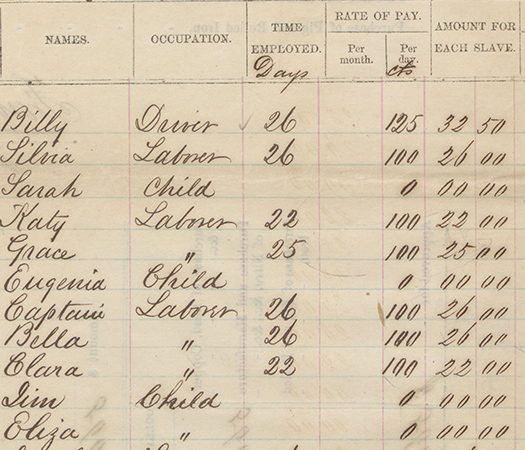
WASHINGTON, D.C., March 4, 2020 — For all of March 1862, a man named Ben cooked for the Confederate military stationed at Pinners Point, VA, earning 60 cents a day that would go to his owner.A few months later and 65 miles away,  Godfrey, Willis, and Anthony worked on “obstructions of the Appomattox River” at Fort Clifton.

Then there were Grace, Silvia and Bella, among several women listed as laborers at South Carolina’s Ashley Ferry Nitre Works in April 1864, near the names of children like Sarah, Eugenia and Sampson.   

They are single lines, often with no last name, on paper yellowed but legible after 155 years, among thousands scrawled in loping letters that make up nearly 6,000 Confederate Slave Payroll records, a trove of Civil War documents digitized for the first time by National Archives staff in a multiyear project that concluded in January. Continued at  Full Text Link: National Archives

Tuesday, January 28, 2020

New and Noteworthy: Life During Wartime--Living, Dying and Surviving in Richmond, Virginia

Rebel Richmond Rebel Richmond: Life and Death in the Confederate Capital,Stephen Ash, University of North Carolina Press, 296 ppages,  illustrations, bibliographic notes, bibliography, 2019.  $35.00.

Reviewed by Michael E. Woods (Marshall University) Published on H-CivWar (January, 2020)

A fresh-faced lieutenant screams from a hospital bed. Shopkeepers fence stolen goods, while an equally entrepreneurial embalmer smuggles deserters and draft dodgers out of town in coffins. Neighbors hear a confectioner lashing an enslaved girl with a leather strap; the next day, the four-year-old child is found dead. In a filthy shack near the wharves, a young prostitute dies alone from a laudanum overdose. These kinds of stories are rarely commemorated with monuments or dramatized in reenactments. But they are all Civil War stories, and they all find a place in Stephen V. Ash’s outstanding Rebel Richmond: Life and Death in the Confederate Capital. 

Richmond was a national capital and a target for attack, a commercial hub and a manufacturing powerhouse, a haven for refugees and a place of captivity. But although historians have thoroughly documented the city’s political and military histories, the experiences of its humbler residents, whose numbers swelled to more than 100,000 during the conflict, have received less attention. The purpose of Ash’s book is to explore “how ordinary Richmonders”—black and white, enslaved and free, male and female, rich and poor, civilian and soldier—“fared in the maelstrom of war” (p. 3).

Ash quite logically emphasizes Richmond’s uniqueness, but the city’s prominence in both history and historiography means that this book will fascinate not only local historians but also readers interested in everything from common soldiers and women’s history to class conflict and slave resistance.
Ash surveys life in wartime Richmond in a series of thematic chapters. The city’s diverse population was fractured along lines of wealth, status, and occupation, but most Richmonders faced an increasingly severe struggle to get by as neighbors multiplied and resources dwindled in what one local paper aptly called the “metropolis of the South” (p. 19).

Richmond’s population may have tripled during the war as bureaucrats, soldiers, refugees, impressed slaves, and drifters, driven by force or free will, crowded into the city. With housing scarce and rents soaring, civilians squeezed into rented rooms, hotels, and offices while soldiers and enslaved laborers lived in nearby barracks and encampments and a growing number of captives—including political prisoners and captured Union soldiers—languished in jails and camps. And although proximity to a rich agricultural hinterland had kept antebellum Richmond well fed, wartime disruption and overcrowding created a parallel crisis of sustenance. As with the housing shortage, public efforts to increase food supply met with mixed results: most Richmonders did not starve, but the poor and the wards of the Confederate government waged a desperate struggle for subsistence.
 
Unlike food and shelter, jobs were plentiful in a city where fierce competition for workers pitted private manufacturers against public-sector employers and the military. Even though Confederate officers detailed soldiers to work in factories and other productive enterprises, the labor shortage remained acute, so considerable numbers of enslaved people, free blacks, and white women and children filled the void. Of course, with so many strangers coming and going, old fears of insurrection and new apprehensions of disloyalty fostered an atmosphere of suspicion.

Deserters and Unionist agents did not topple the city’s Confederate power structure, but the prevalence of crime and immorality, coupled with resistance by enslaved people, made many affluent white Richmonders fear the worst. The outbreak of Richmond’s infamous bread riots in April 1863 seemed to portend a more general uprising of the city’s motley underclass, and for the last two years of the war, local officials mixed poor relief with paramilitary repression in an effort to keep order. The proximity of military force reassured Richmond’s elite, but the proliferation of military hospitals, complete with the sights, sounds, and smells of suffering and death, provided a constant reminder of the war’s costs.

Ash has indeed brought “wartime Richmond to life as a city of flesh-and-blood men, women, and children of many sorts who responded in very human ways to extraordinarily trying circumstances” (p. 5). The success of this rich social history stems from diligent archival research. Ash delved into a variety of manuscript materials, including personal correspondence, the records of the Southern Claims Commission, church and hospital records, and letters received by the Confederate Provost Marshal’s Office and the Confederate Secretary of War.

These dusty files yielded a trove of poignant stories that demonstrate how Richmond’s diverse residents navigated a city shaken to its core by an increasingly revolutionary conflict. From the arrest of an African American bartender who allegedly spoke to a white man with “insolent and provoking language” (p. 175) to hospital matrons’ attempts to brighten their dreary living quarters, Rebel Richmond compellingly illuminates how Richmonders lived, labored, and died in a city where the war sometimes reached the suburbs and was never far away.

This book complements previous accounts of wartime Richmond by Emory M. Thomas and Ernest B. Furgurson, which relied (particularly in Thomas’s case) more heavily on published materials.[1] It also will provide opportunities for comparative analysis if read alongside other urban histories, such as Wendy Hamand Venet’s study of Civil War-era Atlanta and William Warren Rogers Jr.’s work on Montgomery.[2] Indeed, what Richmond shared with other Confederate cities may be as important as what set it apart. Richmond’s status as a political, industrial, and military center certainly made it a distinctly attractive target for Union strategists and a singularly powerful symbol of Confederate nationalism, and Ash quite reasonably underscores its uniqueness.

But many aspects of Richmond’s story had parallels in other Confederate cities. Union war planners coveted New Orleans and Atlanta; manufacturing boomed in Selma and Augusta; refugees streamed into Raleigh and Columbia. Rebel Richmond therefore underscores the centrality of cities to the story of the Confederacy. As Andrew L. Slap and Frank Towers have pointed out, for all the obvious importance of Southern plantation agriculture, and for all the Lost Cause paeans to an agrarian way of life, cities were at the heart of the Confederate project, from the meeting of secession conventions to the manufacturing of war materiel and the marshaling of armies.[3] Rebel Richmond demonstrates this point brilliantly and poignantly. Regardless of where they came from or why they were there, Richmonders—all 100,000 or more of them—experienced an emphatically urban Civil War.

Bibliographic Notes:
[1]. Emory M. Thomas, The Confederate State of Richmond: A Biography of the Capital (Austin: University of Texas Press, 1971); Ernest B. Furgurson, Ashes of Glory: Richmond at War (New York: Alfred A. Knopf, 1996).
[2]. Wendy Hamand Venet, A Changing Wind: Commerce and Conflict in Civil War Atlanta (New Haven, CT: Yale University Press, 2014); William Warren Rogers Jr., Confederate Home Front: Montgomery during the Civil War (Tuscaloosa: University of Alabama Press, 1999).
[3]. Andrew L. Slap and Frank Towers, “Introduction: Historians and the Urban South’s Civil War,” in Confederate Cities: The Urban South during the Civil War Era, ed. Andrew L. Slap and Frank Towers (Chicago: University of Chicago Press, 2015): 1-23.
 
Full Text Source: http://www.h-net.org/reviews/showpdf.php?id=54431

Tuesday, January 14, 2020

New and Noteworthy: Gettysburg: The Living and The Dead as Viewed by a Poet and a Photographer

GettysburgGettysburg: The Living and the Dead, Kent Gramm with photography by Chris Heisey, Souhtern Illinois University Press, 225 pp, profusely illustrated, 2019, hardcover, $29.95.

Reviewed by Matthew A. Borders, (National Park Service, American Battlefield Protection Program; review published by H0Civil War, January 2020.
 
I knew that this work, Gettysburg: The Living and the Dead, would be a challenge from the beginning. An artistic work, the book looks at the largest battle ever fought in the Western Hemisphere through a myriad of lenses, peoples, times, and writings. This is not, nor does it purport to be, another military history of the Battle of Gettysburg. That being said, it is set up in a manner that would familiar to anyone who has read military histories of the battle. Gettysburg has four distinct chapters, covering the first day of fighting with twenty separate entries, the second day with thirty-five entries and the third day with fourteen entries. It ends, as many histories of the battle do, with a chapter on the aftermath, which contains nineteen individual entries.

Each entry, be it a poem or short story, is accompanied by an image. This structure struck me not only as a familiar choice, but also possibly a deliberate one to help the reader. As most are already familiar with the three traumatic days of the battle, this structure seems designed to place the reader into the right mind-set of each day and its aftermath.

That may be the reason why I found the first chapter so jarring. Set up as it is, even with a snippet of the famous 1889 Joshua Lawrence Chamberlain speech just before the table of contents to set the stage, the first chapter has little to do with the Battle of Gettysburg as the opening poems are broad enough to describe almost any conflict. This is not a bad thing, and in fact can bring the past and present closer together as it reveals shared passions, fears, and sorrows. As the chapter continues, however, Gramm also reveals much of himself. There are numerous references to the Vietnam War in this chapter (entry 8: Blood Trail, entry 9: 'Stang, entry 18: Stayin' Alive) and sprinkled throughout the book. The war is seen as a mistake and or something to be protested by the author.
Some of his stories go so far as to use the memory of historical figures from the Battle of Gettysburg as inspiration for these protests. There are several very well-written short stories in this chapter taken from the soldier's perspective and even one apparently real letter from a migrant worker in 1927 who worked in the orchards around Gettysburg. In all, this is a very scattered chapter that feels lacking in focus.

Much like the second day of the Battle of Gettysburg itself, which saw the longest period of fighting, stretching well into the night on some parts of the field, the second chapter is the longest. It is also where I feel the book finds its focus. Of the thirty-five entries, again mostly poems and short stories, the majority focus on the Battle of Gettysburg or its participants. It is also where we start to see a large helping of one of the subthemes of Gettysburg, the supernatural. This had been hinted at since the beginning of the book, but over a third of the entries of this chapter have to deal with ghosts or spirits tied to or trapped on the battlefield, for any number of reasons. Some are trying to communicate with the living to dissuade us from repeating the follies of history, some are still fighting the battle, and some are searching for fallen loved ones. This a theme that is hard to escape in Gettysburg, as the town itself is awash in ghost tours of dubious quality and historic accuracy.

The best aspect of Gettysburg: The Living and the Dead is the bravery of the author to tell his stories and poems through a broad range of voices. Both Union and Confederate soldiers are portrayed, sometimes with sympathy towards their enemies, often with the passions and hatreds of the war on full display. We hear the voices of women—those caring for the wounded, watching over the dead, pining for the lost, or educating the current generation. Veterans both old and new are written about, as are former rangers, battlefield guides, museum curators, and even a reenactor in one story. I will admit I was surprised to see the author use an African American dialect in two of his entries, a bold decision and a commendable effort to include the whole story of the region. The story that spoke to me the most, however, and which in today's climate of intolerance struck me deeply, comes nearly at the end of the work, entry 85: North and South (pp. 207-09). Two fathers, one from Wisconsin and one from North Carolina, tour the battlefield together, discussing fatherhood, loss, and the war. Both are products of their regional bias, neither having really dealt with anyone from the other side of the Mason-Dixon Line. This story ends with two men having a better understanding of the other and a promise to memorialize a loss from a much more recent conflict. I sincerely hope that this story, presented from the perspective of a writer, is the fulfillment of that promise.

It would be a mistake to review Gettysburg: The Living And The Dead without touching on the beautiful photography of Chris Heisey. The images are as diverse as the stories and poems themselves, and sometimes suffer from the same out-of-place feeling that some of the writings have. Every poem or story has at least one image attached to it. Most of these are dramatic shots of the battlefield landscape or the monuments on it. Entry 31: War Means Fighting (pp. 79) is one such example of an oddity, as it has a praying mantis on page 78 to accompany the story. Surprisingly, almost a quarter of the images are wintry shots of the battlefield or monuments, and there are numerous autumnal landscape shots. Considering the sweltering July conditions in which the battle was fought, the snow-and-ice-covered images are beautiful, if unexpected.

While I had some concerns reading this work, I am glad I did. Our cultural landscapes, even our most studied, such as Gettysburg National Military Park, have meant and continue to mean different things to different people. While I may not understand all of the author and the photographer's perspectives and choices for Gettysburg: The Living and the Dead, it is obvious that they care deeply for this historic landscape, the history that happened here, and its visitors.

Citation: Matthew A. Borders. Review of Gramm, Kent; Heisey, Chris, Gettysburg: The Living and the Dead. H-CivWar, H-Net Reviews. January, 2020. URL: http://www.h-net.org/reviews/showrev.php?id=54316

Monday, January 13, 2020

News: The most intact Grand Army of the Republic Post is located in Carnegie, PA

2162165_web1_sig-CarCar-011620 Carnegie Carnegie Corner: Remembering veterans of long ago
For Union Civil War veterans, April 1865 started a time of healing and renewal. We often forget that there were no social safety nets for these men who so nobly served the call to arms to defend the Union. Not until 1930 was there a Veterans Administration as we know it today.
Some things never change. Politicians made empty promises to “care for those who have borne the burden, his widows and orphans.” Immediately following the end of the war, there was little political pressure to see that these promises were kept. Consequently, on April 6, 1866, the Grand Army of the Republic (GAR) was founded in Decatur, Ill., by former Union officers to serve as a united voice in holding the government accountable to make good on those promises.

By 1900, about 7,000-plus GAR Posts were scattered across the U.S., providing a place for veterans to turn to for fellowship, networking and, if needed, charity. Think of it as today’s American Legion or VFW Posts for veterans of the Civil War. The GAR founded soldiers’ homes and were active in relief work and in gaining more liberal federal pension legislation. Orphan schools were founded in Pennsylvania to care for and educate the children of veterans.

The Andrew Carnegie Free Library & Music Hall in Carnegie has been documented by scholars as probably the most intact GAR Post in the country. In a 1911 catalogue, veterans from the post wrote “… we leave for our children and their children, this room full of relics, hoping they may be as proud of them as we are, and that they may see that they are protected and cared for all time.” It’s a responsibility to our veterans that we don’t take lightly. We are honored to tell their stories, display their artifacts and educate the public on what they accomplished for our nation.

The Capt. Thomas Espy GAR Post 153 is open to the public, free of charge, from 11 a.m. to 3 p.m. every Saturday. Private tours can be arranged by appointment. A lecture is held every second Saturday of the month. The Jan. 11 talk begins at 1 p.m. and is on the Battle of Philippi, W.Va., with speaker Jon-Erik Gilot. Light refreshments are served. For more information or to schedule a tour, call 412-276-3456, ext. 9.

Diane Klinefelter is the Andrew Carnegie Free Library & Music Hall Espy Post curator.

Text source: Tribune and Review

Friday, January 03, 2020

New and Noteworthy: The Entrepreneurs Who Save the Union


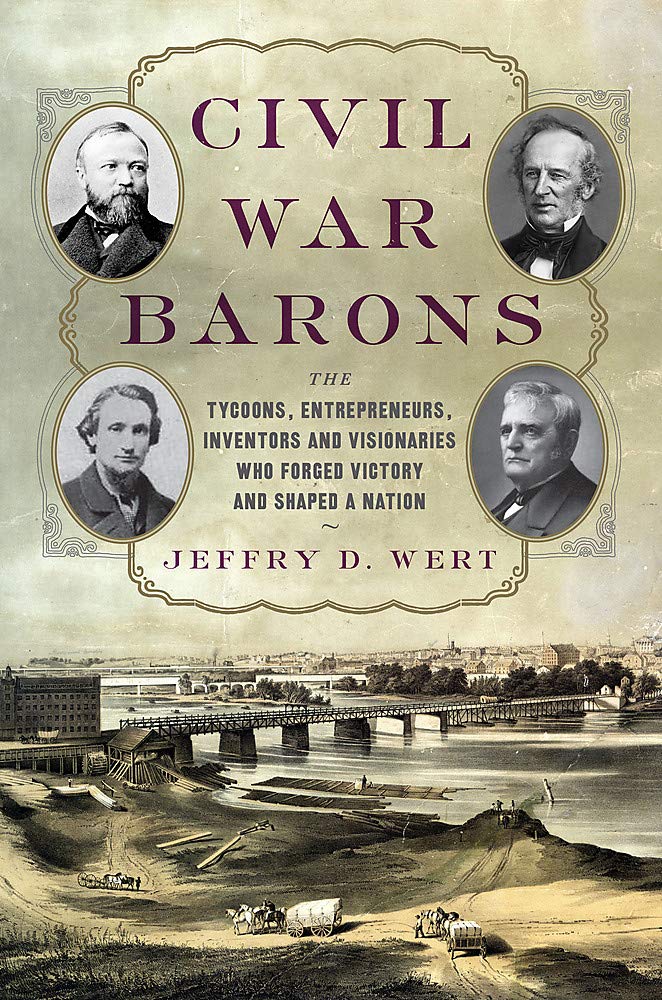
Civil War Barons: The Tycoons, Entrepreneurs, Inventors and Visionaries Who Forged Victory and Shaped a Nation, Jeffry D. Wert, DaCapo Press, 228 pp., 16 pages of b/w images, 2018, hardcover $30.00, paperback $24.00. 


Review Author: Len Riedel, Blue & Gray Education Society


Civil War Barons is a relatively short and tight book. At 209 pages, it is an easy read in any circumstance. I have known and respected Jeff Wert for some time. A former history teacher in Pennsylvania, Jeff long ago earned the respect of the Civil War community, and his frequent publications since then always are well researched and written. With more than 10 books and far more articles on his résumé, you cannot say you are well read on the war unless you have read some of his works—especially his book about James Longstreet. So it was with reasonable expectation that I opened the cover and dove in.

The literature of the Civil War has produced any number of thematic derivatives, and so this work by Jeff was a new and, as it unfolded, intriguing angle about civilian support for the war effort. I have long maintained that we cover the period before the war and after the war because people just were not there when the shooting started, and they didn’t go to a remote island after the war ended. Jeff shows in a compelling fashion how key people in a variety of innovative ways built the support infrastructure that made the Union war effort successful. The names are generally familiar: Vanderbilt, Armour, Borden, Carnegie, Deere, Squibb, Parrott, Weyerhaeuser, and many others.

Jeff offers mini biographies on his subjects that describe how each one came from a position of strength or failure to address the challenge and opportunities presented by the Civil War. The stories of condensed milk, canned meats, lumber, wagon building, artillery, rapid fire weapons, farm instruments, and medical advances work together to help the reader understand how each and every contribution accumulated to provide the resources needed to win the war.

It seems that in our studies we far too often take for granted these support elements, and yet the evolution of repeating rifles, the construction of multiple gunboats in just over 90 days, and the ramping up of shoes mechanically stitched to meet the needs of the growing army are miraculous in their adaptive and functional performance. I recall being a youngster in the 1960s and buying U.S. Savings bond stamps two and three at a time, and yet here is the story of Jay Cooke who revolutionized fundraising from the public as a whole by selling bonds. It is simply amazing to contemplate.

Not all turn out well, and not every person was a good guy. Some were simply ruthless and made money far in excess of what they would ever need or spend in their lives. Many overextended themselves or were unable to sustain their success after the war. Others extrapolated their processes and changed to meet the demands of the following Gilded Age. Some were selfless in the face of national need, and others were successful rapscallions. What struck me was how these developments unleashed American capitalism in all of its raw power and lifechanging potential.
I am a better informed person as a result of this work. It is not mentally taxing, but, frankly, Jeff’s genius in the selection of his topic has filled a significant niche that one could live without, but if you happen upon it you will have an epiphany. I think this book is worth your time and would give it a solid 3.5 stars, maybe even 4, on a 5-star scale.

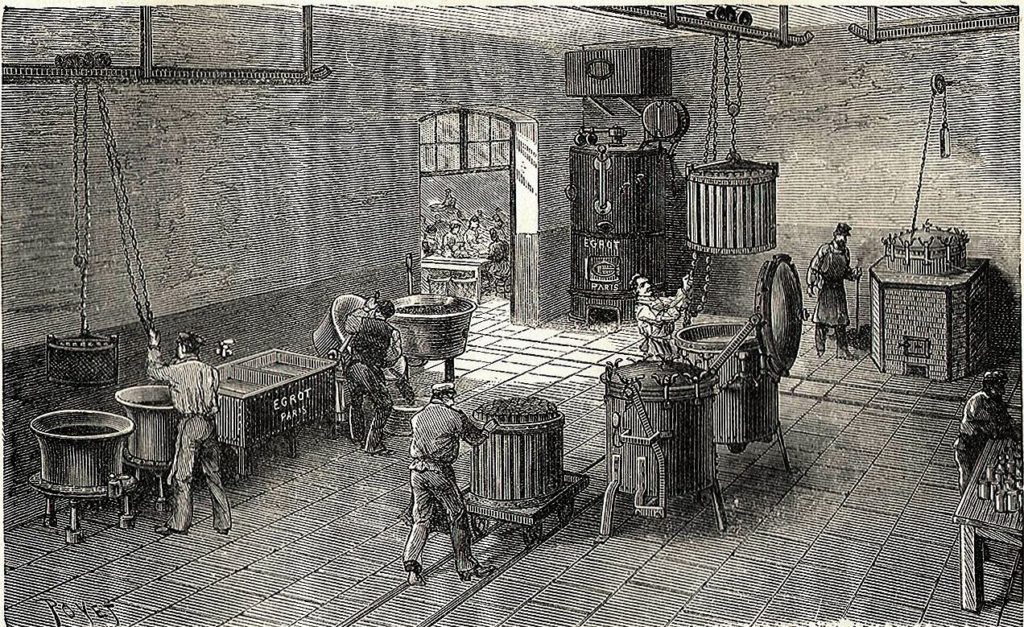
Image Source:  A canning food factory (1898) | Wikipedia
Review Source:  Len Riedel, Blue & Gray Education Society

Tuesday, December 10, 2019

News: Glory, The Film: a Reflection on it 30th Anniversary

Poetry Not Yet Written: Revisiting Glory Thirty Years Later

Ella Starkman-Hyne, December 10, 2019 at Muster: The Web Log of the Society of Civil War Historians

Glory begins as so many Civil War films do: the sun rises on a vast battlefield, brave Union men march into war, and a ferocious battle ensues, American and Confederate flags billowing in the background. Despite its adherence to well-worn tropes, however, Glory tells a tale that is often obscured – even obliterated – in Civil War narratives. Edward Zwick’s 1989 classic follows the story of the 54th Massachusetts Infantry, one of the first African American regiments to fight for the Union cause. Viewed within the larger canon of Civil War films, Glory is a triumph. Most of these narratives sidestep the issue of slavery in order to appeal to the widest possible audience; Glory, in contrast, never lets the viewer forget that this truly was a war of emancipation. This laudable achievement aside, though, Glory has many significant shortcomings. And, as the film celebrates its thirtieth anniversary this December, it is well worth asking the question: who gets to tell this story?
Given Glory’s subject matter, the viewer could reasonably expect the men of the 54th Massachusetts to take center stage. Yet, mere moments into the film, it becomes clear that Glory is, in many ways, the story of the regiment’s white colonel, Robert Gould Shaw (Matthew Broderick). The powerful narration of the film is drawn from Shaw’s real-life letters home, affording the viewer intimate access to the colonel’s thoughts, fears, and hopes. Never mind that the men of the 54th also wrote letters home – this fact is never imagined, much less acknowledged, and the viewer remains wholly unaware of the inner lives of the black men at the heart of the story. This negligence has significant consequences in Glory, and no small amount of unintended irony. At the beginning of the film, Shaw declares with evident self-satisfaction: “We fight for men and women whose poetry is not yet written.” In fact, there was a well-established tradition of African American poetry by this time in American history, a literary movement that included the voices of both free and enslaved black people.[1] The poetry of these men and women was indeed being written – Colonel Robert Gould Shaw simply wasn’t reading it.[2]

The men of the 54th are immensely compelling characters in their own right, yet Glory’s depiction of the regiment’s black soldiers never quite reaches the depth and nuance it reserves for its white protagonist. This lapse is most painfully evident in the case of Trip (Denzel Washington), a composite character based on several real-life soldiers who came to the unit as former slaves. Trip is a quick-tempered and confrontational man, who refuses to back down in the face of authority. In one of the film’s most significant moments, he turns down the honor of carrying the American flag into battle, defiantly telling Colonel Shaw: “I ain’t fighting this war for you, sir.” As powerful as Trip’s character is (Washington would win an Academy Award for his portrayal), the viewer’s insight into his lived experience remains quite limited. The few conversations touching on his enslavement are filled with tense silences, and the true contours of his suffering are never fully explored. This superficial portrayal of Trip’s life – whether a matter of intention or oversight by Glory’s producers – was a missed opportunity; even in the 1980s, there was no dearth of literature on slavery the filmmakers and screenwriters could have used for research.
 
Furthermore, Trip’s fury is often tempered – even invalidated – by his colleagues in the 54th. John Rawlins (Morgan Freeman) takes issue with Trip’s aggrieved demeanor throughout the film, chastising him for being “full of hate” merely because he’s “been whipped and chased by hounds.” In case Trip misses the point, Rawlins declares: “that might not be living, but it sure as hell ain’t dying. And dying’s been what these white boys have been doing for going on three years now, dying by the thousands, dying for you, fool.” This statement is distressing for two reasons: first, Rawlins denies Trip the right to be angry, asserting that the horrors he experienced as a slave do not justify his bitter outlook and, moreover, do not match the ultimate sacrifice made by “these white boys.” Furthermore, the assertion that white men had been dying for African Americans throughout the Civil War is deeply flawed, given that many Union soldiers joined the war effort purely to fight secession and did not, in fact, support the cause of emancipation; some even deserted when President Lincoln issued the Emancipation Proclamation.[3]

Over the past thirty years, historians have generally praised Glory for its historical accuracy, its skillful depiction of the war’s oft-forgotten heroes, and its refusal to adhere to Lost Cause ideologies. Shortly after the film’s cinematic release, Pulitzer-Prize winning Civil War historian James McPherson wrote a review of Glory in The New Republic, citing it as “the most powerful and historically accurate movie about that war ever made.”[4] McPherson wrote that Glory  would “throw a cold dash of realism over the moonlight-and-magnolias portrayal of the Confederacy,” and might even restore the heroic image of black soldiers which prevailed in the North for a brief time during and after the war, before the Lost Cause became entrenched.[5]

Nearly two decades later, the historian Gary Gallagher made similar observations about Glory in his book, Causes Won, Lost, & Forgotten: How Hollywood and Popular Art Shape What We Know about the Civil War. Gallagher’s analysis focuses primarily on Glory’s depiction of the Civil War as a battle of emancipation, noting that Hollywood films since the late 1980s have largely dismissed preservation of the Union as a central motivator for Northern soldiers. This artistic license, Gallagher writes, often comes at the cost of historical accuracy, effectively promoting a “flawed conception of the North’s Civil War,” given that many white soldiers were ambivalent toward the cause of emancipation.[6] This negligence notwithstanding, Gallagher maintains that Glory had a positive and tangible impact. He notes that even its star, Denzel Washington, had been unaware that black people fought in the Civil War. Washington was hardly alone; Gallagher writes that “moviegoers across the United States left screenings with a similar realization that the military struggle between 1861 and 1865 had not been a lily-white affair. In that respect, Glory worked a sea change in popular perceptions about the conflict.”[7]

McPherson and Gallagher have certainly made valuable contributions to the conversation about Glory. However, their respective analyses overlook a vital aspect of the film’s legacy: the framing of the 54th’s story though Colonel Shaw’s perspective. For decades, sociologists and black theorists have explored the implications of black stories being told by white storytellers, often referred to as “racial ventriloquism.”[8] Claire Oberon Garcia, Vershawn Ashanti Young, and Charise Pimentel examine this topic in their book, From Uncle Tom’s Cabin to The Help: Critical Perspectives on White-Authored Narratives of Black Life. These scholars note that white-authored narratives are frequently “used to structure perceptions of American race relations, particularly black racial experiences,” while the work of black writers rarely achieves such dominance.[9] The authors assert that this cultural hegemony persists despite the continuing efforts of black storytellers. Although black writers, filmmakers, television producers, and scriptwriters have depicted both black and white stories through mainstream media, their works seldom achieve the level of financial success granted to white-authored narratives, “and thus do not figure greatly in Americans’ understanding of race in general and black experiences in particular.”[10] These white writers – no matter how well-intentioned – are thus culpable in a “long history of constructing ‘blackness’ to serve hegemonic concerns,” a tradition which effectively denies black people the agency to tell their own stories.[11]


In cinema, such narratives are often referred to as “white savior films.” Sociologist Matthew Hughey investigates this phenomenon in his book, The White Savior Film: Content, Critics, and Consumption. He writes that these stories are “often guided by a logic that racializes and separates people into those who are redeemers (whites) and those who are redeemed or in need of redemption (nonwhites).”[12] White savior films can have profound societal consequences. Hughey cites studies on the lack of interracial communication in many predominantly white areas in the United States, noting that 86 percent of suburban whites live in communities where black people make up fewer than 1 percent of the population.[13] In this context, he asserts, popular films become a kind of proxy for real-life interracial interactions. [14] This framework is certainly at work in Glory. Although the film depicts the 54th Massachusetts as a regiment of former slaves, the majority of the soldiers were, in fact, born free in the North.[15] Such a depiction paves the way for a falsified journey from slavery to freedom, a journey not possible without the fearless leadership of their white colonel (and white savior), Robert Gould Shaw.
The makers of Glory were certainly telling a story that needs to be told – but it is not their story to tell. Indeed, as Glory celebrates its thirtieth anniversary this December, it is worth taking a closer look at whose voices are being heard, both onscreen and behind the scenes (Glory having been written, directed, and produced by white men). In accepting the premise that the poetry of black Americans had “not yet been written,” Glory ensures that whatever poetry it does present is that of its white hero and savior. Viewers must question why, in a film specifically about black soldiers, the perspectives of African Americans are so conspicuously absent. In recent years, many historians have begun to call for a new Civil War documentary, one in which Shelby Foote’s romanticized view of the Old South is not the dominant voice. Perhaps it is also time for a new Glory, a version devoid of “racial ventriloquism,” in which the men of the Massachusetts 54th are not only free from slavery, but free to tell their own stories.

[1] Erika DeSimone and Fidel Louis, Voices beyond Bondage: an Anthology of Verse by African Americans of the 19th Century (Montgomery: NewSouth Books, 2014).
[2] Katie O’Halloran Brown, “Letters of Black Soldiers from Ohio Who Served in the 54th and 55th Massachusetts Volunteer Infantries during the Civil War,” Ohio Valley History 16, no. 3 (2016): 72-79.
[3] James M. McPherson, For Cause and Comrades: Why Men Fought in the Civil War (New York: Oxford University Press, 1997), 123.
[4] James M. McPherson, “TNR Film Classic: ‘Glory’ (1990),” The New Republic, January 15, 1990, https://newrepublic.com/article/91210/tnr-film-classics-glory-january-15-1990.
[5] Ibid.
[6] Gary W. Gallagher, Causes Won, Lost, and Forgotten: How Hollywood and Popular Art Shape What We Know about the Civil War (Chapel Hill: University of North Carolina Press, 2008), 92.
[7] Ibid., 95.
[8] Claire Oberon Garcia, Vershawn Ashanti Young, and Charise Pimentel, From Uncle Tom’s Cabin to the Help: Critical Perspectives on White-Authored Narratives of Black Life (New York: Palgrave Macmillan, 2015), 1.
[9] Ibid., 1-2.
[10] Ibid., 2.
[11] Ibid., 4.
[12] Matthew W. Hughey, The White Savior Film: Content, Critics, and Consumption (Philadelphia: Temple University Press, 2014), 2.
[13] Ibid., 15.
[14] Ibid.
[15] Joseph T. Glatthaar, “‘Glory,’ the 54th Massachusetts Infantry, and Black Soldiers in the Civil War,” The History Teacher 24, no. 4 (1991): 475-85, 478.

Images:  Denzel Washington in Glory. Courtesy of Tristar Pictures.; Matthew Broderick, who portrayed Robert Gould Shaw in Glory. Courtesy of Tristar Pictures; Promotional poster for Glory. Courtesy of Tristar Pictures.

Ella Starkman-Hynes

Ella Starkman-Hynes is an independent author and graduate of McGill University. She is currently applying to graduate school for U.S. history and intends to specialize in Civil War memory. Her research focuses primarily on the depiction of the Civil War in popular culture, and she is currently working on a project examining northern memory of the war through twentieth-century literature.

Monday, November 25, 2019

New and Notable: The Leadership Team of Lee and Jackson

The reviewer is Dr. Kathleen Logothetis Thompson who earned her PhD in Nineteenth Century/Civil War America from West Virginia University, and also holds a M.A. from WVU and a B.A. from Siena College. Her research is on mental trauma and coping among Union soldiers and she is currently working on her first book, tentatively titled War on the Mind. She currently teaches history at several colleges and universities and leads tours of Frank Lloyd Wright’s Fallingwater. Kathleen was a seasonal interpreter at Fredericksburg & Spotsylvania National Military Park for several years and is the co-editor of Civil Discourse.

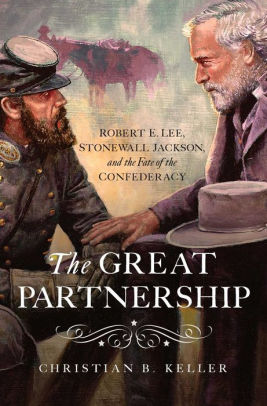
The Great Partnership: Robert E. Lee, Stonewall Jackson, and the Fate of the ConfederacyThe strength of this book is a well-researched and well-written narrative that seamlessly combines military strategy and human lives together in a way that is compelling for both historians and general readers. The writing is not heavy or full of military jargon that might leave a reader bogged down, which makes the book enjoyable to read. The themes of command, strategy, and leadership come across strongly throughout the book and typically Keller is careful with his post-war sources to expose biases and Lost Cause rhetoric. This book would be perfect for a reader who is looking for a scholarly approach to the Lee-Jackson partnership, one who is trying to analyze Confederate leadership and military strategy, or even one who is looking for a good read about Stonewall Jackson and Robert E. Lee. 

A critique of the book is that while Keller looks at Lee and Jackson through the particular lens of command and leadership, he does not make a radically new argument about these two men. Much of this history has been researched and written about before, and Keller is just highlighting certain aspects to analyze why this partnership grew so strong and how it affected military strategy in 1862 and 1863. For those who are well versed in the history of these campaigns and in the careers of these two men, much of this information will be familiar. I think the most compelling part of the analysis was the chapter in which Keller pulls away the Lost Cause rhetoric to show that Southerners at the time reacted in those ways to Jackson’s death.

He also delves into the “what if” question that historians usually avoid. He does a pretty good job navigating that fine line in his chapter about Gettysburg, but chooses to close his book with an imagined vignette of “what did not happen,” where a one-armed Jackson rides with Lee and crosses the Mason-Dixon line on their way towards Harrisburg, PA (247-248). While it is a more compelling narrative, it would have been stronger to end on a more scholarly note instead of playing into fantasies that are usually held by Lost Causers. 

The entire review is located at A Civil Discourse.


Thursday, November 14, 2019

New and Noteworthy: Illinois Soldiers In Their Letters, in Their Words

In Their Letters, in Their WordsIn Their Letters, in Their Words: Illinois Civil War Soldiers Write Home,  Mark Flotow, editor, Southern Illinois University Press, 320 pages, 12 illustrations, 2 maps,  bibliographic notes, bibliography, index, October 2019, $26.00.

From The Publisher: A vital lifeline to home during the Civil War, the letters of soldiers to their families and friends remain a treasure for those seeking to connect with and understand the most turbulent period of American history. Rather than focus on the experiences of a few witnesses, this impressively researched book documents 165 Illinois Civil War soldiers’ and sailors’ lives through the lens of their personal letters. Editor Mark Flotow chose a variety of letter writers who hailed from counties throughout the state, served in different branches of the military at different ranks, and represented the gamut of social experiences and war outcomes.

Flotow provides extensive quotations from the letters. By allowing the soldiers to speak for themselves, he captures what mattered most to them. Illinois soldiers wrote about their reasons for enlisting; the nature of training and duties; necessities like eating, sleeping, marching, and making the best of often harsh and chaotic circumstances; Southern culture; slavery; their opinions of commanding officers and the president; disease, medicine, and hospitals; their prisoner-of-war experiences; and the ways they left the army. Through letters from afar, many soldiers sought to manage their homes and farms, while some single men attempted to woo their sweethearts.

Flotow includes brief biographies for each soldier quoted in the book, weaves historical context and analysis with the letters, and organizes them by topic. Thus, intimate details cited in individual letters reveal their significance for those who lived and shaped this tumultuous era. The result is not only insightful history but also compelling reading.

Preface ix
1. A Lifeline of Letters                                      2. Illinois Citizens Become Soldiers
3. Camp Life and Bonding with the Boys         4. Soldiering
5. Managing Affairs from Afar                         6. Seeing the Elephant
7. Southern Culture through Northern Eye       8. Officers, Generals, and “Old Abe
9. Debility and Diseases                                  10.  Writing the Indescribable as P.O.Ws 11. Soldiers No More
Appendix A: Soldiers’ Brief Biographies
  Appendix B: Chronology of the Civil War
   Appendix C: Quoted Soldiers, by County of Origin


Endorsements:  “Words matter, and by allowing Illinois soldiers to speak for themselves, the Civil War comes alive anew. Flotow helps us envision the ‘real war’ that Walt Whitman observed would ‘never get in the books.’ The editor’s fresh approach provides an intimate and illuminating portrait of the war and those who fought it. In Their Letters, in Their Words is a superb addition to Civil War literature.”—Stephen D. Engle, author of Gathering to Save a Nation: Lincoln and the Union’s War Governors

 “Flotow has done a fine job of linking together, as well as comparing and contrasting, the comments of 165 Illinois soldiers on a wide variety of Civil War subjects. The result is an enjoyable and thought-provoking read for anyone with an interest in the Civil War.”—Glenna R. Schroeder-Lein, author of The Encyclopedia of Civil War Medicine

Friday, October 11, 2019

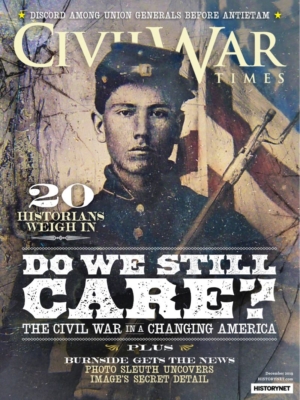
Current Topic: Does The Civil War Still Matter? A Publisher Makes His Case

When someone discovers I publish military and general history books for a living, and my focus is the American Civil War, the conversation invariably narrows to some variant of the question about which I was asked to write: “Does the Civil War still matter?” If time (and the interest of the interrogator) remains, the discussion moves to the inevitable question, “Do people still read Civil War books?”
The answer to the both questions is, of course, yes. The Civil War still matters for a legion of reasons I will leave for others to explore. Since I have a rather specialized view of the subject, I thought it best to delve a bit more deeply into the second question (which, of course, relates to the first.)
The state of the Civil War new book market is as vibrant as it has ever been, even as the number of serious Civil War book buyers and readers inexorably shrinks. Why is this?
The second part of that sentence is easier to answer than the first. The core book-reading group is aging and dying off. Attend your average Civil War Round Table meeting and count the heads under 40. There are not many.
One of the ways we have been working to increase interest in the Civil War is by publishing our growing series of Emerging Civil War series of titles (co-founded by series editor Chris Mackowski). These books, with which every reader of this blog are familiar, run 168-192 pages, include a wide variety of illustrations, driving tours/appendices, and well-written informative text. Veterans readers love them, but newer readers do as well because they are wonderful gateways into the literature. It is much less daunting to pick up one of these at $14.95 and read it than a $35.00 heavily footnoted hardcover weighing in at 488 pages.

Why is the market so vibrant? So exciting? Because the way I see it, the market is saturated with books, and the best scholarship Civil War enthusiasts have ever enjoyed is coming out right now. You just have to cull through it.
The last twenty years have radically changed every aspect of publishing. Technological advances, better and faster computers, desktop publishing, and of course, the Internet, are all responsible for the current market. To my way of thinking, the result—which affects everything from how books are researched, written, and printed—is a saturated market.
Not there’s anything wrong with that. (Sorry, I was just watching Seinfield before California cuts off my power.)

Image result for ted savasI was born with DNA that despises control and gatekeepers (the nuns had a hell of a time with me). The fact that it is easier now to be an “author” and put out whatever you wish is just fine with me. With research much easier to conduct, most of the barriers to entry into the publishing world have been removed. Desktop publishing software at home, or companies masquerading as publishers online, will turn anyone’s manuscript into something that at least looks like a book even if it doesn’t always read like one. The result is more titles than you could ever read in your lifetime.
Never has caveat emptor (“Let the buyer beware”) been more important when you spend your hard-earned money.
As readers, we have access to a wider selection of Civil War titles than at any other time since the end of the war. We can order from catalogs, browse and buy in brick-and-mortar stores, purchase directly from publishers, and snag copies from most authors. We can even download them into our Kindles or listen to a book if audio is an option.
No category is lacking for new studies. Even the war’s redheaded stepchild—the Trans-Mississippi Theater—is finally getting some love.

I was speaking with someone not long ago who was irritated by the large number of books that pour out annually. “I know you love beer. Do you ever shop for it?” I asked. “Of course,” he replied cautiously. “Would you rather go into a store that has Coors and Miller Lite,” I continued, “or Coors, Miller Lite, and one hundred other selections—and you get to choose?”

Even though the core buying pool is smaller than it used to be, sales remain reasonably strong, especially for presses with a dedicated following that work hard to market their books AND their authors. Honestly, there are not that many that do both (and some don’t do either). Some presses get grants and don’t have to turn the sort of profit others must in order to survive. Every publisher has different market niches and specialties.

I can state with complete certainty that if you count the number of Civil War titles published annually and examine sales figures, the average Civil War title sells in the 100s of copies, not the thousands. (This almost always surprises everyone.) In most instances, if one of our books sells fewer than 1,000 copies in one year, we do not think of it as a success. Most of ours sell significantly more than that, and some well into five figures.

Related imageOften, however, I will pick up a niche book I know won’t sell all that well because I think it is important and needs to be done. The better-selling books make that possible. Sometimes breaking even (for the right reason) is okay.Like it has always been, however, the subject—coupled with the author attached to it—matters. It matters a lot.

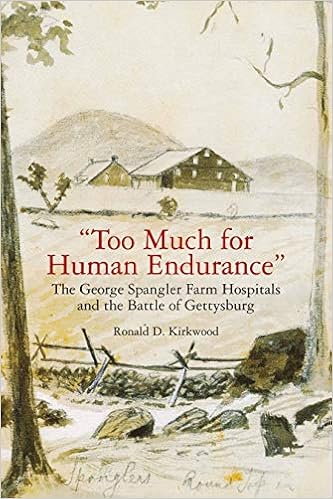
Without fail, the best-selling Civil War topic remains fresh aspects of Gettysburg and the campaign. It is not difficult to find people who grumble that they are sick of the Pennsylvania battle, but sales continue to suggest otherwise. For example, our recent trio of titles—Gettysburg’s Peach Orchard (by Hessler and Isenberg); Too Much for Human Endurance: The George Spangler Farm Hospitals (Kirkwood), and Lee is Trapped and Must be Taken (Ryan and Schaus)—all sold out within weeks and have been reprinted.  Two were national book club selections. Their first printings were not insignificant. Barnes and Noble did not pick up one of these books. It still sold out.
Generally speaking, battles sell. Studies on battles that don’t begin with the letter G also tend to do well, though again, the topic matters. Selling a battle study on Shiloh or Chickamauga, for example, is much easier than Perryville or Chantilly. Selling combats waged in Virginia is much easier than fighting in Kentucky. Map studies, like Brad Gottfried’s military atlas series, are strong steady sellers.
Biographies and unit histories are harder to move since, by definition, they take a small market and essentially cut it in half. This tends to be true for any books focused on one side of the war or the other. Every week I get manuscript queries to publish a history of someone’s ancestor’s company. Alas, that is simply not a viable proposition.

I have not run any real numbers, but if I had to guess, I would say the print run for the average Civil War title published by Savas Beatie is about 20% smaller than it was a decade ago. Many first editions, however, still demand a robust first printing (equal to, or greater than, a decade ago) and still go into multiple printings. No one has a crystal ball. If we did, every book would be a bestseller.
A large part of any “softness” that exists in the book industry is the result of competition—not with other publishers but with other forms of entertainment. The Internet in general, movies on demand, streaming platforms, our damn phones—all play a role. Given this, paying close attention to what sells and allocating revenue and labor accordingly is especially important in today’s marketplace.

Publishers carefully monitor which titles have “legs,” i.e., are the books that have hard-working authors, generate great reviews, and enjoy steady sales and good word-of-mouth during the first few months of release. Those books (and authors) are reinforced with marketing dollars. Like a breakthrough on a battlefield, publishers reinforce success to widen the breach and seize the day.
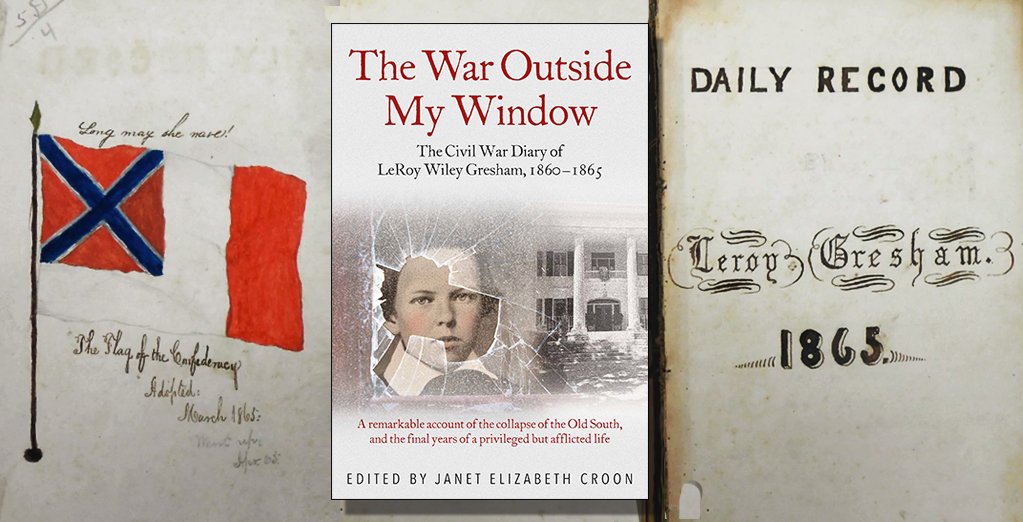
Image result for ted savasA classic example is our 2018 breakout book The War Outside My Window: The Civil War Diary of LeRoy Wiley Gresham, edited by Janet Croon. This is NOT your typical Civil War book by any stretch of the imagination. We thought this would do well because we knew its true worth. Everyone in our office fell in love with the tragic prodigy, his remarkable family, and their incredible story—but would our readers? Could we expand this book beyond typical readers of Civil War history. We pushed it out and held our breath.

The reviews poured in, the books poured out, major news organizations picked up the story—and off it went. We called up the reserves and launched a relentless book tour (thank you, Jan!) with significant marketing behind it. The first printing sold out quickly, and then a large second printing.
The War Outside My Window has generated a life of its own. LeRoy’s story is now in its third hardcover printing, has a new curriculum guide for teachers, parents, and general readers, and a major wholesaler for the school market is helping us craft a young adult version for 2020. LeRoy has also been the subject of a major essay in American Chess Magazine, and we hope to kick off a Georgia chess tournament in his name in 2020
To thousands of people, the Civil War still matters.

Full Text Link: Emerging Civil War

Wednesday, October 02, 2019

News: Antietam Battlefield Receives 1 Million Dollars to Improve Trails

Press Release: Eastern National has received a $1 million gift from an anonymous benefactor. The donation, designated to expand and enhance Antietam National Battlefield’s educational trail program, will help increase access and provide new opportunities for visitors to connect with interpretive resources. 

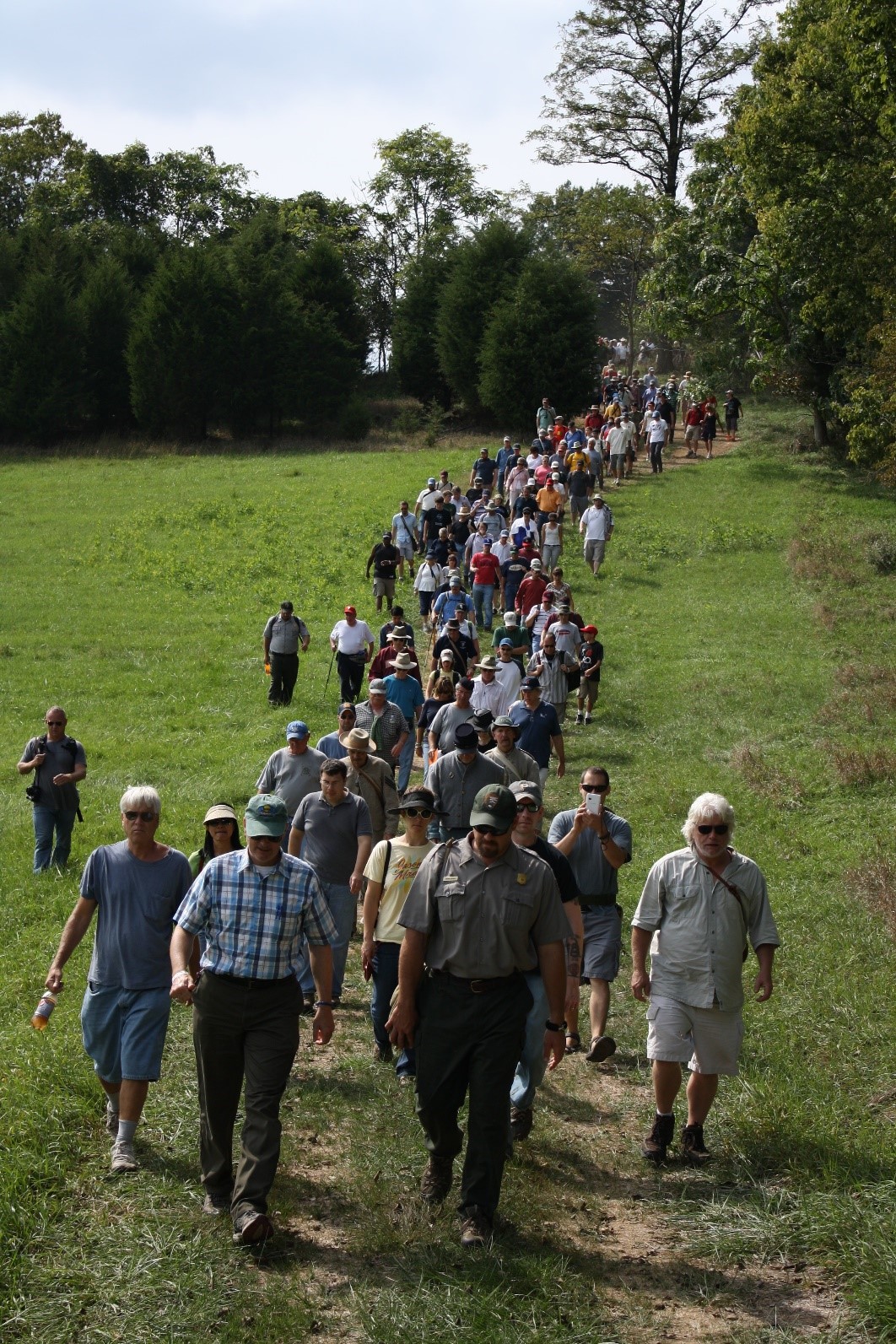
The transformational gift will support construction of a new hiking trail system, described in the 2018 Visitor Access and Circulation Plan – Environmental Assessment, as well as the development of interpretive resources such as trail guides, trailhead exhibits, ranger-led battlefield hikes and tours, and enhanced visitor experience and resource protection capabilities. 
“We are delighted to have received such a generous gift,” said Antietam National Battlefield Superintendent Susan Trail. “As stewards of the land and its history, we’re excited for a new opportunity to connect visitors to Antietam in meaningful ways.” 

Antietam National Battlefield’s acreage has more than doubled since the completion of the last General Management Plan in 1992. The construction of new trail segments and realignment of existing trails will offer future visitors easier access and interpretive context when they visit these newer sections of the park. It is estimated that the project will take seven years to complete. 
The gift stemmed from an inquiry from an anonymous patron who wanted to support trails at Antietam National Battlefield. Staff from Eastern National and the National Park Service worked closely to formalize the project with a philanthropic support agreement, then submitted a proposal to the prospective donor. With substantial funding in place, park officials will be able to leverage the donation to apply for matching funds from federal sources. 

 “Eastern National and Antietam National Battlefield have a rich history of working together to enhance visitor experiences,” said Kevin C. Kissling, Eastern National president and CEO. “We’re honored to have helped facilitate this substantial investment in the park and its resources.”
Antietam National Battlefield is the site of the bloodiest day of the American Civil War, seeing 23,000 soldiers killed, wounded, or missing after 12 brutal hours of savage combat. The Battle of Antietam, fought on September 17, 1862, ended the Confederate Army’s first invasion into the North and led Abraham Lincoln to issue the preliminary Emancipation Proclamation. Coincidentally, the donation arrived at Eastern National’s headquarters on September 17, 2019, the 157th anniversary of the battle. 

Full Text Available at  Eastern National.

Monday, September 30, 2019

News: Thaddeus Stevens Moves Back To Gettysburg, Sometime in the Future, Maybe

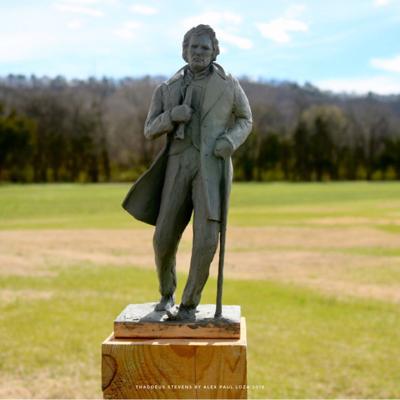
Thaddeus Stevens Gettysburg statue together S20.jpg

Statue of Thaddeus Stevens commissioned for installation in Gettysburg, Mary Ellen Wright, Lancaster Online, Septemmber 23, 2019 

Before the Civil War, before he became Lancaster’s powerful Radical Republican congressman and before he championed the civil-rights-based Reconstruction amendments to the U.S. Constitution, Thaddeus Stevens lived, practiced law and helped a college get started in Gettysburg.  For years, Ross Hetrick, president of the Gettysburg-based Thaddeus Stevens Society, has wanted to see a statue of Stevens erected in the town where the Great Commoner, as Stevens was known, lived from 1816 to 1842.“I’d like anything named after him in Gettysburg,” Hetrick says with a laugh, “or everything named after him. This place should be called Stevensburg instead of Gettysburg.”  Hetrick hopes to get his wish sometime in the next couple of years, having raised $55,000 in cash and monetary pledges and commissioned a 6-foot bronze statue of Stevens to be placed in an as-yet-undetermined spot in Gettysburg.

Hetrick still must figure out a place for the statue to rise in Gettysburg, and must get permission to erect it on a pedestal somewhere in the borough.And he must collect the monetary pledges people have made to the project.“We hope (the statue) will be completed in late 2021 or early 2022,” Hetrick says. “We’re hoping to dedicate it in April 2022, which is Thaddeus Stevens’ 230th birthday.”

In Chattanooga, Tennessee, Hetrick found the artist, Alex Paul Loza, who will sculpt Stevens’ bronze image over the next couple of years.  “What we did was we posted a request for proposals on a website called Public Artist, and we got 20 responses” from artists across the country, Hetrick says.
Those 20 artists wrote statements that described their thoughts on Stevens and on how they sought to recreate him in metal. “And the responses were submitted to a three-person committee that we formed, consisting of two historians and one artist,” Hetrick says, “and they made the selection from those 20 submissions. Mr. Loza’s was the best one.”

Loza says when he read about the statue project, “I felt very connected to (Stevens), and I asked myself, why don’t I know more about him? “Reading about him having a club foot,” Loza says, “I felt that’s where his strength came from. I put that club foot up front, as well as the cane, because I feel (Stevens) was always moving forward. And then his shoulders are leaning forward to strengthen that idea.”

Throughout Stevens’ young life in Vermont, he was mocked for his club foot and the limp for which he used a cane. But many have suggested it made Stevens empathetic to the downtrodden, which, in turn, made him a champion for the civil rights of African Americans and other disenfranchised minority groups.  Loza sculpted a maquette, or miniature clay model, of how he intends the statue to look.

The model shows Stevens taking a step forward, his open coat seemingly flowing out behind him.
Hetrick says the committee liked the sense of “dynamism” and movement Loza was able to capture in Stevens’ stance.  Stevens seemed “like he was never standing still,” Loza says. “He needed to work” and continue moving forward in his fight for social justice, he adds.
The artist, who is a painter as well as a sculptor, says he appreciates Stevens’ ability to “speak for those who had no voice.”

Loza says he needs to adjust his initial image of Stevens to shift the cane from Stevens’ left hand to his right, and must do some anatomical studies to make sure the statue’s weight is properly distributed to reflect that change.The artist, a native of Peru who has lived in the United States since 1989, plans to travel to south-central Pennsylvania next month to tour the sites where Stevens lived and worked.

There’s a Stevens statue at the Thaddeus Stevens College of Technology in Lancaster, a school which money from Stevens’ will helped found. Stevens is buried beneath an inscribed tomb in Lancaster’s Shreiner-Concord Cemetery, and the home and law offices he shared with Lancaster businesswoman Lydia Hamilton Smith and her children is being developed by LancasterHistory as a historic downtown Lancaster site.

Full Text and Image Source--Lancaster Online