Monday, May 20, 2013

New and Noteworthy---Guide to Gettysburg Battlefield Monuments: Handy and Easy To Use For Visitors and Students

Guide to Gettysburg Battlefield Monuments, Tom Huntington, Stackpole Books, Inc., 2013, 234 pp., profusely illustrated with color photographs,, 39 color maps. $9.95.

7 1/4 inches tall, 4 1/2 inches wide and 1/2 thick, Huntington's Guide to Gettysburg Battlefield Monuments fits both on a dashboard or inside a pants back pocket. A strong flexible binding encourages its frequent use. The locations of over 800 monuments, tablets and markers are presented with both GPS locations and map locations. The text offers "a bit about each monument, the division or person each one honors and whet the honoree did during the fighting." Additionally it includes listings, location and coordinates for all the tablets.

Monument descriptions with color photographs are organized by state. Following these descriptions, additional monuments that memorialize brigades, divisions, corps, people are included.  The year of dedication is included for both the state and additional monuments. Each monument is numbered and the number appears on a map; there are maps A through GG at the back of the book. Guide to Gettysburg Battlefield Monuments is an attractive, easy to use, and informative book for visitors to the battlefield, readers and students.

Thursday, May 16, 2013

Off Topic----Into The Fire: Earning A Medal Of Honor In The Afghan War

Into The Fire: An First Hand Account of the Most Extraordinary Battle in the Afghan War, Dakota Meyer and Bing West, Random House, 259 pages, 2012, $27.00.

From the Publisher: During the fall of 2009, Taliban insurgents ambushed a patrol of Afghan soldiers and Marine advisers in a mountain village called Ganjigal. Firing from entrenched positions, the enemy was positioned to wipe out one hundred men who were pinned down and were repeatedly refused artillery support. Ordered to remain behind with the vehicles, twenty-one year-old Marine corporal Dakota Meyer disobeyed orders and attacked to rescue his comrades.

With a brave driver at the wheel, Meyer stood in the gun turret exposed to withering fire, rallying Afghan troops to follow. Over the course of the five hours, he charged into the valley time and again. Employing a variety of machine guns, rifles, grenade launchers, and even a rock, Meyer repeatedly repulsed enemy attackers, carried wounded Afghan soldiers to safety, and provided cover for dozens of others to escape—supreme acts of valor and determination. In the end, Meyer and four stalwart comrades—an Army captain, an Afghan sergeant major, and two Marines—cleared the battlefield and came to grips with a tragedy they knew could have been avoided. For his actions on that day, Meyer became the first living Marine in three decades to be awarded the Medal of Honor.

Into the Fire tells the full story of the chaotic battle of Ganjigal for the first time, in a compelling, human way that reveals it as a microcosm of our recent wars. Meyer takes us from his upbringing on a farm in Kentucky, through his Marine and sniper training, onto the battlefield, and into the vexed aftermath of his harrowing exploits in a battle that has become the stuff of legend.

Investigations ensued, even as he was pitched back into battle alongside U.S. Army soldiers who embraced him as a fellow grunt. When it was over, he returned to the States to confront living with the loss of his closest friends. This is a tale of American values and upbringing, of stunning heroism, and of adjusting to loss and to civilian life.

We see it all through Meyer’s eyes, bullet by bullet, with raw honesty in telling of both the errors that resulted in tragedy and the resolve of American soldiers, U.S. Marines, and Afghan soldiers who’d been abandoned and faced certain death.   Meticulously researched and thrillingly told, with nonstop pace and vivid detail, Into the Fire is the unvarnished story of a modern American hero.

CWL:  When U.S. Army leadership failed, and when Washington DC policies contradict the situation on the ground, Sergeant Dakota Meyer did everything in his power to save the lives of his comrades in arms, both Marine and Afghan. Born and raised in rural Kentucky, Meyer excelled as a Marine Corps school trained sniper and then as a combat infantryman. In a combat situation in which everything that could go wrong did go wrong, Meyer provided boots-on-the-ground leadership and courage.

Into The Fire: An First Hand Account of the Most Extraordinary Battle in the Afghan War is an clear and concise story of an unrealistic Pentagon policy crafted in Washington, D.C. that encumbers the effectiveness of combat teams and their ability to call in artillery fire and reconnaissance support.  An unnecessary tragedy occurred at Ganjigal.


Friday, May 10, 2013

New and Noteworthy----Hell Or Richmond: Ralph Peters' Adds to Cain At Gettysburg

Hell or Richmond:  A Novel, Ralph Peters, Forge Publishing, 542 pp., maps, May 2013, $25.99

Those who thoroughly enjoyed 2012's Cain At Gettysburg will greet Hell or Richmond.

From the publisher: Between May 5 and June 3, 1864, the Union and Confederate armies suffered 88,000 casualties. Twenty-nine thousand were killed, wounded or captured in the first two days of combat. The savagery shocked a young, divided nation.

Against this backdrop of the birth of modern warfare and the painful rebirth of the United States, New York Times bestselling novelist Ralph Peters has created a breathtaking narrative that surpasses the drama and intensity of his recent critically acclaimed novel, Cain at Gettysburg.

In Hell or Richmond, thirty days of ceaseless carnage are seen through the eyes of a compelling cast, from the Union’s Harvard-valedictorian “boy general,” Francis Channing Barlow, to the brawling “dirty boots” Rebel colonel, William C. Oates. From Ulysses S. Grant and Robert E. Lee to a simple laborer destined to win the Medal of Honor, Peters brings to life an enthralling array of leaders and simple soldiers from both North and South, fleshing out history with stunning, knowledgeable realism.

From the horrific collision of armies in the Wilderness, where neither side wanted to fight, to the shocking slaughter of the grand charge at Cold Harbor, this epic novel delivers a compelling, authentic, and suspenseful portrait of Civil War combat.

Commemorating the approaching 150th anniversary of this grim encounter between valiant Americans, Ralph Peters brings to bear the lessons of his own military career, his lifelong study of this war and the men who fought it, and his skills as a bestselling, prize-winning novelist to portray horrific battles and sublime heroism as no other author has done.

Ralph Peters, New York Times bestselling author of Cain at Gettysburg, is a retired U.S. Army officer, a controversial strategist and veteran of the intelligence world, a journalist who appears frequently in the broadcast media, and a lifelong traveler with experience in over seventy countries on six continents.

In addition to works under his own name, he is also the author, under the pen name Owen Parry, of a series of award-winning Civil War mysteries.
Peters has studied the Civil War since childhood. Combining painstaking research, years of walking those fields of battle, with insight gleaned from his own military career, Ralph Peters tells this great American tale in a masterful style.

CWL: Just received a copy and will start it this weekend. Grand expectations!!

New and Noteworthy--The Furtherst Tide: Confederates At The Gates Of Harrisburg

The Confederate Approach On Harrisburg: The Gettysburg Campaign's Northernmost Reaches, Cooper H. Wingert, History Press, 222 pages, 45 illustrations, 8 maps, appendices, bibliographic notes, bibliography, index, 2012, $21.99, trade paperback.

Pennsylvanians, fans of the Army of Northern Virginia and enthusiasts of the 1863 Pennsylvania Campaign are well served by Cooper Wingert's The Confederate Approach On Harrisburg: The Gettysburg Campaign's Northernmost Reaches. Personalities, terrain, military objectives are smoothly woven into a compelling story of an invasion and an emergency response.

On June 15 1863, while wading the Potomac river, Richard Ewell's Second Corps of the Army of Northern Virginia, understood that Pennsylvania was the target and Harrisburg was the bull's eye.  On June 12 Governor Andrew Curtin anticipated the invasion and called up the state's militia for the dual purpose of patrolling Fulton, Adams and York counties and constructing defenses for Harrisburg.  During the next fifteen days, Chambersburg, Gettysburg, Carlisle and York would be seized by Ewell's divisions and their assigned cavalry escorts.

Spies, scouts and assorted ner' do wells are pushed forward, through and behind the Confederate advance. Whirl becomes king for nearly three weeks. The New York State Militia arrives in Harrisburg and makes progress with the east bank earthworks. On June 28 a Confederate cavalry brigade galloped into Mechanicsburg, a mere 30 minute dash west of Harrisburg.  Brief artillery salvos occurred around Peace Church. June 29 at Oyster Point the closest Confederate approach to Harrisburg occurred. The artillery skirmish provided cover for scouts to reach a spot from which  Harrisburg's fortifications were viewed. Ewell prepared orders for an attack on June 30, but other
orders reached him from Lee.  Ewell's divisions [Rodes, Early, and Johnson] were to return to the Chambersburg-Gettysburg area.

Wingert presents clearly and concisely the many personalities and circumstances of Ewell's approach to Harrisburg. Maps are admirably drawn by John Heiser, cartographer for GNMP and Gettysburg Magazine.  Photographs include the many well known soldiers and civilians; many photographs are historical and present day images of regional locations. Wingert provides an insightful and detail discussion of the Confederate march further east of Gettysburg. Segments of the text are short and focused; the author stays within the limits of the primary sources available; artificial suspense is not injected into the story. The Confederate Approach On Harrisburg: The Gettysburg Campaign's Northernmost Reaches is an example of local history well written.

Wednesday, May 08, 2013

News---11th Mississippi Soldier's Letters Discovered, Donated and Digitized

Letters From the Civil War Donated to Ole Miss, Lucy Weber, May 6, 2013, Clarion Ledger

Richard Bridges seemed like a typical college kid in his letters home: He tells his family he may need more money and definitely more clothes, talks about hanging out with old friends from home and sounds a little homesick at times. Through his letters, this one-time University of Mississippi student has returned to the Oxford campus 150 years later.

Mike Martin of Madison, his sister Pat Owen of Rankin County and two of their cousins in Memphis — Bridges’ great-great nephews and nieces — recently donated to the university the 27 letters that Bridges wrote when he served in the University Greys, the unit organized by students to fight in the Civil War.  “We found out that it was significant in that these were only the second set of letters from one of the original 130 University Grays to ever find their way back to the university,” Martin said. “They were proud to receive them and we were proud to give them.”

The letters are housed in the university’s special collections and can be read online. Some of the letters are on display in a special exhibit that opened recently, “Preserving Our Past: Highlights from Archives & Special Collections.” “These letters are indeed one of our treasures,” said Jennifer Ford, head of archives and special collections at Ole Miss. “The Bridges’ letters are a significant addition to our collection.”

Martin said the letters were handed down to his mother in the 1960s from his great aunt, Dot Batton who lived in Crystal Springs where Bridges lived. “I remember Aunt Dot mentioned Uncle Richard and then she pulled out this tin box. She told her (Martin’s mother), “Martha, I want you to have these,” Martin said. “Mama went home and transcribed all those letters. We knew they were special.”
Through the years, the letters were tucked away for safekeeping. After Martin’s mother died, the letters ended up in Owen’s possession. “We talked about how to keep them safe,” Martin said.

Eventually, the family decided to contact officials at the university to see if they wanted them. “The letters needed to be back where he was,” Martin said. “I really thought this was no big deal, that they get stuff like this all the time, but in fact this is only the second set of original letters,” he said.
Written in the graceful penmanship of the day, Bridges’ letters tell of his life from 1861 to 1863. He writes of camp life, asks for more pants and blankets, asks for money when he hasn’t received his military pay, tells briefly of battles and reports on his health, including not-so-serious and serious wounds. There’s longing for home when he writes: “Wealth, honor and ease are but poor things to compare with the pleasure that it would afford me just to see you all once more.”

In the first letter, written Jan. 26, 1861, before he enlisted in his freshman year, he tells one of his sisters that he’s well despite a great deal of sickness, pneumonia and diptheria, in the college and how much he enjoyed the recent holidays at home. The last letter from Bridges is one he dictated on May 26, 1861 “thro’ the kindness of a Va. lady” following the amputation of his left leg after he was struck by a minnie ball during the Battle of the Wilderness.

The last letter in the collection, dated June 3, 1864, came from the woman who wrote the previous letter, Louisa A. Smith of Staunton, Va., telling the family that Bridges passed away peacefully the day before. Smith also enclosed one of his shirt buttons and a lock of Bridges’ hair, which the family kept with the letters through the years. Reading through the letters chronologically shows how Bridges changed over the course of his service that included seeing action in battles at Manassas, Ball’s Bluff, the Seven Days Campaign, and Gettysburg, Martin said.

“In the first letters, he was a peaceful sort of guy. Then, his attitude changed to not bloodthirsty but that he didn’t want to lose,” Martin said. “The guy’s been dead 150 years, and I still get emotional.”
After deciding to donate the letters to the university, Martin said the family delved into Civil War history, trying to learn more about Bridges. They found a picture of him — “he’s a good looking guy” — in a book detailing the history of the 11th Mississippi Infantry Regiment, which included the University Greys in Company A, Martin said.

In the book, Bridges is listed on the Confederate government’s Roll of Honor, dated May 5, 1864. “He was included after that last injury so I think he was considered particularly brave,” Martin said.
The special exhibit “Preserving Our Past” will be on display until January 2014 on the third floor of the J.D. Williams Library on campus. Besides select Bridges’ letters, the exhibit includes special pieces from the archives’ blues collection, including rare 78s of bluesman Robert Johnson, signed baseballs by Ty Cobb and Ted Williams and several pieces from literary collections.

Text and Image Source: The Clarion Ledger

Monday, May 06, 2013

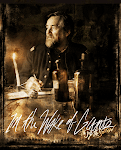
News--- Stephen Lang's The Wheatfield: Gettysburg Foundation 's Centerpiece Of July 1 Commemoration

Salute To the States: Gettysburg Foundation's Signature Event, July 1, 2013

The Gettysburg Foundation invites you to join us for our special 150th Battle of Gettysburg commemorative event, Salute to the States, highlighted with a special performance by renown actor and playwright Stephen Lang.

Lang will perform his solo piece, The Wheatfield, in which he, in the character of Medal of Honor Recipient James Jackson Purman, relates the events that transpired at The Battle of Gettysburg on July 2nd and 3rd, 1863. The personal story that Purman tells is both stark and rich in detail; highly emotional and intensely dramatic. It is an 18 minute tour de force of theatrical expertise.

The performance will be followed by the world premiere of the short film The Wheatfield, written and acted by Lang; directed by Alexander and Adrian Smith; produced by Jake Boritt; original music by Robert Kessler; music performed by celebrated double-bassist Tim Cobb.  Following the film an onstage Q&A with Lang and the filmmakers will be hosted by the eminent Lincoln scholar and author Harold Holzer. Holzer will conduct the interview and invite questions and comments from the audience.

This ticketed event also includes a culinary tour of America featuring signature cuisine from various regions of the United States, Civil War-era ballroom dancing, living history performances by Confederate and Union Generals who share their experiences at Gettysburg, and a unique exhibit of reunion badges from each state that fought at Gettysburg (display courtesy of Gettysburg National Military Park.)

Held at the Gettysburg National Military Park Museum and Visitor Center, from 7:00 p.m. to midnight, the cost of tickets is $100 Individual Ticket and $150 Patron Ticket (additional $50 contribution supports 150th preservation, acquisition and education projects.)
Registration/RSVP deadline is June 1, 2013. To purchase tickets and for more information, please call 717-339-2148 or visit www.gettysburgfoundation.org.

Text Source: Gettysburg Foundation
Image Source: ALT Move Guide

News----Third Winchester Farm's Middle Field That Held 3,000 Casualties To Be Returned To Wheat


Battlefields are usually purchased simply to be preserved. This one will be different. The foundation decided early on that the best preservation practices include land conservation, and made plans to return the Middle Field to its 1864 appearance. Soldiers encountered wheat stubble when they fought over the Middle Field and, if all goes well, visitors to the battlefield on its 150th anniversary next year will see the same thing.

The $80,000 project is a big undertaking because wheat hasn’t been planted on the land for almost 50 years. In its absence, a thick undergrowth of shrubs and a dense stand of non-native trees have filled in the space. All of that has to be cleared before the land can be prepared for planting, a multi-year project if done by hand or even with tractors. Instead, the foundation brought in two large mastication machines capable of tearing up trees with trunks as large as four inches and crunching the heavy undergrowth and, best of all, leaving behind mulched material.

Large oaks, cedars, red buds and dogwoods will be saved from the mechanical jaws. New tree plantings will probably include the American chestnut said Manager for Stewardship Chase Milner, who has filled a briefcase with his research into the farm and 1860s horticulture. Other plans for the Middle Field include planting an assortment of native warm-season grasses, a good habitat for wildlife.

By early May, James Madison University and the Archaeological Society of Virginia will have begun an archaeological investigation of the Middle Field, according to foundation Executive Director Denman Zirkle. He is concerned that work will attract unwanted relic hunters, and to prevent that, he said the land will be posted against trespassers and patrolled round-the-clock by a private security company working in concert with the Frederick County sheriff’s department.

Full Text Link: Washington Post, April 27, 2013

Image Source: Shenandoah At War

Friday, May 03, 2013

Off Topic---Post Civil War Medicine: A Tale of Madness, Medicine and the Murder of a President

Destiny of the Republic: A Tale of madenss, Medicine and the Murder of a President, Candice Millard, Doubleday Publishing, 340 pp.,  34 illustrations, bibliographic notes, bibliography, index, $28.95 hardcover; $16.00 trade paperback.

On July 2, 1881 about four months into his presidency, James A. Garfield was shot in the back by Charles J. Guiteau using a .44 caliber British Bulldog pistol. Garfield died September 19 of the same year. He was medically attended to by D. Willard Bliss who had attendied Abraham Lincoln when he had been assassinated. Millard's book offers many intriguing stories regarding Garfield's death and his assassin's life.

Among those aspects, Millard discusses the dissmissal by Bliss of Joseph Lister's work with germ theory and antiseptic surgery.  Lister used Louis Pasteur's research in microbiology and he promoted the practice of sterile surgery. Carbolic acid used for cleaning wounds and sterilizing medical instruments reduced infections. During 1867-1869 Lister introduced his discovery to British surgeons. Throughout the 1870s sterilization became a wide spread practice in England.

Bliss appears to be represenative of American doctors in 1881 in that he dismissed in the 1870 Lister's work. Additionally, Bliss excessively probed Garfield's wound and inadvertently created a new wound in Garfield's body.  Millard's story contains insights to the American medical establishment of the late 19th century.  Also, she covers the politics and the diagnosis of mental illness during this era.  Destiny of the Republic: A Tale of madenss, Medicine and the Murder of a President is a nicely paced narrative that is accessible to the general reader.

Author discusses Destiny of the Republic on CSpan BookTV  [52 minutes]


Friday, April 19, 2013

News---Three Inch Schenkl Unfired Artillery Shell Found Buried On Sharpsburg Farm


Sharpsburg Man Unearths Live Civil War-Era Shell, Dave Rhodes, Herald Mail, April 11, 2013
A Sharpsburg man planting trees at his Powell Road home Thursday unearthed a live Civil War-era shell that authorities later disposed of by setting it off at a neighboring farm. “When I saw it I knew what it was,” J.D. Taylor Jr. said. “It was the second one I found here. 

“It was some kind of experience.” Taylor said he at first thought he hit a rock with his steel shovel while digging in his yard about a mile from Antietam National Battlefield sometime between 8:30 to 9 a.m. He pushed the shovel under the object, which was five or six inches deep, and knelt to pry it out.

The Maryland State Fire Marshal’s office said in a news release that the object was a 3-inch Federal Navy Schenkl that had not been fired and had an intact fusing mechanism. Taylor said it weighed about eight pounds, was about nine inches long and had a spring-loaded detonator on the end. “It looked like a torpedo without the fins,” he said.

Taylor said he wasn’t afraid to handle it. “I said, ‘Oh my Lord, there’s another one,’” he said.
He had prior experience with another one found 30 years earlier and about 12 to 13 feet away.
Taylor said a contractor working to build his home in 1983 found one just like it while digging on the site.

He said he left the first one at a tree in the woods and it eventually disappeared. He thinks it was probably taken by Civil War artifact hunters.  After finding the second shell on Thursday, Taylor called the Washington County Sheriff’s Office, which requested bomb technicians from the state fire marshal. Those technicians were joined at Taylor's home by U.S. Army bomb technicians from Fort Belvoir, Va. Fire and emergency medical service personnel from Sharpsburg stood by, according to the fire marshal’s news release. Taylor said Maryland State Police were also at the scene.

Authorities using computers in their vehicles researched the device and determined it had been used by both the Union army and navy during the Civil War, according to Taylor. The technicians took the shell to the neighboring farm and detonated it, he said. “It made a decent boom,” Taylor said.
No one was hurt. The on-site research showed that had the shell been inert, it would have been worth about $600 to a collector, Taylor said.

Text Source: Herald Mail
Image Source: ICollector

Wednesday, April 17, 2013

News---Pennsylvania's State Museum Exhibits Objects of Valor To Commemorate Civil War Sesquicentennial {Pittsburgh Post Gazette}


Objects of Valor Exhibit To Open In Harrisburg, Tom Barnes, Pittsburgh Post Gazette, April 14, 2013.

Gettysburg isn't the only place where Civil War buffs can see paintings, uniforms and artifacts related to the historic three-day battle fought in July 1863. The State Museum of Pennsylvania is getting in on the act also.

Starting Friday, an exhibit called "Objects of Valor" will open at the museum, located on Third Street across from the state Capitol. The exhibit is designed to "commemorate the Civil War in Pennsylvania," said the Pennsylvania Historical and Museum Commission in a statement.
Perhaps the most noteworthy item in the exhibit is a large painting depicting the unsuccessful charge by Confederate Gen. George Pickett's troops against Union forces on July 3, 1863, in which hundreds of men on both sides were killed or wounded. Its ultimate failure to dislodge Union troops from their lines led Confederate Gen. Robert E. Lee to pull his forces back to Virginia the next day. This painting -- 16 feet high and 32 feet wide -- was commissioned by the state Legislature in 1865, the year the war ended, and was completed in 1870 by a Luzerne County artist named Peter F. Rothermel. There will be interactive panels beside the painting that visitors can use to get information about Pickett's Charge and about how the painting came to be done.

"The exhibit tells of the painstaking research conducted by Rothermel and its much-anticipated unveiling in 1870 at the Academy of Music in Philadelphia," museum officials said. The Rothermel painting of "Pickett's Charge" is done on a single canvas, and is completely different from what is probably a better-known artwork that also depicts Pickett's Charge -- a 42-foot high, 377-foot Cyclorama painting that was created in the early 1880s by a French artist, Paul Philippoteaux. That one hangs in a circular gallery inside the National Military Park and Visitors Center in Gettysburg, which is run by the National Park Service.

Other Civil War artifacts that will go on display at the state museum in Harrisburg include a chair that Gen. George Meade, the Union commander at Gettysburg, used in his headquarters on the battlefield; a musket that a 69-year-old civilian named John L. Burns used to help defend Union soldiers at Gettysburg; and various pieces of shot and shell taken from the battlefield. Also on display will be recent acquisitions of uniforms, weapons and tools used by African-American soldiers who fought in the Civil War -- some of them former slaves -- who were members of a unit called the United States Colored Troops.

Other items that have been donated by military veterans and their families over the past 100 years will also be available for viewing, including swords, sashes and paintings of Civil War generals as well as "everyday items saved by common soldiers to memorialize their war experience," museum officials said.  The Harrisburg museum (www.statemuseumpa.org or 1-717-705-8639) is open from 9 a.m. to 5 p.m. Wednesday to Saturday and from noon to 5 p.m. Sunday. Admission is $5 for adults and $4 for children and senior citizens. The Historical and Museum Commission, based in Harrisburg, operates 25 historical sites and museums around the state.


Read more: http://www.post-gazette.com/stories/local/state/objects-of-valor-exhibit-to-open-in-harrisburg-683394/#ixzz2QkQJSMDb

News--Gettysburg's New Seminary Ridge Musem Opens July 1 {Pittsburgh Post Gazette}

Seminary Ridge Opening To Mark Gettyburg Anniversary, Tom Barnes, Pittsburgh Post Gazette, April 14, 2013.

. . . A major part of the celebration will be the opening of the $15 million Seminary Ridge Museum, which, appropriately, takes place July 1. It's been created in a large building that was a Lutheran theological seminary in 1863 and which became a makeshift hospital for both Union and Confederate troops wounded in the fighting.

PG map: Seminary Ridge Museum
Construction of the new museum "will allow visitors to walk the halls of a building where wounded soldiers suffered, hear their voices of duty and devotion and stand in the spot in the cupola on Seminary Ridge where Union Gen. John Buford stood to observe the approaching Confederate forces," said museum director Barbara Franco.

The seminary, which educated Lutheran pastors, was founded on the ridge in 1832 and is still located there, although it has expanded and modernized, with many more classroom and administrative buildings than it had 150 years ago.
The four-story, red brick building that was the original seminary building has been turned into a Civil War museum. It still has its tall cupola on top -- a one-time bell tower where Buford spotted thousands of Confederate troops advancing from the west toward his small band of cavalry, who stepped down from their horses to fight. "He could see the Confederate campfire lights off in the hills to the west," Ms. Franco said. "He could see that the Union was vastly outnumbered."
. . . . . 
The museum's depiction of the medical care includes lifelike, human-size figures created to represent the suffering soldiers, with many stretched out on beds or the floor.
In many cases Union soldiers who were wounded on the first day of battle didn't receive any care for three days because Confederates controlled the makeshift hospital and were tending to their own wounded. Care for these Union soldiers didn't come until July 4, when rebel forces finally retreated south to Virginia. The seminary was used as a hospital until September 1863.

One room shows a surgeon with a saw preparing to amputate the leg of a soldier, with (fake) blood all over the floor. There was chloroform and ether to somewhat ease a patient's suffering.
"The pain these guys must have been in, with broken arms and legs and gunshot wounds, is unbelievable," Ms. Franco said. She added the museum has done research to uncover the names of all the patients treated in the hospital and the nurses who treated them. The second floor is devoted to moral and theological disputes during the war. "Religion played a major role in the war, with both North and South claiming God was on their side," Ms. Franco said.

She's hoping to attract a new crowd to Gettysburg -- Christians and others interested in social justice issues, including the owning of slaves and what the Bible has to say about it. She said biblical quotations were used by both pro- and anti-slavery advocates to justify their positions.
One second-floor room is devoted to Adams County abolitionists who helped escaping slaves flee from the South through the Underground Railroad, a series of houses where they stayed.
Ms. Franco hopes to attract 70,000 people a year to the museum.

The Seminary Ridge Historic Preservation Foundation was formed in 1999 to bring greater public knowledge of what happened that July 1. Working with it on the museum were current officials of the seminary and the Adams County Historical Society. Also, a mile-long outdoor walking trail around the seminary property is being created by the National Park Service and a promotional group called Main Street Gettysburg.

Read more: http://www.post-gazette.com/stories/local/civilwar/museums-opening-to-help-mark-gettysburg-anniversary-683389/#ixzz2QkP52mYo

News--Civil War Coded Message Needs Decoded

Nancy Basinger Brewer Requests The Following : 
 
"I am looking for someone who can crack Civil War codes. This is a spy letter, that I think may be Rose O'Neil Greenhow- (See front and Back view of her in tin type) The code was hidden between the two tin types. (believe it or not I found this at a flea market)"   
 
 
Nancy's email is msnacybnc@aol.com  Visit nancybbrewer.com 

Thursday, April 11, 2013

New and Noteworthy In Paperback--- Abraham Lincoln, A Life In Two Volumes by Michael Burlingame

Abraham Lincoln: A Life, Volumes, One and Two,  Michael Burlingame, Johns Hopkins University Press, Paperback, Volume One, 1035 pp., 10 illustrations, bibliographic notes, index, Volume Two, 1048 pp.,  23 illustrations, bibliographic notes, index.  Each volume is $29.95.

In the first multi-volume biography to be published in decades, Michael Burlingame offers comprehensive and fresh look at Abraham Lincoln's entire life. Accessing the field notes of earlier biographers, and relying upon decades of his own research in manuscript archives with extensive newspaper collections, Burlingame as produced a remarkable work.  A fresh look?  Is that still possible?  Indeed, it is possible and it has been achieved. Abraham Lincoln: A Life both alters and reinforces readers' understanding of the sixteenth president.

Volume One presents Lincoln's early childhood as a farm lad in Kentucky, Indiana and Illinois, his legal training, and his 1846-1848 term in the U.S. House of Representatives.  The volume through the end of 1860 as Lincoln chooses is presidential cabinet.  Volume Two begins with his February 1860 trek through the North and ends with his assassination in 1865. Military dilemmas, battlefield crisises, relentless office seekers, challenges from senators and representatives, the death of a son, stresses to his marriage are presented with new interpretations.

Published during the 200th anniversary of Lincoln's birth, Burlingame's hallmark study reinforces his reputation as a thorough author of Lincoln's life and era.  Abraham Lincoln: A Life has been named as one of the top ten Lincoln books by the Chicago Tribune. The work has also won the 2008 Prose Award of Best Book in U.S. History and Biography and the 2010 Lincoln Prize from the Civil War Institute at Gettysburg College. Readers who have enjoyed the narrative styles of Bruce Catton and Shelby Foote, will likely also enjoy Burlingame's Abraham Lincoln: A Life.
 

Tuesday, April 09, 2013

News---Gettysburg's George Spangler Farm's Eleventh Corps Hospital and Armistead Death Site Open

The 156-acre George Spangler farm served as the Union army’s 11th Corps field hospital from July 1 to the first week in August, 1863. Over 1,600 Union and Confederate wounded were treated here. Recently preserved by the Gettysburg Foundation, the farm stands as the finest example of a field hospital that exists on the Gettysburg battlefield.

 For the 150th battle anniversary, the Foundation is opening the George Spangler Farm to the public on Fridays, Saturdays and Sundays from May 24 through August 18. Each Friday at 1:30 p.m. the public is invited to join a Gettysburg National Military Park Ranger for a special program exploring this unique site and discovering how an army corps hospital functioned. Access to the farm is by free shuttle bus from the Museum and Visitor Center.   For more information about visiting the George Spangler farm go to:  www.gettysburgfoundation.org

Text Source: Gettsyburg Foundation
Image Source: Gettysburg Daily

Off-Topic----The Black Banners of al-Qaeda: How To Successfully Interogate A Terrorist Without Resorting To Violence

The Black Banners: The Inside Story of 9/11 And The War Against Al-Qaeda, Ali H. Soufan, with Daniel Freedman, W.W. Norton Publishing, 608 pp., map, list of characters, list of documents cited, $26.95 hardcover, 2011.

Ali H. Soufan, former Federal Bureau of Investigation interrogator and counter-terrorism operative, discloses the successes, failures, bureaucratic incompetence and turf protection of some federal agencies from al-Qaeda's declaration of war in 1996 through the death of Usama bin Ladin in 2012. Soufan is a Lebanese American who graduated in 1995 from Mansfield University, a institution in the Pennsylvania university system.

On September 11, 2001, FBI Special Agent Ali H. Soufan was handed a secret file. Had he received it months earlier, when he had requested it, the 9/11 attacks may have been prevented. From his beginning employment in 1995 through his 2005 departure from the FBI, Soufan interrogated prisoners and elicited some of the most important confessions from terrorists in the war against al-Qaeda. His method of interrogation used conversation only and he never used violence. Soufan provides intimate firsthand knowledge of the investigation into the October 2000 attack on the USN Cole in Yemin.  Al-Qaeda hideouts, CIA and FBI interrogation rooms, Guantanemo Bay and al-Qaeda in America are the environments are are revealed either by first hand observations or revealed in interrogations. Usama bin Laden's personal celebration of the 9/11 bombings, the mindset, personal lives of  terrorists as well as their thought processes and operate style are each presented.  The Black Banners: The Inside Story of 9/11 And The War Against Al-Qaeda essential and compelling reading.  Words, phrases and paragraphs within the text have been blackened out by order of the Central Intelligence Agency.

Lower image source: Harpers magazine

Monday, March 25, 2013

New and Noteworthy---Ron Maxwell's Copperhead Opens June 28 2013

The official website for Copperhead contains a trailer; the Internet Movie Database contains a list of characters and actors.  The film's website lists the release date as June 28, 2013. The location of the filming was Kings Landing, New Brunswick, Canada.   Kings Landing includes over 70 historic buildings, complete with artifacts, furniture, tools and equipment” from the 1800s.  The film is based upon a short story, Copperhead, by Harold Frederic; he was was an New York state journalist, novelist and short story writer.  Frederic was born in 1856 and is considered as a realist author writing between 1887 through 1898.

The Hollywood Reporter offers this description of the film.:

"Copperhead, Ron Maxwell’s latest film now shooting in Atlantic Canada, is ostensibly about families on the homefront split by the bloodshed of the American Civil War.  But as much as the director of Gettysburg and Gods and Generals is keeping his focus on events in 1862 and telling a compelling story, Maxwell insists his latest Civil War costume drama will inevitably be seen by cinema-goers as an echo of America’s reaction to current events in Iraq and Afghanistan."

“I keep it (Copperhead) with as much integrity as I can in 1862, but people will watch this film and leave the theatre and say, ‘Wow, it was like a 150 years ago, and it’s like now,’” the director said from King’s Landing, New Brunswick, where he’s shooting the Jason Patric and Angus MacFadyen-starrer set in 19th century upstate New York.

“We’re living through similar times. There’s these great causes articulated -- we’re liberating and we’re freeing people, we’re changing the world, we’re defending liberty – and it’s the same rhetoric with the same consequences,” Maxwell insisted about the cost of war, then and now. Unlike his earlier Civil War-era epics set on bloody battle fields, Copperhead has a central focus on families back on the home front, burying their dead and feuding amid widespread fear and political panic.
“People die, and it’s mostly young people, it’s mostly the people who have no say in the politics, who have voice in it and who bravely, and with great courage and patriotism, put themselves in harm’s way and pay the price,” Maxwell added."

"Copperhead, based on the 19th-century novel of the same name by Harold Frederic, and adapted by Bill Kaufman, examines the price of dissent amid the hysteria of war, as a family is ripped apart by Civil War-era events. The film, which takes its name from a derisive term used during the Civil War to insult Northerners who opposed the historical conflict, sees Patric play the patriarch Abner Beech, while MacFadyen performs the role of Jee Hagadorn."

"At the same time, Maxwell sees political parallels between 1862 and today where few Americans and Canadians have been left untouched by a decade of brutal war and bloodshed in Iraq and Afghanistan, “By this time, you have to be living like Rip van Winkle not to understand the devastation that both these wars have wrought on our population,” he said. Copperhead, which has yet to secure U.S. distribution, will likely be between 95 and 115 minutes in length, Maxwell said. That’s far shorter in length, and more intimate, than his earlier Civil War epics, where Gettysburg, financed by Ted Turner, was four hours and 15 minutes, and Gods and Generals was three hours and 45 minutes."

Bottom Image Souce: Hollywood Reporter.

Monday, March 18, 2013

New and Noteworthy---McPherson's Clear, Concise, Comprehensive War on The Waters

War on the Waters: The Union and Confederate Navies, 1861-1865, James M. McPherson, University of North Carolina Press,  23 illustrations, 19 maps, notes, bibliography, index $35.00.

War on the Waters: The Union and Confederate Navies, 1861-1865 is a clear and concise description and analysis of the Civil War's naval mobilizations, battles and diplomatic impacts.  Within 250 pages, McPherson offers a primary source centered narrative that is enjoyable to read. Offering a chronological story, he places the navies' developments, successes and shortcomings within the context of the land campaigns and political conflicts. Within eleven chapters, McPherson describes the brown water and blue water fleets and the significant engagements of both navies.

Much of McPherson's story may be new to Civil War enthusiast who regularly reads army and land battle narratives.  Admiral Farragut's cannon, recently employed in the Mississippi Delta in late April 1862 challenged Vicksburg on July 1 of the same year; Farragut asks for Vicksburg's surrender and is refused. 

International law and diplomacy are set within the context of Europe's approach and avoidance policies toward the Confederacy. The earth's oceans the scene of commerce raiding, near piracy, and chases. The destruction of a segment are of the North's merchant marine by Confederate commerce raiders cause repercussions that lasted beyond the end of the war and settled by international courts.

McPherson offers thorough evidence that the U.S. Navy was a major factor in the success of the Union's war effort and that the C.S. navy was, without a doubt, innovative and a considerable impact on the length of the war. With a meager 5% claim on the Union's military budget and assets, the U.S. Navy produced results disproportionate the expenditure. With even less funds available the C.S. challenged  in a dramatic fashion the North's blockade and commerce.  His narrative frequently is moved forward by the personalities of the inventors, sailors, and politicians.

War on the Waters: The Union and Confederate Navies is a pleasure to read and accessible to general readers including high school student working in advance placement courses. The 19 maps are uncluttered and offer details relevant to the narrative.

Friday, March 08, 2013

New and Noteworthy----Maryland's Civil War Women

Maryland Women in the Civil War: Unionists, Rebels, Slaves and Spies, Claudia Floyd, History Press, 160 pp. $19.99

From The Publisher:  On July 9, 1864, young Mamie Tyler crouched in a cellar as Union sharpshooters above traded volleys with Confederate forces. After six excruciating hours, she emerged to nurse the wounded from the Battle of Monocacy. This was life in a border state and the terrifying reality for the women of Maryland. Western Maryland experienced some of the worst carnage of the war, and women turned their homes into hospitals for the wounded of Antietam, South Mountain and Gettysburg. In Baltimore, secessionists such as Hetty Carry fled arrest by Union troops. The Eastern Shore’s Anna Ella Carroll plotted military strategy for the Union, and Harriet Tubman led hundreds of slaves to freedom on the Underground Railroad.

Author Claudia Floyd draws on letters and memoirs to chronicle their stories and present a fascinating and nuanced portrait of Maryland women in the Civil War.

Text Source: History Press

News---Remains of U.S.S. Monitor's Sailors Moved To Arlington

Remains of U.S. S. Monitor Sailors To Be Buried At Arlington, Michael R. Ruane, Washington Post, March 7, 2013.

The wind rustled the red, white and blue flags on the two caskets. It blew the pantlegs of the waiting ceremonial guard, and it lifted the jumper flaps on the sailors’ uniforms. It might have seemed familiar to the two shipmates whose bones were borne from the hold of an aircraft Thursday, a century and a half after they perished in a storm off the North Carolina coast.  But the two men, who died aboard the USS Monitor in 1862, were safe from the winds now, and back in the white-gloved hands of fellow sailors who were readying them for their burial Friday at Arlington National Cemetery.

The two sets of remains, which were found when the famous Monitor’s 150-ton turret was raised from the bottom of ocean in 2002, arrived at 11:30 a.m. at Washington Dulles International Airport.
They were flown through Atlanta on a Delta Airlines commercial flight from a military identification laboratory in Hawaii. There they had been studied for the past 10 years, and their identities sought, in vain. As the plane landed, passengers could be seen taking snapshots from the windows, and the plane’s pilot, Capt. Steve Manley, came down from the cockpit, stood at attention and saluted near the nose of his jet.

Manley had told the passengers about the remains, explained the history of the Monitor and asked that people stay in their seats until the caskets were unloaded. As the gusts came, and quiet commands were issued, the caskets were then carried by a Navy Ceremonial Guard to two gray hearses, which took them to an Arlington funeral home to await burial Friday. One of the most renowned vessels in history, the Monitor is famous for engaging in the first battle between ironclad warships on March 9, 1862. Its opponent was the formidable Confederate ship CSS Virginia, formerly the USS Merrimack.

The battle in Hampton Roads was a draw, but many people thought the Monitor had saved the Union from the Confederate behemoth. The Monitor and its crew became national heroes. The ship was swarmed with visitors who begged for autographs. One woman, given a tour, kissed the guns. An emotional President Abraham Lincoln  went aboard and reviewed the assembled crew, hat in hand. But 10 months later as the Monitor was being towed off the coast of North Carolina, it got caught in a fierce storm, capsized and sank. It went undiscovered until a scientific team located the wreck in 1974.

Most of the Monitor’s crew escaped the sinking, but 16 men died, including the two who were trapped in the turret. The names of all 16 are known, but experts could not determine which of them were the ones who were recovered. One was a younger man, about 21, whose skull showed he had suffered a broken nose and whose feet were clad in a pair of beat-up, mismatched shoes. The other man was older, about 35, and his bones showed that he might have had a limp from a previous injury. He also had a groove in his left front teeth, probably from clenching a pipe, and he wore a gold ring with a crude swirling pattern on a right-hand finger.

The arrival at Dulles was emotional for some of those who had been working on the Monitor project for years. “I was thinking of the irony that these men who fought to preserve the Union flew over a United States last night that they couldn’t even have comprehended in 1862,” said David W. Alberg, superintendent of NOAA’s Monitor National Marine Sanctuary, who was aboard the plane.

“It’s reassuring that everything that they fought for was not in vain, that the nation not only survived but has thrived,” he said. The funeral Friday is open to the public. After a service at the adjacent Fort Myer chapel, the men are to be buried at 4:30 p.m. in the cemetery’s Section 46. Assistant Secretary of the Navy Juan M. Garcia, who was on hand to meet the plane, said: “It’s delivering on a commitment we make to every one of our sailors . . . you will to the maximum extent possible, you will be brought home . . . even if it takes a century and a half.”

Text Source: Washingtont Post, March 7, 2013
Image Source: Civil War Librarian LLC. This is a photo of a cast of the remains as they were found in the recovered turrent of the U.S.S. Monitor. The cast of the turret's interior is on display at The Maritime Museum located in Newport News, Virginia. 

Wednesday, March 06, 2013

News---Trees Planted and Geotagged For Smartphones Commemorate Civil War Casualties